


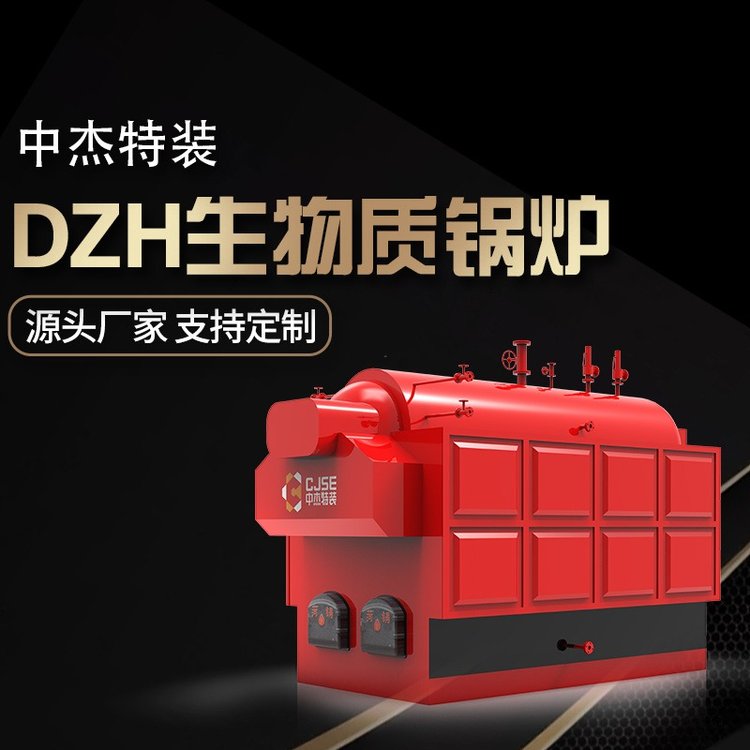

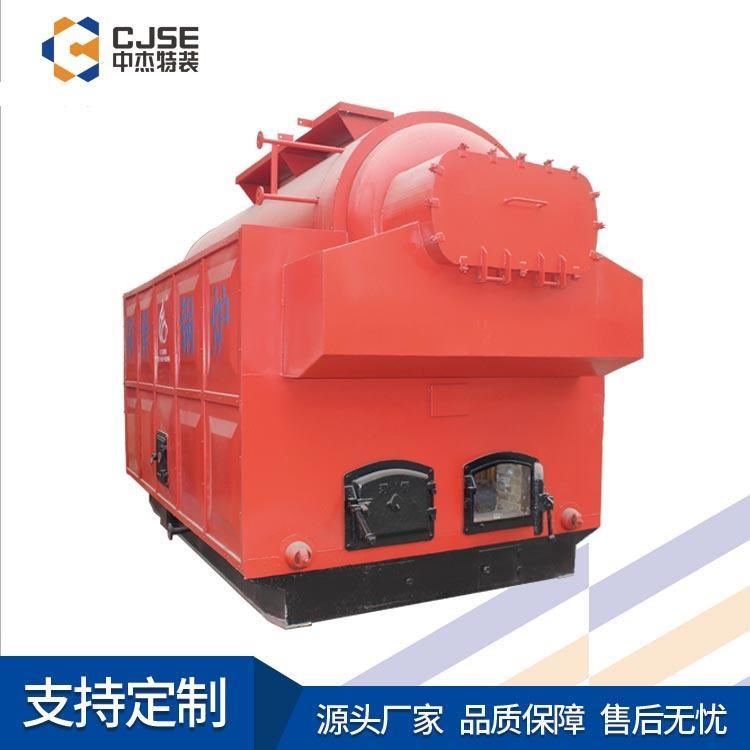
Shandong Zhongjie Special Equipment (formerly Heze Boiler Factory Co., Ltd.) was established in 2001, located at No. 2218 Jinnan Road, Economic and Technological Development Zone, Heze City. With a registered capital of 50 million yuan and total assets of 500 million yuan, the company has seven business centers: boilers, deep-freezing containers, pressure vessels, central air conditioning, engineering installation, international trade, and Internet of Things. It has three factory sites on Jinnan Road, East Changjiang Road, and Bohai Road, covering a total area of 200,000 square meters, with the main workshop spanning 83,000 square meters. The company currently employs 710 people, including 247 engineers and technicians and 82 intermediate-level technical personnel. In December 2016, it was recognized as a "High-tech Enterprise" by the Science and Technology Department. In June 2021, it was identified as a "Specialized and New Enterprise in Shandong Province" by the Department of Industry and Information Technology. In June 2022, it was recognized as a "Gazelle Enterprise in Shandong Province" and in August 2022, it was identified as a "Specialized and New Small Giant Enterprise" by the Ministry of Industry and Information Technology.
High evaporation rate in biomass pellet boiler fuel may lead to the following issues:
Incomplete combustion: High evaporation fuel releases a large amount of steam during combustion, which reduces the combustion temperature and affects the completeness of the combustion. Incomplete combustion leads to energy loss and increased emissions, lowering the boiler's thermal efficiency and environmental performance.
Poor combustion stability: Fuels with high volatility are prone to instability in the combustion process, which may result in flameout and uneven combustion. This can lead to unstable operation of the boiler and affect the stability of hot water supply.
To address issues caused by high-evaporation fuel, the following measures can be taken:
Combustion System Optimization: Optimize the combustion system of biomass pellet boilers, encompassing aspects such as combustion chamber design, combustion air supply, and mixing. Enhance combustion completeness and stability through measures like increasing combustion temperature and oxygen supply.
Combustion Adjustment Control: Utilizes a combustion adjustment control system to monitor and regulate parameters such as temperature and oxygen content in real-time during the combustion process. Adjusts the supply of combustion air based on actual conditions to maintain stability and completeness of the combustion.
Fuel Pretreatment: Pre-treat biomass pellets with high volatile matter content, such as drying and crushing. By reducing the moisture content and particle size of the fuel, the content of volatile matter is decreased, enhancing the combustion efficiency and stability.
Burn parameter adjustment: Adjust the boiler's burn parameters, such as burn temperature and duration, based on actual conditions. Through reasonable parameter adjustments, make the combustion process better suited to the characteristics of high-evaporation fuel.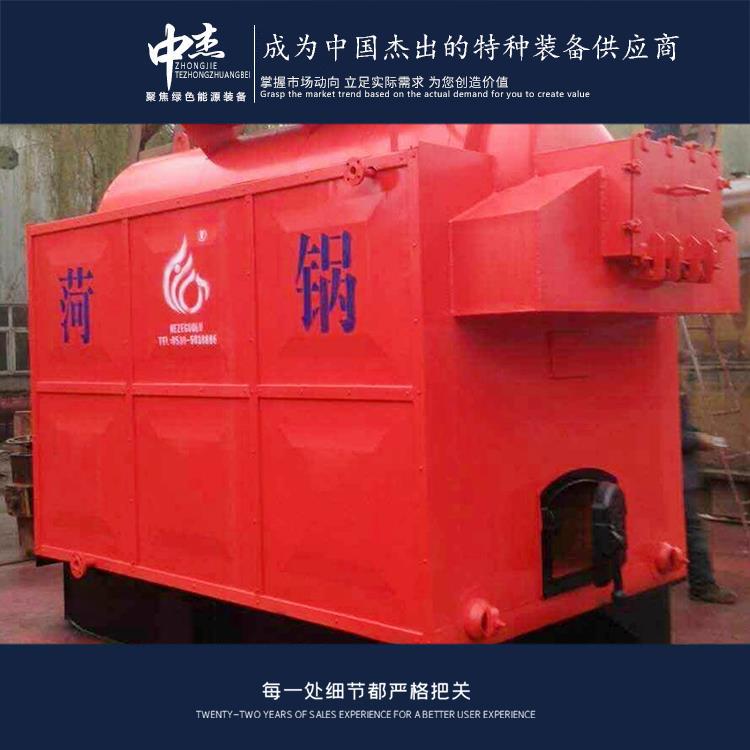
Energy-saving methods for biomass hot water boilers mainly include the following aspects:
Fuel Selection: Choose biomass fuel in bulk, such as wood chips, straw, etc., ensuring the moisture content and particle size meet the boiler's requirements. Low moisture content and appropriate particle size of the fuel can enhance combustion efficiency and reduce energy waste.
Combustion Optimization: Enhance combustion efficiency by optimizing the combustion process. Adjust combustion parameters such as temperature and duration to achieve more complete combustion and reduce fuel waste.
Heat Recovery Utilization: Utilize waste heat from flue gas for heat recovery. By installing flue gas waste heat recovery units, the excess heat in the flue gas is captured and used for other heat requirements such as heating and hot water, enhancing energy efficiency.
Boiler Insulation: Enhance the insulation of the boiler to reduce heat loss. Insulate the boiler shell and pipelines to minimize heat dissipation and improve the thermal efficiency of the boiler.
Control System Optimization: Optimize the boiler control system to achieve temperature and pressure control. Through reasonable control strategies, reduce energy waste and enhance the operational efficiency of the boiler.
Regular Maintenance: Perform regular maintenance on biomass hot water boilers to ensure normal operation. Clean the combustion chamber, heat exchangers, and other components, inspect and replace worn-out parts to ensure the boiler's performance.
Energy Management: Establish a scientific energy management system, monitor and analyze energy consumption, and formulate reasonable energy-saving measures. Continuously optimize the operation of boilers through energy management methods to achieve energy-saving goals.
By integrating the above energy-saving methods, the energy utilization efficiency of biomass hot water boilers can be improved, energy waste reduced, and the goal of energy conservation and environmental protection achieved.
When operating biomass boilers, the following safety precautions should be noted:
Familiarize with the Operation Manual: Before operating the biomass boiler, carefully read and familiarize yourself with the operation manual to understand the boiler's structure, working principle, operating steps, and safety precautions.
Regular inspections and maintenance: Conduct regular checks on all parts and equipment of the boiler to ensure proper operation and safety performance. Timely clean ash and slag, inspect the tightness of pipes and valves, to keep the boiler clean and unobstructed.
Regulate Fuel Supply: Control the rate and quantity of fuel supply to prevent either too rapid or too slow delivery, ensuring complete fuel combustion and reducing safety risks.
Maintain controlled combustion temperature: Keep the combustion temperature at an appropriate level, avoiding both too low and too high temperatures. Too low temperatures can lead to carbon buildup, while too high temperatures may cause incomplete combustion and safety hazards.
Regular cleaning and maintenance of the combustion chamber: Regularly clean the ash and carbon deposits within the combustion chamber to maintain the boiler's cleanliness and prevent coking and blockage issues.
Safety valves and pressure gauges: Ensure the proper operation and accuracy of safety valves and pressure gauges; promptly repair or replace any damaged valves or gauges.
Prevent overheating and overpressure: Monitor the boiler's temperature and pressure to avoid overheating and overpressure, and take timely measures for adjustment and treatment.
Prevent Gas Leaks: Regularly inspect the seals of gas pipes and valves to ensure no gas leaks occur, avoiding the risks of fire and explosion.
Pre-shutdown Procedures: Prior to shutdown, first turn off the fuel and air supplies, then wait for the boiler to cool down before proceeding with maintenance and cleaning.
Training and Operating Procedures: Ensure operators have received relevant training, are familiar with operating procedures and emergency response measures, and can handle emergencies correctly.
Above are some safety precautions to be aware of when operating biomass boilers. To ensure the safe operation of the boiler, it is recommended to follow relevant operational procedures and safety standards, and to conduct regular inspections and maintenance.
Fully automatic biomass boiler systems commonly use a make-up water pump for pressure maintenance, which is a standard water supply method. The specific working principle is as follows:
Feedwater Pump: The fully automatic biomass boiler is equipped with a feedwater pump, which is used to pump water from a water source (such as a water tank or municipal water pipeline) into the boiler's supply system.
Pressure Regulation: The make-up water pump operates on a constant pressure system, which involves installing a pressure sensor or controller in the boiler's water supply system to monitor the pressure. When the water supply system's pressure falls below the set value, the make-up water pump will automatically activate, replenishing water into the system to increase the pressure.
Pressure Control: The feed pump will control the pressure based on the set range. When the system pressure reaches the set value, the feed pump will stop operating to prevent excessive pressure.
Automation Control: The water supply system of fully automatic biomass boilers is typically equipped with an automated control system that can intelligently manage based on the boiler's operating status and needs. For instance, when the boiler requires water replenishment, the control system will automatically activate the feedwater pump to ensure the stable operation of the water supply system.
By employing a constant pressure water supply pump system, the fully automatic biomass boiler can achieve automated control of the water supply system and stable water supply, ensuring the normal operation and safety of the boiler. This method can be adjusted and optimized according to actual needs, enhancing water supply and energy utilization efficiency.
Our company attaches great importance to technological innovation and R&D design. We possess 1 municipal enterprise technology center in Heze City, equipped with non-destructive testing, physical and chemical testing, welding testing, hydrostatic testing, and other testing facilities. We have over 600 various instruments and equipment, including CNC machine tools, X-ray flaw detectors, digital ultrasonic flaw detectors, mechanical property testing machines, chemical analyzers, spectrometers, tensile testing machines, plasma welding machines, etc. The key products and technologies we have developed, such as temperature-pressure vessel welding, biomass boiler emission reduction, and waste heat recovery, have successively been shortlisted for multiple Shandong Provincial Department of Industry and Information Technology science and technology innovation projects, key projects in Shandong Province, and Heze City innovative and excellent projects. In total, we have obtained 27 authorized utility model patents, 16 authorized invention patents, participated in drafting 2 standards, 2 industry standards, and registered 15 trademarks. Our technical team, in collaboration with Professor Li Yajiang of Shandong University, has jointly developed deep cryogenic vessel processing technology, utilizing the international plasma arc + wire-in-tube argon arc welding (PAW-GTAW) technology. After the provincial scientific and technological achievement appraisal, our technology level has reached the international standard in the field of deep cryogenic vessel manufacturing. Choose Zhongjie Special Equipment, and let's create brilliance together!
Tumushuk Biomass Boiler Manufacturer
