


Shandong Zhongjie Special Equipment (formerly Heze Boiler Factory Co., Ltd.) holds an A-grade boiler manufacturing license, an A2-grade pressure vessel manufacturing license, an A2-grade pressure vessel design license, a B-grade boiler installation license, and GB2/Class, GC2/Class pressure pipeline installation licenses, as well as a mechanical and electrical equipment installation contracting qualification. It is a member of the China Boiler and Water Treatment Association, the China Chemical Equipment Association, and the council member of the Shandong Equipment Manufacturing Association. The company has also passed the ISO9001 Quality Management System, ISO14001 Environmental Management System, OHSAS18001 Occupational Health and Safety Management System certifications, and the American ASME/U2 certification.
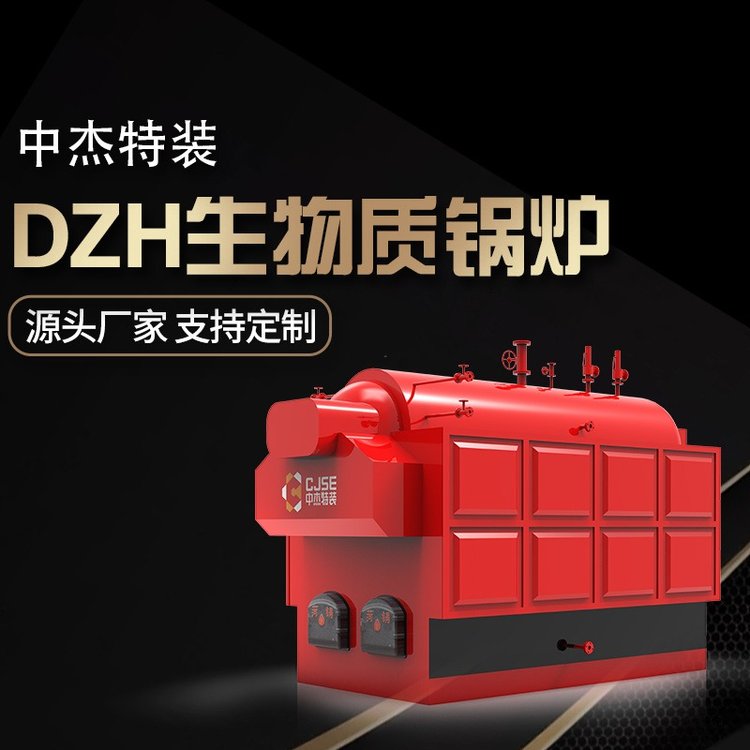
Biomass fuel boilers feature the following product characteristics:
Fuel Diversity: Biomass fuel boilers are adaptable to a variety of biomass fuels, such as wood chips, straw, rice husks, etc. This diversity allows for greater flexibility and sustainability in energy utilization.
Environmental Low Emission: Biomass fuel boilers burn biomass fuel, resulting in relatively low emissions during combustion, such as particulates and nitrogen oxides. Consequently, biomass fuel boilers have lower carbon emissions and environmental pollution.
Energy-saving: The biomass fuel boiler utilizes advanced combustion technology and heat recovery techniques, enabling efficient combustion and heat utilization. High combustion and thermal efficiency ensure maximum energy extraction from biomass fuel.
Automated Control: The biomass fuel boiler is equipped with an automated control system that accurately controls and adjusts parameters such as temperature, pressure, and fuel supply. The control system features safety protection functions to ensure the safe operation of the boiler.
High Reliability and Stability: The materials and processes used in biomass fuel boilers offer excellent durability and stability. Rigorous quality control and testing ensure the boiler's high reliability and long-term stable operation.
Flexible Application: Biomass fuel boilers are widely applicable in industrial, commercial, and residential sectors, such as for heating, heating systems, and steam generators. They offer flexible installation methods and capacity options to meet the diverse needs of various users.
Biomass fuel boilers may encounter the following issues during operation:
Fuel quality inconsistency: The quality of biomass fuel is affected by factors such as raw material source, processing methods, and storage conditions, leading to inconsistent fuel quality. Inconsistent fuel quality may impact combustion efficiency and the stable operation of boilers.
Ash disposal issue: Biomass fuel produces a large amount of ash during combustion, including waste, ash content, and unburnt materials. The handling and disposal of ash may pose environmental pollution and cost issues.
High Temperature Corrosion: Ash and elements such as chlorine in biomass fuels are prone to cause corrosion at high temperatures, damaging the metal components of boilers. Appropriate measures need to be taken for protection and treatment of high temperature corrosion issues.
Low combustion efficiency: Biomass fuel has different combustion characteristics compared to traditional fossil fuels, which may result in lower combustion efficiency. Optimization of the combustion system and control strategies is necessary to enhance combustion efficiency and reduce energy waste.
Gas emissions from combustion: The combustion of biomass fuel produces certain emissions, such as carbon dioxide, nitrogen oxides, and particulates. These emissions have an impact on the environment and air quality, necessitating appropriate control measures.
Transport and Storage Costs: The transportation and storage costs for biomass fuels are high, especially for areas far from the source of supply. This may increase the operational costs of biomass fuel boilers.
In summary, biomass fuel boilers face issues such as inconsistent fuel quality, ash and slag disposal, and high temperatures.
Control methods for biomass boiler combustion systems can include the following aspects:
Fuel Supply Control: Regulate the supply volume and speed of biomass fuel to ensure a stable supply. This can be achieved by adjusting the feeder's speed or on/off settings.
Air Supply Control: Regulate the air supply during the combustion process to ensure complete fuel combustion. This can be achieved by adjusting the fan speed or switching it on/off.
Combustion Temperature Control: Monitors the temperature within the combustion chamber and adjusts it according to the set values. The combustion temperature can be controlled by adjusting the air supply or fuel supply within the combustion chamber.
Combustion Process Monitoring: Monitor parameters during the combustion process, such as combustion temperature and pressure inside the combustion chamber, to real-time supervise the combustion status and adjust accordingly based on the monitoring results.
Oxygen Content Control: By monitoring the oxygen content within the combustion chamber and adjusting it according to the set values, we ensure complete combustion of the fuel. This can be achieved by installing an oxygen content sensor and regulating the air supply.
Ash cleaning system control: Manages the operation of ash cleaning equipment, promptly burning off the ash in the combustion chamber to ensure combustion efficiency and the normal operation of the system.
Above are some common control methods for biomass boiler combustion systems. Specific control strategies and methods will vary depending on the type of boiler and system design.
A biomass boiler economizer is a device used to recover excess heat from flue gas, which serves to enhance the boiler's thermal efficiency and reduce energy waste. The economizer accomplishes this by transferring heat from the flue gas to the boiler's feed water, preheating it and thereby reducing fuel consumption.
Based on their structure and working principles, biomass boiler economizers can be classified into the following categories:
Tubular Economizer: A common type of economizer, it consists of a series of parallel pipes. Flue gas flows over the outside of the pipes, while feedwater circulates inside them. Heat transfer through the pipe walls recovers the excess heat from the flue gas.
Finned Economizer: The finned economizer is an improvement on the tubular economizer, featuring fins that increase the heat transfer area and enhance efficiency. It is suitable for high-temperature flue gas applications.
Direct-Flow Economizer: A direct-flow economizer is a structure that separates flue gas and incoming water, achieving cross heat transfer between the two through multiple parallel flue gas and water channels, thereby enhancing heat transfer efficiency.
Recirculation refers to the process of reintroducing the waste heat from the economizer back into the boiler combustion area to increase the combustion temperature and thermal efficiency. Recirculation can be controlled by adjusting the recirculation ratio, which is generally adjusted as needed during the boiler's operation. Recirculation can raise the combustion temperature, enhance the completeness of combustion, and reduce pollutants.
Our company attaches great importance to technological innovation and R&D design. We have 1 municipal-level enterprise technology center in Heze City, equipped with non-destructive testing, physical and chemical testing, welding testing, hydrostatic testing, and other testing facilities. We have over 600 types of instruments and equipment, including CNC machine tools, X-ray flaw detectors, digital ultrasonic flaw detectors, mechanical property testing machines, chemical analyzers, spectrometers, tensile testing machines, plasma welding machines, etc. The key products and technologies we have developed, such as temperature and pressure vessel welding, biomass boiler emission reduction, and waste heat recovery, have successively been included in several Shandong Province Ministry of Industry and Information Technology scientific and technological innovation projects, key projects in Shandong Province, and Heze City innovative and excellent projects, etc. We have累计 obtained 27 authorized utility model patents, 16 authorized invention patents, participated in drafting 2 standards, 2 industrial standards, and registered 15 trademarks. Our technical team, in collaboration with Professor Li Yajiang of Shandong University, has jointly developed deep cryogenic container processing technology, using the international plasma arc + filler wire argon arc welding (PAW-GTAW) technology. After the provincial-level scientific and technological achievement appraisal, the technological level has reached international standards in the field of deep cryogenic container manufacturing. Choose Zhongjie Special Equipment, let's work together to create brilliance!
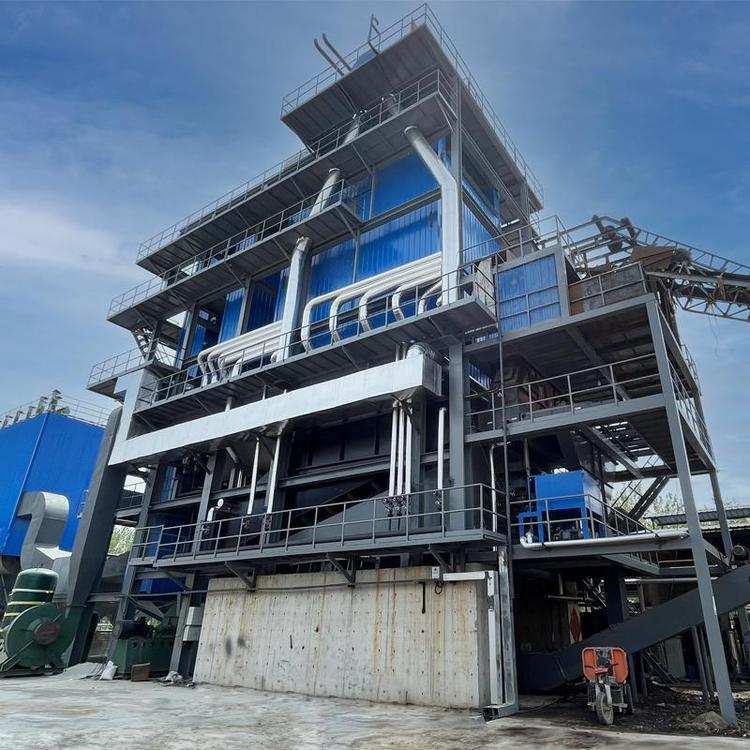
Nanjing 25-ton biomass boiler, low operation cost
