


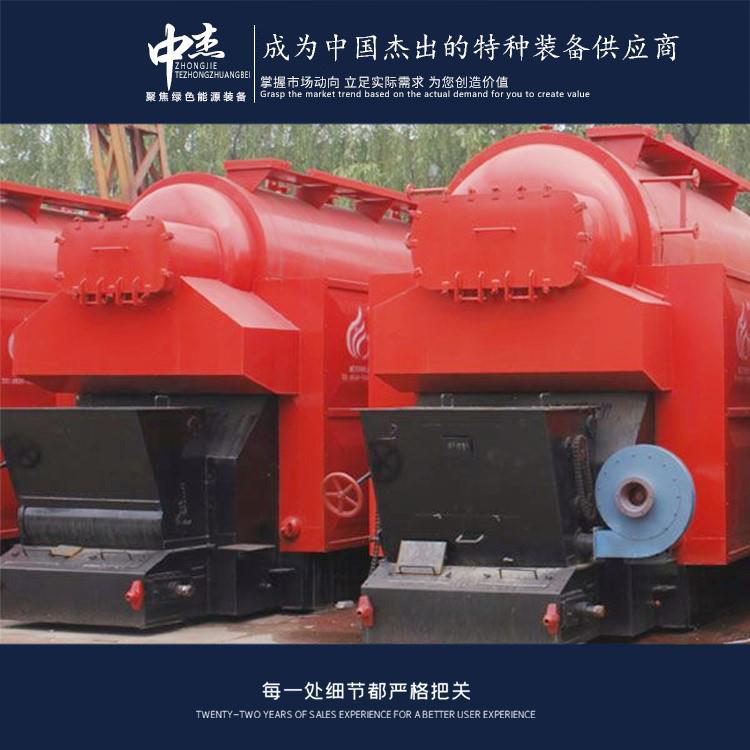
Shandong Zhongjie Special Equipment's main products include: fuel (gas) boilers, organic heat carrier boilers, biomass boilers, waste heat recovery boilers, and other boiler products; vacuum insulation cryogenic pressure vessels such as LNG tanks, oxygen/nitrogen/argon tanks, and CO2 tanks; pressure vessel products such as denitrification engineering equipment, heat storage and energy storage equipment, and complete chemical equipment; central air conditioning and HVAC equipment such as ground (water) source heat pumps, air source units, water-cooled screw units, and air-cooled modular units. Planned products include large-scale energy centers, LNG transport vehicles, LNG tank containers, and other green energy equipment.
The use of biomass boilers holds significant importance for energy conservation and emission reduction:
Reducing Carbon Emissions: Fuel for biomass boilers comes from organic matter such as plants, animals, and microorganisms, which, when burned, releases carbon dioxide that can be absorbed by plants, creating a cycle. Compared to traditional fossil fuels, biomass fuel emits less carbon, effectively reducing greenhouse gas emissions and playing a significant role in combating climate change.
Reduce Energy Consumption: Biomass boilers, utilizing combustion technology and a heat recovery system, enhance energy utilization efficiency and minimize waste. By conserving energy, energy costs can be reduced and the benefits of energy use can be improved.
Reducing dependency on fossil fuels: Biomass, as a local renewable energy source, can decrease reliance on imported fossil fuels and enhance energy security. In regions with scarce resources, the use of biomass boilers can provide a reliable energy supply, reducing dependence on external energy sources.
Promote agricultural and forestry development: Fuel for biomass boilers primarily comes from agricultural residues like straw and wood, which are by-products of agriculture and forestry. This supports the sustainable development of agriculture and forestry. By effectively utilizing agricultural and forestry waste, resource waste can be reduced and the comprehensive benefits of the agriculture and forestry industries can be enhanced.
Promoting Environmental Protection: The combustion of biomass boilers produces relatively low emissions and ash, exerting less environmental impact. Moreover, utilizing biomass boilers can reduce the exploitation and destruction of natural resources, thereby safeguarding the ecological environment.
In summary, utilizing biomass boilers is of great significance for energy conservation and emission reduction.
When using biomass boilers, the following safety precautions should be observed:
Familiarize with the Operation Manual: Before using the biomass boiler, carefully read and familiarize yourself with the operation manual to understand the boiler's usage, precautions, and safety requirements.
Regular Inspections and Maintenance: Conduct regular checks on all components and equipment of the biomass boiler to ensure proper operation. Timely clean the combustion chamber, flue, and ash, maintaining the boiler's cleanliness and unobstructed flow.
Note fuel quality: Choose biomass fuel, avoiding damp, contaminated, or harmful fuel. Ensure the fuel quality meets requirements to prevent damage to the boiler and the environment.
Regulate combustion process: Reasonably control the combustion of biomass boilers to ensure stable and complete combustion. Adhere to correct ignition and shutdown procedures to avoid issues such as incomplete combustion or overheating.
Prevent overheating and overpressure: Monitor and control the temperature and pressure of biomass boilers to avoid overheating and overpressure. Install and maintain safety valves, pressure gauges, and thermometers, etc., to ensure the safe operation of the boiler.
Prevent Gas Leaks: Regularly inspect and maintain the gas pipelines and valves of biomass boilers to ensure good sealing and prevent gas leaks. In case of gas leaks, take immediate action to stop usage and promptly repair.
Prevent fires: Keep the biomass boiler area clean and tidy, prevent堆积 and ignition sources from being near the boiler. Install and maintain fire alarms and extinguishing equipment to enhance fire safety.
Training and Awareness Enhancement: Provide necessary training to operators to improve their operational skills and safety awareness for biomass boilers. Ensure operators are aware of and comply with relevant safety regulations and operational procedures.
Here are some safety tips for the operation of biomass boilers. Adhering to these tips ensures the safe operation of biomass boilers.
Biomass boilers promote environmental protection in the following aspects:
Renewable Energy Utilization: Biomass boilers use biomass fuels such as wood chips, straw, wheat straw, fruit shells, etc., which are renewable resources. Compared to fossil fuels, the combustion of biomass fuels releases less carbon dioxide, resulting in a smaller impact on climate change.
Reducing Greenhouse Gas Emissions: The carbon dioxide produced during the combustion of biomass boilers can be reabsorbed through the regeneration process of biomass, forming a closed loop. This helps to decrease greenhouse gas emissions and has a cumulative effect on slowing down climate change.
Low Pollution Emissions: The combustion process of biomass boilers results in relatively low emissions of pollutants in the flue gas. Through reasonable combustion adjustment and supplementary pollution control equipment, such as dust collectors and nitrogen oxide control devices, the emissions of particulates, nitrogen oxides, and other pollutants in the flue gas can be further reduced.
Recycling Waste: Biomass boilers can utilize waste and by-products as fuel, such as crop straw and wood processing waste. This enables the recycling of waste, reducing the issues of waste storage and disposal.
Energy Efficiency Enhancement: The combustion process of biomass boilers can be improved through technologies like heat recovery and waste heat utilization, thereby enhancing energy utilization efficiency. This aids in reducing energy consumption and diminishing reliance on traditional energy sources.
Overall, biomass boilers, as a renewable energy utilization technology, offer advantages such as low carbon emissions, low pollution discharge, and waste recycling, which positively promote environmental protection and sustainable development.
In the technical aspects of biomass boilers, the following three issues need to be focused on:
Improved Combustion Efficiency: Biomass fuel has characteristics different from traditional fossil fuels, which tend to produce particulate matter like straw and wood shavings during combustion, leading to lower combustion efficiency. Therefore, research and development as well as improvements of the combustion system are needed to optimize the combustion process, enhance efficiency, and reduce energy waste.
High-Temperature Corrosion Issues: Ash and elements like chlorine in biomass fuels tend to cause corrosion at high temperatures, damaging the metal components of boilers. To address high-temperature corrosion, it is necessary to develop and apply corrosion-resistant materials, control combustion conditions, and minimize corrosion occurrence.
Ash and slag management and utilization: Biomass fuel combustion generates a large amount of ash and slag, including waste, ash content, and unburnt materials. The management and disposal of ash and slag is a critical issue, requiring the development and application of ash and slag management technologies, including recycling, resource utilization, and chemical treatment.
By addressing these three issues, the combustion efficiency of biomass boilers can be further improved, corrosion risks reduced, and the effective treatment and utilization of ash and slag achieved, promoting the sustainable development of biomass energy.
Shandong Zhongjie Special Equipment, welcome customers to visit our factory for business discussions.
Jiuquan biomass boiler customization - Available for customization
