


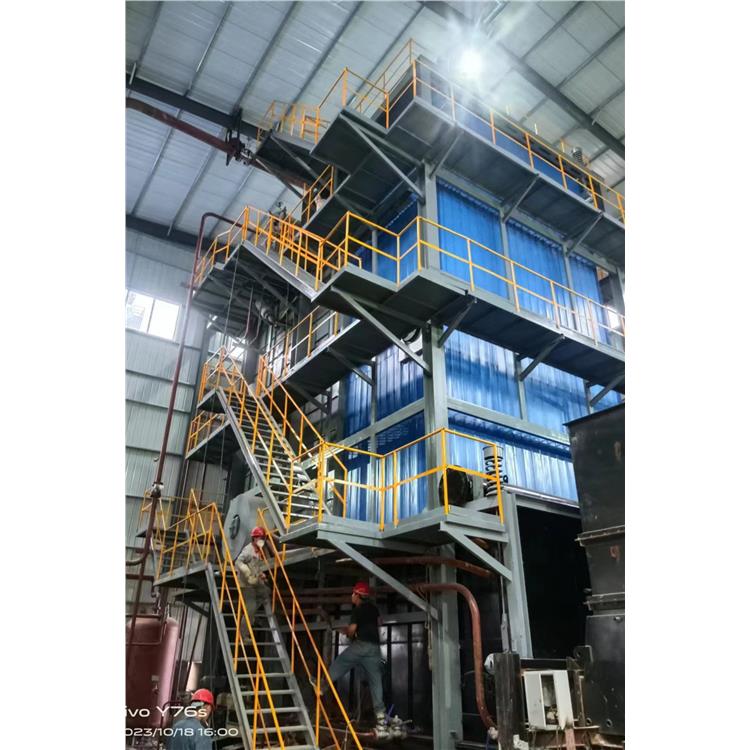
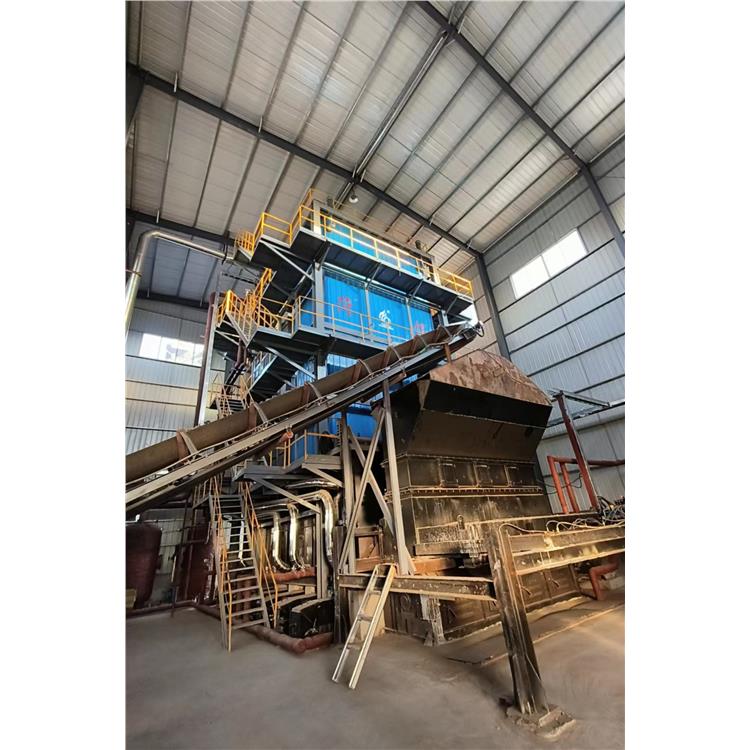

Shandong Zhongjie Special Equipment's main products include: fuel (gas) boilers, organic heat carrier boilers, biomass boilers, waste heat recovery boilers, and other boiler products; vacuum insulation cryogenic pressure vessels such as LNG tanks, oxygen/nitrogen/argon tanks, and CO2 tanks; pressure vessel products such as denitrification engineering equipment, heat storage and energy storage equipment, and complete chemical equipment sets; central air conditioning and HVAC equipment such as ground (water) source heat pumps, air source units, water-cooled screw units, and air-cooled modular units. Planned products include large-scale energy centers, LNG transport vehicles, LNG tank containers, and other green energy equipment.
The dust removal technology for coal-fired boilers aims to reduce particulate emissions during the combustion process, protecting the environment and improving air quality. Here are several common dust removal techniques for coal-fired boilers:
Mechanical Dust Collectors: Mechanical dust collectors are one of the common dust removal equipment, separating particulate matter from flue gas through physical principles. Common types include gravity dust collectors, inertial dust collectors, bag dust collectors, etc. The working principle of mechanical dust collectors is to utilize the inertia, gravity, or filtering effect of particles to separate them from the flue gas.
Electrostatic precipitators utilize electrostatic force to charge particulates in flue gas, then collect the charged particles by the action of the electrostatic force. Electrostatic precipitators are divided into two types: dry electrostatic precipitators and wet electrostatic precipitators. Dry electrostatic precipitators are suitable for high-temperature flue gas, while wet electrostatic precipitators are suitable for flue gas with higher humidity.
Wet Dust Collector: A wet dust collector uses spray water or other liquids to humidify particulates in flue gas, and then separates the humidified particles from the flue gas through gravity or inertial force. It is suitable for treating flue gas with high humidity and sticky particles.
Electrostatic Precipitator: An electrostatic precipitator utilizes the force of an electric field to charge particles in flue gas, then collects the charged particles by the action of the electric field. Suitable for the treatment of high-temperature flue gas and fine particles.
Integrated Dust and Desulfurization Technology: The integrated dust and desulfurization technology combines the two processes of dust removal and desulfurization, achieving integrated treatment by sharing equipment and jointly processing flue gas. This technology can reduce the occupied area of equipment and lower investment and operation costs.
Above are common coal-fired boiler dust removal technologies. Different dust removal technologies are suitable for different flue gas and particulate matter characteristics. In practical applications, the appropriate combination of dust removal technologies can be selected based on specific circumstances to achieve the goal of reducing particulate matter emissions.
Chain biomass boiler is a common type of biomass boiler, its working principle and process are as follows:
Fuel Supply: Biomass fuel (such as wood chips, straw, etc.) is transported to the combustion chamber of the chain boiler via the feeding system.
Combustion Process: The fuel is ignited in the combustion chamber while the chain boiler's chain system starts operating. The fuel is gradually propelled forward by the movement of the chain, simultaneously burning within the combustion chamber. During combustion, the fuel is thoroughly mixed with air, and the heat energy produced is transferred to the boiler's water or other working substance.
Smoke Emission: The smoke produced by combustion is channeled through the flue system of the combustion chamber and discharged into the chimney. During the smoke emission process, the smoke purification equipment can be utilized to treat the smoke, thereby reducing the emitted particulate matter and gas pollutants.
Heat Recovery: The heat generated from combustion is transferred to water or other working fluids through the heat exchanger of the boiler, raising their temperature. Post-recovery, the hot water or steam can be used for heating, hot water supply, or other industrial processes.
Control System: Chain biomass chain boilers are typically equipped with an automatic control system for monitoring and adjusting parameters such as temperature, pressure, and fuel supply during the combustion process. The control system can automatically adjust according to actual needs to ensure the safe operation and performance of the boiler.
Overall, the biomass chain grate boiler gradually feeds biomass fuel into the combustion chamber through a chain system for combustion. The heat energy is transferred to water or other working substances via a heat exchanger, achieving heat recovery and utilization. This boiler boasts high combustion efficiency and strong fuel adaptability, and is widely used in heating, industrial heating, and other fields.
Biomass boilers and coal-fired boilers differ in terms of fuel, environmental performance, and sustainability.
Fuel Type: Biomass boilers utilize renewable biomass fuels such as wood chips and straw, whereas coal-fired boilers use fossil fuels like coal. Biomass fuels are renewable and have low carbon characteristics, while coal is a finite resource and burning it produces a large amount of carbon dioxide and other pollutants.
Environmental Performance: Biomass boiler combustion emits relatively fewer pollutants, such as carbon dioxide, nitrogen oxides, and particulates. In contrast, coal-fired boilers produce more pollutants, including nitrogen oxides, particulates, and heavy metals, which have a significant impact on air quality and human health.
Sustainability: Biomass fuel is a renewable resource, which can be utilized through planting and regeneration cycles, offering good sustainability. Coal, on the other hand, is a finite resource, and its mining and burning can cause environmental damage.
Combustion Efficiency: The combustion efficiency of biomass boilers is relatively lower due to the complex chemical and physical properties of biomass fuel, which tends to produce more ash and carbon deposits during combustion. In contrast, coal-fired boilers have a higher combustion efficiency, as the chemical properties of coal fuel are more stable, resulting in a more complete combustion process.
Technical Requirements: Biomass boilers versus coal-fired boilers
Biomass boilers offer the following advantages:
Renewable Energy: Biomass boilers utilize biomass fuels such as wood chips and straw, which are renewable and can be obtained through planting and regeneration cycles. These fuels have a lower carbon footprint compared to fossil fuels.
Environmental Protection and Low Carbon: The carbon dioxide produced during biomass combustion can be absorbed by plants, forming a cycle that reduces the burden on the atmosphere. Additionally, emissions and pollutants during biomass combustion are relatively low, resulting in minimal environmental impact.
Resource-rich: Biomass fuel sources are diverse, including crop straw, forest waste, and industrial by-products, with relatively abundant resources and a low risk of depletion.
High thermal efficiency: The biomass boiler employs advanced combustion technology and a heat recovery system, achieving high thermal energy conversion and utilization, enhancing energy efficiency.
Versatility: Biomass boilers are not only used for heating but also for hot water supply and industrial heating in various applications.
However, biomass boilers also have some drawbacks:
Fuel supply instability: The supply of biomass fuel is affected by factors such as seasons, regions, and crop yields, which may lead to unstable supply issues.
Particulate matter produced by combustion: A certain amount of particulate matter is generated during biomass combustion, which has an impact on air quality and requires treatment through flue gas purification equipment.
Fuel handling and storage costs: Biomass fuel requires pretreatment, drying, and storage, which may add costs and complexity.
High technical requirements: Biomass pot
Our company places great emphasis on technological innovation and R&D design. We have one municipal-level enterprise technology center in Heze City, equipped with non-destructive testing, physical and chemical testing, welding testing, hydrostatic testing, and other testing facilities. We have over 600 various instruments and equipment, including CNC machine tools, X-ray flaw detectors, digital ultrasonic flaw detectors, mechanical property testing machines, chemical analyzers, spectrometers, tensile testing machines, plasma welding machines, etc. The key products we have developed, such as temperature and pressure vessel welding, biomass boiler emission reduction, and waste heat utilization, have successively been shortlisted for multiple Shandong Provincial Department of Industry and Information Technology Science and Technology Innovation projects, Shandong Provincial key projects, and Heze City innovation and excellence projects. We have cumulatively obtained 27 authorized utility model patents, 16 authorized invention patents, participated in drafting 2 standards, 2 industry standards, and registered 15 trademarks. Our technical team, in collaboration with Professor Yajiang Li of Shandong University, has jointly developed deep cryogenic container processing technology using the international plasma arc + wire filling argon arc welding (PAW-GTAW) technology. After provincial-level scientific and technological achievement identification, the technology level has reached an international standard in the field of deep cryogenic container manufacturing. Choose Zhongjie Special Equipment, and let's create brilliance together!
Meizhou Biomass Boiler Manufacturer - In Stock Supply
