


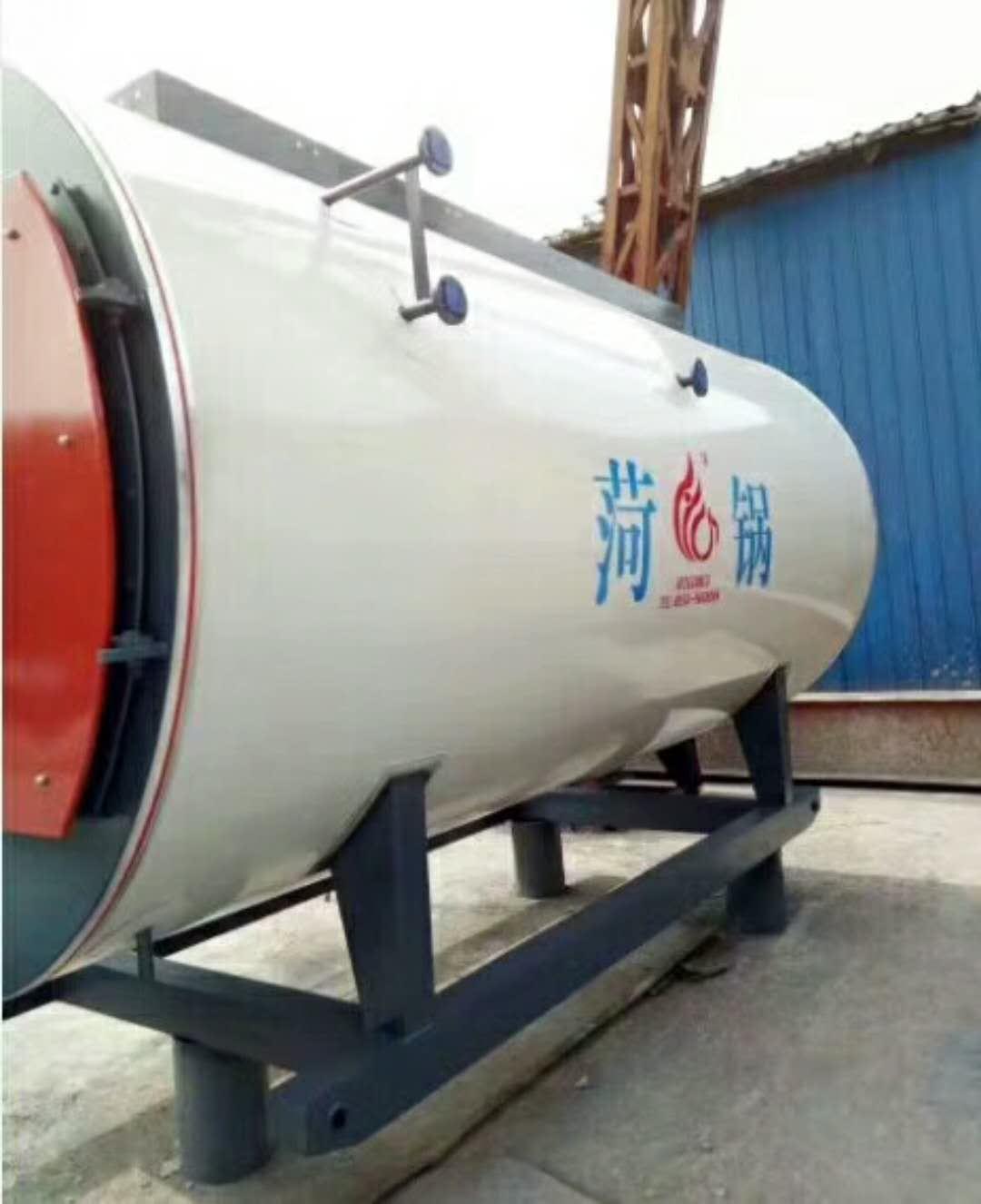
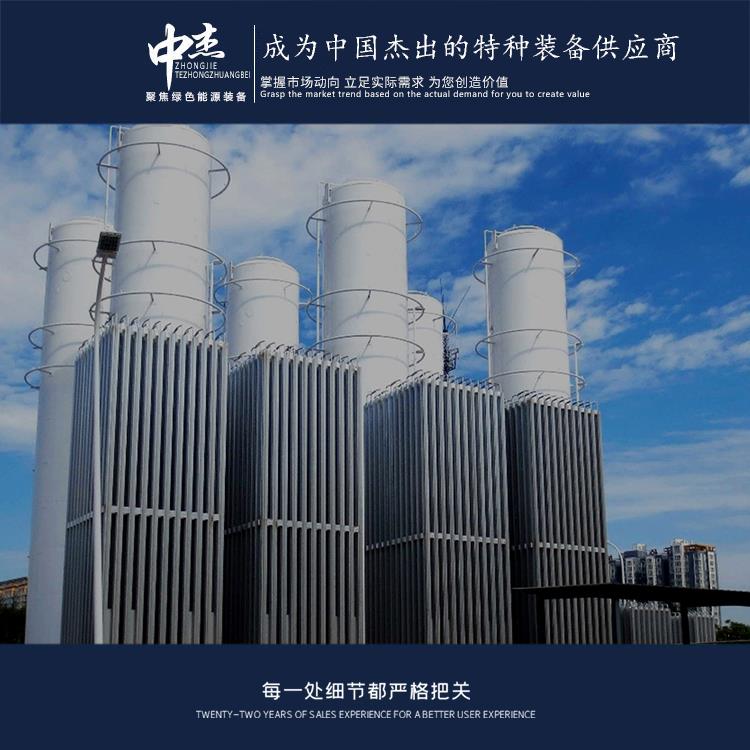
Shandong Zhongjie Special Equipment's main products include: fuel (gas) boilers, organic heat carrier boilers, biomass boilers, waste heat boilers, and other boiler products; vacuum insulation cryogenic pressure vessels such as LNG tanks, oxygen/nitrogen/argon tanks, and CO2 tanks; pressure vessel products such as denitrification engineering equipment, heat storage and energy storage equipment, and complete chemical equipment; central air conditioning and HVAC equipment such as ground (water) source heat pumps, air source units, water-cooled screw units, and air-cooled modular units. Planned products include large-scale energy centers, LNG transport vehicles, LNG tank containers, and other green energy equipment.
If a leak in the carbon dioxide tank is detected, the following procedures should be taken immediately:
Confirm the leak location: First, determine the exact position of the leak. This can be done through auditory detection, observation, or using gas detection equipment.
Emergency response: Upon discovering a leak, implement immediate emergency measures to ensure personnel safety. Evacuate staff to a safe area and notify relevant personnel and emergency services.
Cut off the gas supply: Quickly shut off the carbon dioxide supply source by closing valves or disconnecting power to stop the flow of CO2.
Locate the leak: In a safe environment, use gas detection equipment or visual inspection to find the leak. Apply soap water or other leak detection agents to potential leak points and observe for bubbles.
Seal the leak: Once the leak location is confirmed, take temporary sealing measures, such as using tape, sealant, or other reliable sealing materials for temporary repairs. Ensure the sealing is secure and effective in preventing gas leakage.
Repair and maintenance: In a safe environment, conduct further repairs and maintenance. Depending on the leak's specifics, you may need to replace seals, repair or replace valves, etc. These tasks should be performed by trained personnel.
Inspection and testing: After repairs, conduct leak detection and testing to ensure the leak has been fully repaired and the tank's safety performance is restored.
Note: Handle carbon dioxide tank leaks with caution and adhere to relevant safety standards and procedures. If you lack the necessary knowledge and skills, contact a professional for assistance.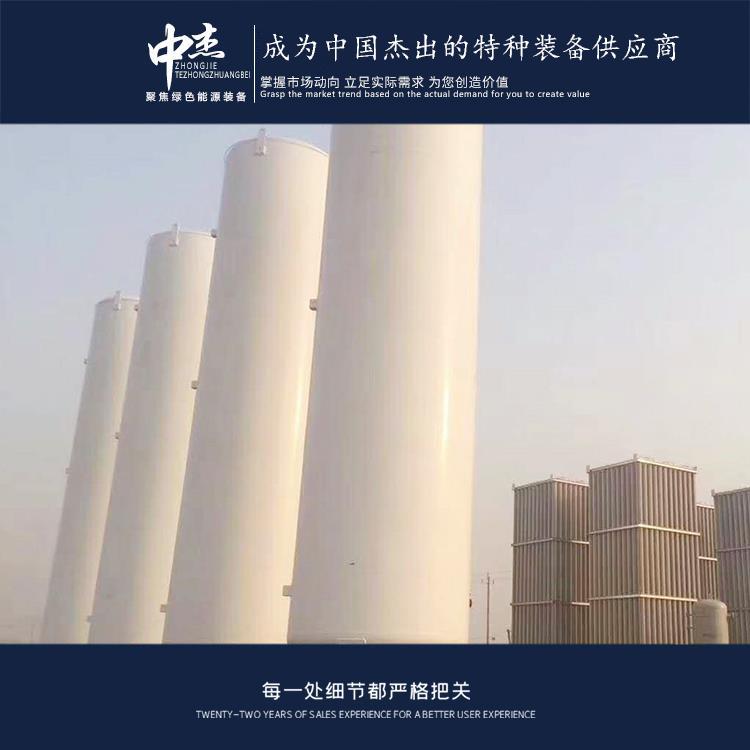
When storing CO2 storage tanks, the following requirements must be adhered to ensure safety and effectiveness:
Ventilation: Tanks should be stored in well-ventilated areas to avoid the accumulation of CO2 gas. Ensure adequate air circulation around the tank to prevent gas buildup and asphyxiation risks.
Fire and Explosion Prevention: Keep the tanks away from sources of fire, high-temperature areas, and flammable materials. Avoid open flame operations near the tank to prevent fire and explosion risks.
Avoid Direct Sunlight: Store tanks in places shielded from direct sunlight to prevent overheating and pressure increase. Direct sunlight can raise tank temperatures, increasing the risk of leaks and explosions.
Prevent Mechanical Damage: Keep tanks away from machinery and heavy objects to avoid collisions and damage. Mechanical damage may lead to tank leaks or破裂, causing safety incidents.
Identification and Warning Signs: Clearly mark the tanks with information on the stored gas type and pressure. Set up warning signs around the tanks to alert personnel to their presence and related safety precautions.
Regular Inspections: Conduct regular checks on the tank's appearance, valves, and connections to ensure they are undamaged. Take prompt repair actions if any abnormalities are detected.
Storage Capacity Control: Control the storage capacity of the tanks to avoid exceeding the rated capacity. Exceeding the rated capacity can lead to excessive tank pressure, increasing safety risks.
Storage Records: Document the tank's usage, including filling dates, filling amounts, and inspection records. Regularly inspect and maintain the tanks, and keep relevant records.
It should be noted that specific storage requirements may vary depending on the tank type and application. When storing CO2 tanks, operate in accordance with relevant specifications and standards and consult experts to ensure safety and effectiveness.
二氧化碳储罐的检验频率应根据当地的法规、标准和制造商的建议来确定。一般来说,以下几个因素会影响二氧化碳储罐的检验频率: 法规和标准要求:不同和地区可能有不同的法规和标准,规定了储罐的检验要求和频率。例如,美国的DOT标准要求液化气体储罐每5年进行一次外部检验和每10年进行一次内部检验。 制造商建议:储罐的制造商通常会提供关于检验频率的建议。这些建议基于储罐的设计、材料和使用寿命等因素,可以作为制定检验计划的参考。 使用环境和条件:储罐的使用环境和条件也会影响检验频率。例如,如果储罐暴露在腐蚀性环境中或经常受到机械应力,可能需要更频繁的检验。 一般来说,液化气体储罐的外部检验通常是通过目视检查、超声波检测、磁粉检测等方法进行的,以评估储罐的外部状况和可能存在的缺陷。内部检验可能需要排空储罐,并通过内部检查、厚度测量、焊缝检测等方法来评估储罐的内部状况。 重要的是,储罐的检验应由经过培训和有经验的人员进行,并严格按照相关的法规、标准和制造商的建议进行。定期的检验和维护可以确保储罐的安全性和可靠性,减少事故的风险。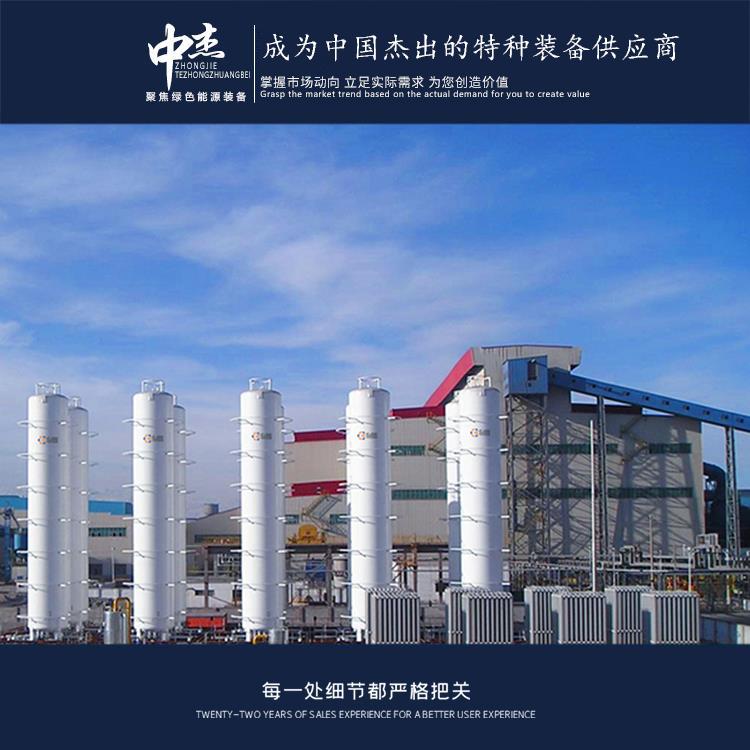
Carbon dioxide storage tanks possess the following characteristics:
- High-pressure Vessel: Carbon dioxide storage tanks are typically designed as high-pressure vessels, capable of withstanding high pressure. This is because carbon dioxide requires high pressure at room temperature to maintain a liquid state.
- High Oxidizing Property: Carbon dioxide has a high oxidizing property, which can support combustion. Therefore, when using and storing carbon dioxide, precautions must be taken to prevent contact to avoid the risk of fire and explosion.
- Low-Temperature Storage: Carbon dioxide is in a gaseous state at room temperature but can be compressed into a liquid at lower temperatures. Thus, carbon dioxide storage tanks usually need to have good insulation properties to maintain the low-temperature liquid state of the stored carbon dioxide.
- High Density: Liquid carbon dioxide has a high density, allowing for the storage of large amounts of carbon dioxide in a relatively small volume. This makes carbon dioxide storage tanks useful in scenarios requiring substantial carbon dioxide supply.
- Safety Valves and Pressure Control: To ensure the internal pressure of the tank remains within a safe range, carbon dioxide storage tanks are usually equipped with safety valves and pressure control devices. These devices monitor and control the internal pressure of the tank to prevent excessive pressure from causing the tank to burst.
- Corrosiveness: Carbon dioxide has some degree of corrosiveness, especially in high humidity environments. Therefore, the materials and corrosion prevention measures for the tank need to consider the corrosiveness of carbon dioxide to ensure the tank's durability and safety.
These characteristics make carbon dioxide storage tanks widely applicable in many industries, such as the food and beverage industry, fire suppression, and gas industry. When using carbon dioxide storage tanks, it is necessary to follow relevant safety operation procedures and standards to ensure operational safety.
Shandong Zhongjie Special Equipment, welcome customers to our factory for business discussions.
Guangxi 30 Cubic CO2 Storage Tank, Made of 304 Stainless Steel
