



Shandong Zhongjie Special Equipment (formerly Heze Boiler Factory Co., Ltd.) holds an A-grade boiler manufacturing license, an A2-grade pressure vessel manufacturing license, an A2-grade pressure vessel design license, a B-grade boiler installation license, and GB2/Class and GC2/Class pressure pipeline installation licenses, as well as an electromechanical equipment installation contracting qualification. It is a member of the China Boiler and Water Treatment Association, the China Chemical Equipment Association, and the理事 member of the Shandong Equipment Manufacturing Association. The company has also passed certifications for the ISO9001 Quality Management System, ISO14001 Environmental Management System, OHSAS18001 Occupational Health and Safety Management System, and the American ASME/U2 certification.
Biomass boilers possess certain characteristics that give them an edge in energy conservation and environmental protection:
Renewable Energy: The fuel used in biomass boilers is renewable, such as wood chips, straw, and waste materials. Compared to fossil fuels, the use of biomass fuel can reduce dependence on limited resources and lower energy consumption.
Low carbon emissions: The amount of carbon dioxide released during the combustion of biomass fuel is roughly equivalent to the amount absorbed during its growth, forming a closed carbon cycle. Compared to the combustion of fossil fuels, biomass boilers have lower carbon emissions, contributing significantly to the reduction of greenhouse gas emissions.
Combustion: The biomass boiler utilizes advanced combustion technology and control systems to achieve combustion. By optimizing the combustion process, it enhances the utilization of thermal energy and reduces energy waste.
Waste Utilization: Biomass boilers can use waste materials as fuel, such as crop straw and wood waste.
There are several common types of biomass energy-saving steam boilers:
Biomass Chain Grate Boilers: The biomass chain grate boiler utilizes a chain feeding system to deliver biomass fuel into the furnace for combustion. The chain feeding system allows for continuous feeding, making it suitable for larger-scale biomass steam boilers.
Biomass Circulating Fluidized Bed Boiler: The biomass circulating fluidized bed boiler utilizes circulating fluidized bed combustion technology, blending biomass fuel with a bed material (such as sand) to burn at high temperatures. This type of boiler boasts high combustion efficiency and strong fuel adaptability.
Biomass Pellet Boilers: Biomass pellet boilers are designed specifically for burning biomass pellet fuel. These boilers feature high combustion efficiency and stability, making them suitable for small to medium-sized biomass steam boilers.
Biomass Gasification Boilers: Biomass gasification boilers utilize gasification technology to convert biomass fuel into combustible gases, which are then burned to produce steam. These boilers offer advantages such as utilizing biomass energy and reducing pollution emissions.
Biomass Hot Air Furnace: The biomass hot air furnace is a device that utilizes biomass fuel to generate high-temperature hot air, suitable for drying and heating processes in industrial production. It boasts features such as energy-saving and environmental protection.
These types of biomass energy-saving steam boilers possess their own characteristics and suitability in different application scenarios, and can be selected according to actual needs.
The hot water boiler boasts the following main features:
Energy-saving: The combustion technology and heat exchanger design of the hot water boiler achieve high energy conversion and utilization, enhancing energy efficiency and reducing energy consumption and operational costs.
Environmental Emission Reduction: The hot water boiler utilizes advanced combustion technology and flue gas purification equipment during the combustion process, effectively controlling and reducing emissions of pollutants, thereby protecting the environment and human health.
Safety and Reliability: The hot water boiler is equipped with comprehensive safety protection devices and control systems, capable of real-time monitoring and controlling the boiler's operational status to ensure safe and reliable operation, preventing accidents from occurring.
Temperature Control Intelligence: The temperature control system and intelligent control equipment equipped with the hot water boiler enable temperature control and energy consumption management, enhancing system stability and comfort.
Multi-energy supply: Hot water boilers can accommodate various energy sources, including gas, oil, biomass, and solar energy, achieving diversified energy use and sustainable development.
Flexible Installation: The hot water boiler features flexible installation methods and structural design, allowing for customization and installation to meet various site conditions and requirements, catering to the needs of both architectural and industrial settings.
Stable: The heat exchangers and combustion system of the hot water boiler can quickly reach the set temperature and maintain a stable supply of hot water, meeting the users' demand for hot water.
Ease of Maintenance: The maintenance and upkeep of hot water boilers are relatively simple, with a clear equipment structure that is easy to clean and repair, reducing downtime and maintenance costs.
These features make the hot water boiler an ideal equipment for supplying hot water, widely used in residential areas, industrial plants, commercial buildings, and other locations, providing users with environmentally friendly, safe, and comfortable hot water supply.
Developing biomass boiler heating is an effective measure to combat air pollution. Here are some relevant suggestions:
Replace High-Polluting Energy Sources: Replace traditional coal boilers with biomass boilers to reduce the emissions of air pollutants generated by coal combustion. The combustion of biomass fuel produces relatively fewer pollutants, causing less pollution to the atmosphere.
Enhance combustion efficiency: Improve the combustion efficiency of biomass boilers through optimized combustion processes, reducing fuel wastage and emissions of pollutants. Adjust combustion parameters such as combustion temperature and time to achieve more complete combustion.
Regulate Pollutant Emissions: Utilize pollutant control technologies such as flue gas desulfurization, denitrification, and particulate matter capture to reduce emissions. Install flue gas purification equipment to effectively remove pollutants like nitrogen oxides and particulates generated during the combustion process.
Enhanced Monitoring and Management: Establish and improve a monitoring system to oversee the operation of biomass boilers and assess their pollutant emissions. Strengthen the management of biomass boilers to ensure regular maintenance and equipment checks.
Our company places great emphasis on technological innovation and R&D design. We have one municipal-level enterprise technology center in Heze City, equipped with non-destructive testing, physical and chemical testing, welding testing, hydrostatic testing, and other testing facilities. We have over 600 various instruments and equipment, including CNC machine tools, X-ray flaw detectors, digital ultrasonic flaw detectors, mechanical property testing machines, chemical analyzers, spectrometers, tensile testing machines, plasma welding machines, etc. The key products we have developed, such as temperature and pressure vessel welding, biomass boiler emission reduction, and waste heat utilization, have successively been selected for multiple Shandong Provincial Department of Industry and Information Technology science and technology innovation projects, Shandong Provincial key projects, and Heze City innovation and excellence projects. We have cumulatively obtained 27 authorized utility models, 16 authorized inventions, participated in drafting 2 standards, 2 industry standards, and registered 15 trademarks. Our technical team, in collaboration with Professor Yajiang Li of Shandong University, has developed deep cryogenic container processing technology using the international plasma arc + wire filling argon arc welding (PAW-GTAW) technology, which has been appraised as reaching international standards in the field of deep cryogenic container manufacturing at the provincial level. Choose Zhongjie Special Equipment, and let's create brilliance together!
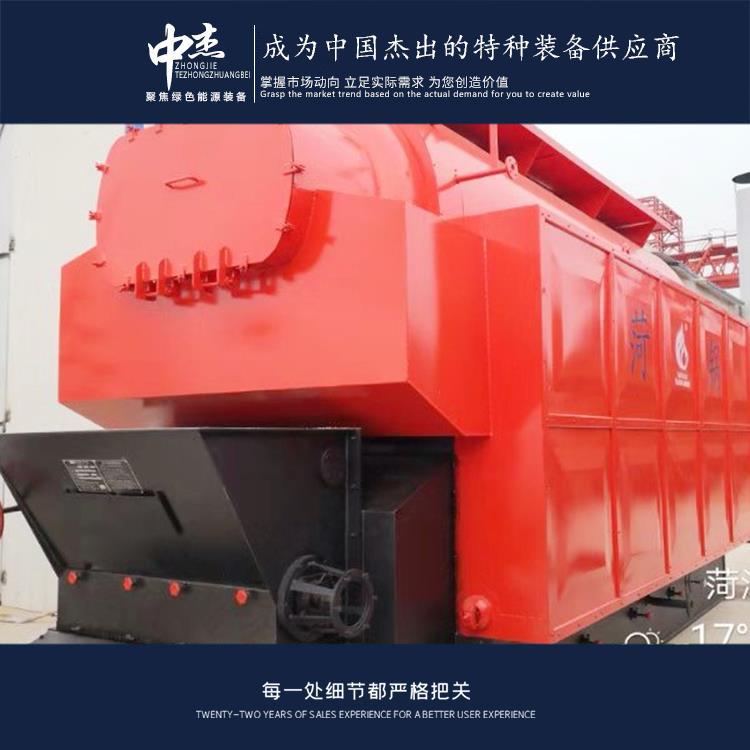
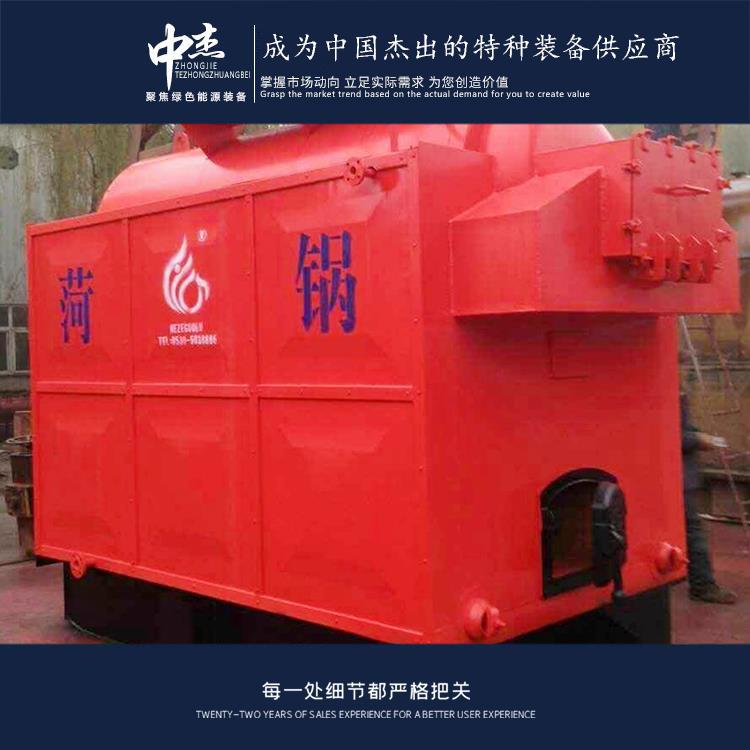
Chao Lake 30-ton biomass boiler - Reliable Choice
