


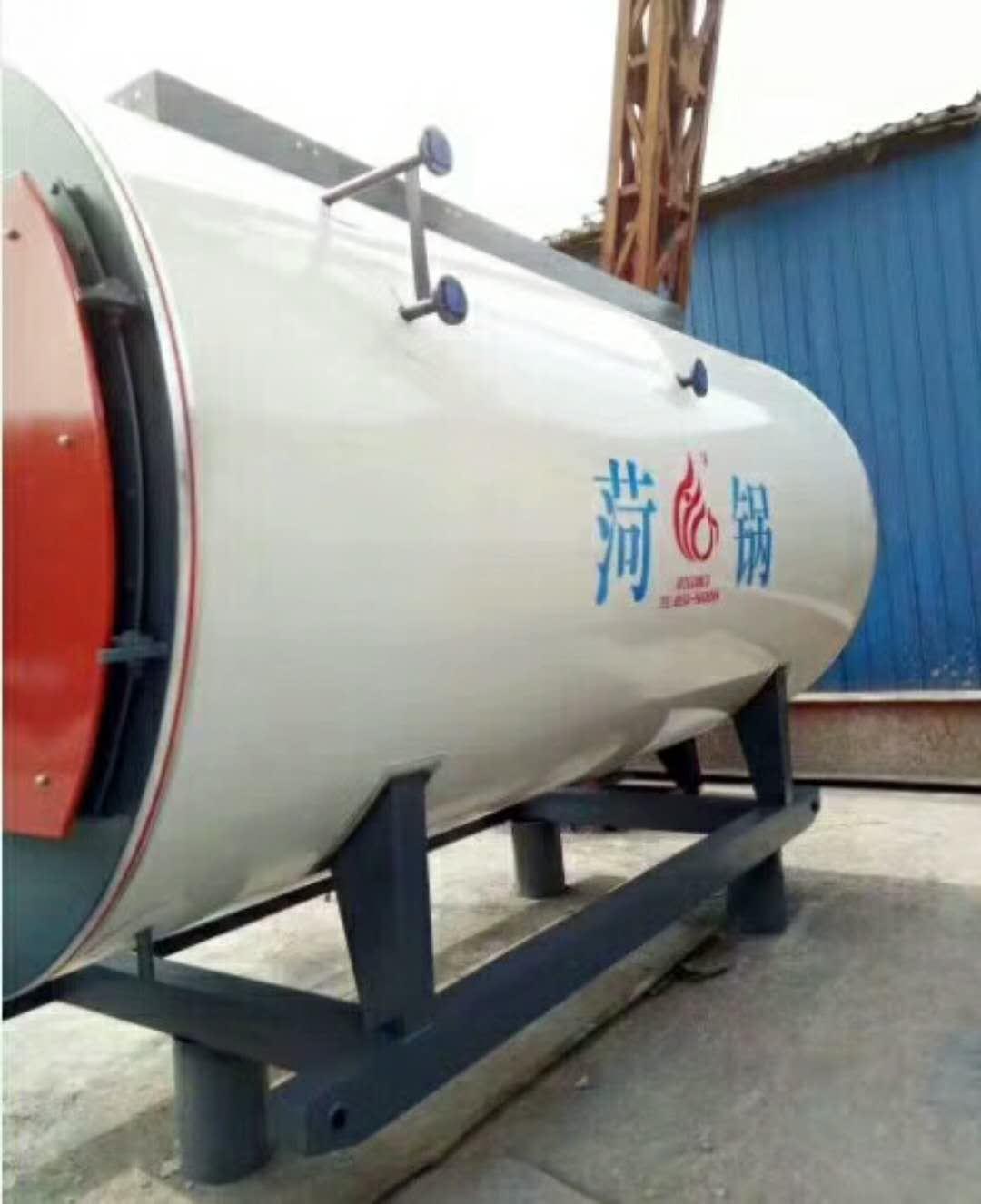

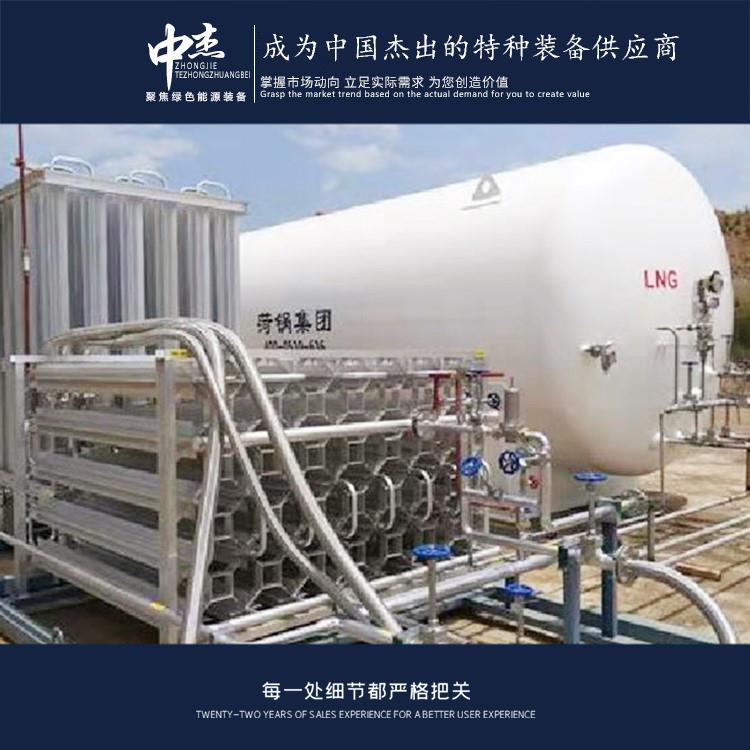
Shandong Zhongjie Special Equipment's main products include: fuel (gas) boilers, organic heat carrier boilers, biomass boilers, waste heat boilers, and other boiler products; vacuum insulation cryogenic pressure vessels such as LNG storage tanks, oxygen-nitrogen-argon storage tanks, CO2 storage tanks; pressure vessel products such as denitrification engineering equipment, heat storage and energy storage equipment, complete chemical equipment sets; central air conditioning and HVAC equipment such as ground (water) source heat pumps, air source units, water-cooled screw units, and air-cooled modular units. Planned products include large-scale energy centers, LNG transport vehicles, LNG tank containers, and other green energy equipment.
Liquid Oxygen Low-Temperature Storage Tanks are primarily used for storing and supplying liquid oxygen, with their application methods varying based on specific requirements and scenarios. Here are some common applications of liquid oxygen low-temperature storage tanks:
Applications: Liquid Oxygen Low-Temperature Storage Tanks are widely used in the field for cryogenic preservation of biological samples, cells, tissues, and vaccines. Institutions such as biopharmaceutical research organizations and biobanks utilize liquid oxygen low-temperature storage tanks to store and protect these biological materials.
Experimental Research: Liquid Oxygen Low-Temperature Storage Tanks are used to provide low-temperature environments in scientific research and laboratories, for cryogenic preservation and experiments. These tanks play a crucial role in experimental research across various fields, including physics, chemistry, biology, and materials science.
Industrial Applications: Liquid oxygen low-temperature storage tanks are used in industrial fields for providing low-temperature cooling, such as in metal processing, welding, and heat treatment processes. These tanks can achieve low temperatures, enabling metals to reach the required hardness and toughness during processing.
Food Industry: Liquid Oxygen Low-Temperature Storage Tanks are used in the food industry for freezing and refrigerating products such as frozen meats, frozen fruits, and frozen seafood. The low temperature of liquid oxygen rapidly freezes the food, preserving its freshness and quality.
Liquid oxygen cryogenic storage tanks are used in the field for storing and supplying liquid oxygen as fuel. Liquid oxygen, as a high-energy fuel, is widely used in the propulsion systems of engines and vessels.
During the operation of liquid oxygen low-temperature storage tanks, strict adherence to relevant safety regulations and operational guidelines is required to ensure the safe operation and use of the tanks. Liquid oxygen is highly flammable, so fire prevention measures must be taken when using liquid oxygen low-temperature storage tanks, and it must be ensured that there are no ignition sources in the vicinity of the tank.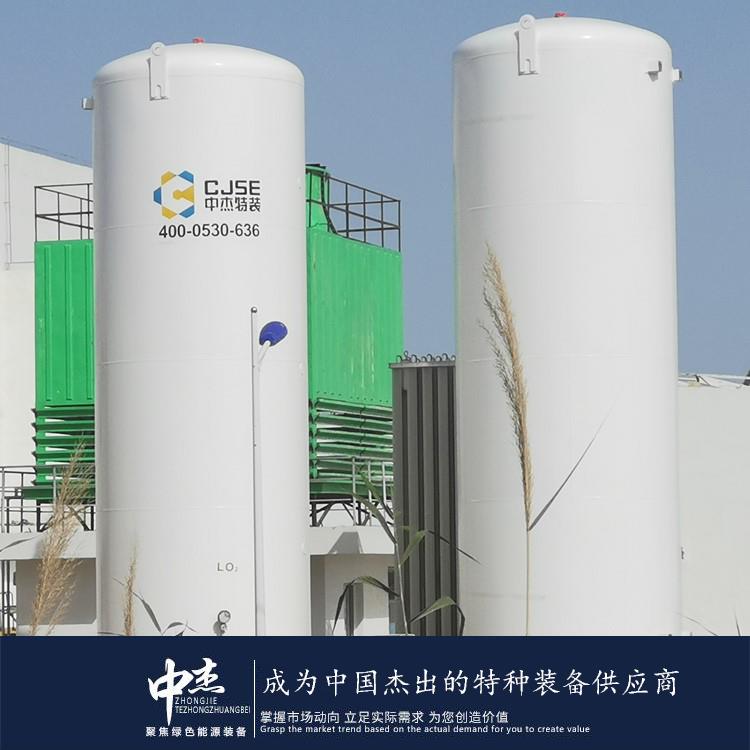
The safety distance between liquid oxygen storage tanks and buildings is typically governed by relevant safety standards and regulations to ensure the safe distance and fire separation between the tank and the building. The following is a reference for the general safety distance between liquid oxygen storage tanks and buildings:
Horizontal spacing: The horizontal spacing between the liquid oxygen storage tank and the building is generally required to maintain a certain distance to prevent the tank from causing danger to the building in case of leakage or accidents. The specific spacing should be determined based on factors such as the tank's capacity, pressure, and the nature of the building, with a recommended general safety distance.
Vertical spacing: The vertical spacing between the liquid oxygen storage tank and the building must also comply with relevant safety requirements. This is to prevent the tank from causing danger to the building in case of leakage or accidents. Specific spacing requirements will be determined based on factors such as the tank's capacity, pressure, and the height of the building, with a general recommendation to maintain a certain safety distance.
Fire Protection Distance: Liquid oxygen has a high oxygen content and flammability, and in the event of a leak or accident, it may cause a fire. Therefore, a certain fire protection distance must be maintained between liquid oxygen storage tanks and buildings to ensure that the fire does not spread or pose a danger to the structures. Specific fire protection distance requirements:
The temperature difference between the interior and exterior of a low-temperature liquid storage tank depends on various factors, including the tank's design, insulation performance, the temperature of the liquid, and the temperature of the external environment. Generally speaking, the temperature inside a low-temperature liquid storage tank is much lower than that of the external environment.
Low-temperature liquid storage tanks are commonly used for storing cryogenic liquids such as liquid nitrogen, liquid oxygen, and liquid argon. These liquids have very low boiling points, typically below -100 degrees Celsius. To maintain the低温 state of the liquids, the storage tanks must have excellent insulation properties to minimize heat transfer and evaporation loss.
Low-temperature liquid storage tanks typically offer lower temperature variations. Generally, the internal temperature of the tank can be maintained near the boiling point of the liquid, usually several dozen degrees cooler than the external environment. The specific temperature difference depends on the tank's design and insulation properties, as well as the characteristics of the liquid.
Note that the temperature differences in low-temperature liquid storage tanks may change over time. As time progresses, the performance of the insulation material may be affected by wear or aging, leading to an increase in temperature differences. Therefore, regular inspection and maintenance of the tank's insulation layer are crucial to ensure its effective and stable insulating performance.
Liquid Oxygen Storage Tanks are equipment used for storing and supplying liquid oxygen. Liquid oxygen is the state of oxygen cooled below its boiling point, converting it into a liquid form. Liquid oxygen storage tanks are typically designed with double or multi-layer structures, filled with insulating material in between to minimize heat transfer and the evaporation of liquid oxygen.
Liquid Oxygen Storage Tanks Feature the Following:
High Purity: The liquid oxygen storage tank contains high purity liquid oxygen, typically exceeding 99.5% purity. This makes the liquid oxygen tank essential for applications requiring high purity oxygen, such as medical, aerospace, and research fields.
Low Temperature: As the boiling point of liquid oxygen is -183°C, liquid oxygen storage tanks must have excellent insulation to maintain the low temperature state of the liquid oxygen. Tanks are typically designed with double or multi-layer structures, filled with insulating material in between to reduce heat transfer and the evaporation of liquid oxygen.
High Pressure: Liquid oxygen tanks typically need to withstand high pressure to maintain their liquid state. The design and material selection of the tank must consider the pressure requirements of liquid oxygen to ensure the tank's safety and reliability.
Flammability: Liquid oxygen is highly flammable and can support combustion. Therefore, during the design and use of liquid oxygen storage tanks, fire prevention measures must be implemented to ensure there are no ignition sources nearby, and appropriate fire extinguishing equipment is provided.
High Density: Liquid oxygen has a higher density, allowing liquid oxygen tanks to store more oxygen compared to gas oxygen. This gives liquid oxygen tanks an advantage in applications requiring large oxygen supplies, such as in the field.
The use of liquid oxygen tanks must strictly adhere to relevant safety regulations and operational guidelines to ensure the safe operation and usage of the tanks.
Shandong Zhongjie Special Equipment, welcome customers to our factory for business discussions.
Enshi Liquid Oxygen Storage Tank - Customizable
