




Shandong Zhongjie Special Equipment (formerly Heze Boiler Factory Co., Ltd.) was established in 2001, located at No. 2218 Jinnan Road, Development Zone, Heze City, with a registered capital of 50 million yuan and total assets of 500 million yuan. The company has 7 business centers: boilers, deep-freeze containers, pressure vessels, central air conditioning, engineering installation, international trade, and Internet of Things. It has three factory sites on Jinnan Road, East Changjiang Road, and Bohai Road, covering a total area of 200,000 square meters, with the main workshop spanning 83,000 square meters. It currently employs 710 people, including 247 engineers and technicians, and 82 intermediate-level technicians. In December 2016, it was recognized as a "High-tech Enterprise" by the Science and Technology Department. In June 2021, it was identified as a "Specialized and New Enterprise in Shandong Province" by the Ministry of Industry and Information Technology. In June 2022, it was recognized as a "Gazelle Enterprise in Shandong Province" and in August 2022, it was identified as a "Specialized and New Small Giant Enterprise" by the Ministry of Industry and Information Technology.
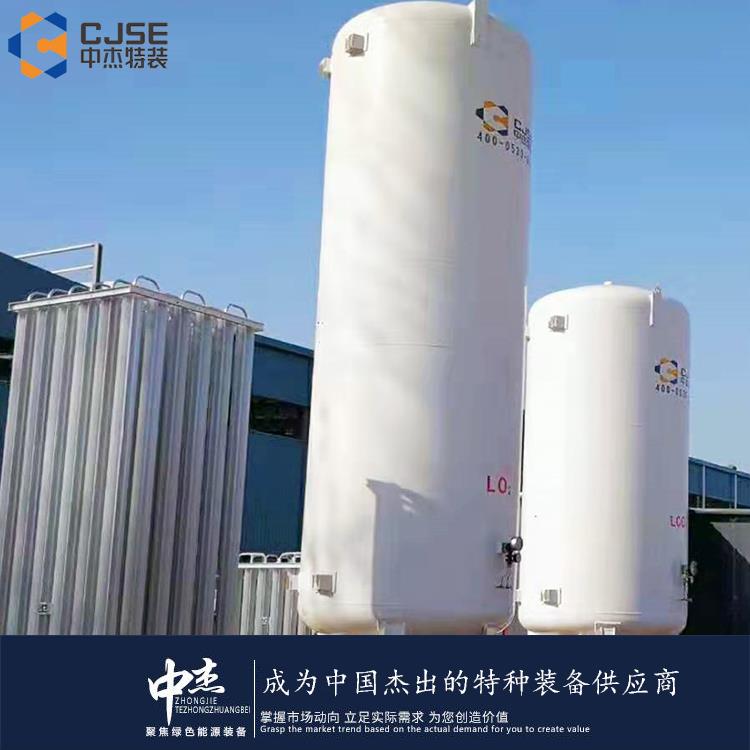
Liquid oxygen low-temperature storage tanks are primarily used for storing and supplying liquid oxygen, and their application methods can vary depending on specific needs and scenarios. Here are some common applications of liquid oxygen low-temperature storage tanks:
Applications: Liquid Oxygen Low-Temperature Storage Tanks are widely used in the field for cryogenic preservation of biological samples, cells, tissues, and vaccines. Institutions such as biopharmaceutical research organizations and biobanks utilize these tanks to store and protect these biological materials.
Experimental Research: Liquid Oxygen Low-Temperature Storage Tanks are used to provide low-temperature environments in scientific research and laboratories, for cryogenic preservation and experiments. These tanks play a crucial role in experimental research across various fields, including physics, chemistry, biology, and materials science.
Industrial Applications: Liquid Oxygen Low-Temperature Storage Tanks are used in industrial fields for low-temperature cooling, serving processes such as metalworking, welding, and heat treatment. These tanks provide low temperatures to achieve the required hardness and toughness of metals during processing.
The food industry: Liquid Oxygen Low-Temperature Storage Tanks are used in the food industry for freezing and refrigerating foods such as frozen meats, fruits, and seafood. The low temperature of liquid oxygen can quickly freeze the food, preserving its freshness and quality.
Liquid oxygen low-temperature storage tanks are used in the field for storing and supplying liquid oxygen as fuel. Liquid oxygen, as a high-energy fuel, is widely used in the propulsion systems of engines and devices.
During the operation of liquid oxygen low-temperature storage tanks, it is crucial to strictly adhere to relevant safety regulations and operating guidelines to ensure the safe operation and use of the tanks. Liquid oxygen is highly flammable, so fire prevention measures must be taken when using liquid oxygen low-temperature storage tanks, and it must be ensured that there are no sources of fire around the tanks.
The use and operation of liquid oxygen storage tank systems require attention to the following points:
Safe Operation: When operating the liquid oxygen storage tank system, it is mandatory to adhere to relevant safety operation procedures and standards to ensure the safety of operators.
Tank Selection: Choose liquid oxygen tanks that comply with regulations and standards, ensuring their quality and safety performance.
Tanks Installation: Tanks should be installed on a solid foundation to ensure stability. Additionally, good ventilation should be maintained around the tanks and they should be kept away from flammable materials and heat sources.
Seal Integrity Check: Regularly inspect the tank system's sealing performance to ensure there are no leakage at valve and pipeline joints.
Pressure Control: The storage tank system should be equipped with a pressure gauge and a safety valve, with regular inspections and maintenance to ensure pressure remains within a safe range.
Fire Prevention Measures: Liquid oxygen contains a high oxygen content and is highly flammable. Set up fire barriers around the storage tank system, ban smoking and open flames, and ensure safety.
Static Dissipation: During the operation of the liquid oxygen system, static electricity can cause sparks, increasing the risk of fire. Measures such as using static-conductive materials and anti-static equipment should be taken to reduce the accumulation and release of static electricity.
Regular Inspections and Maintenance: Conduct regular checks on the tank system and associated equipment, including valves, pipes, pressure gauges, etc. Ensure that equipment is in perfect condition, and promptly repair or replace any damaged parts.
Waste Gas Treatment: During the operation of the liquid oxygen system, waste gases are produced, which necessitate appropriate waste gas treatment measures to minimize environmental impact.
Above are the precautions to be taken when using the liquid oxygen storage tank system, ensuring safe operation and normal system functionality. During operation, strict adherence to relevant operational procedures and safety requirements is mandatory to prevent accidents.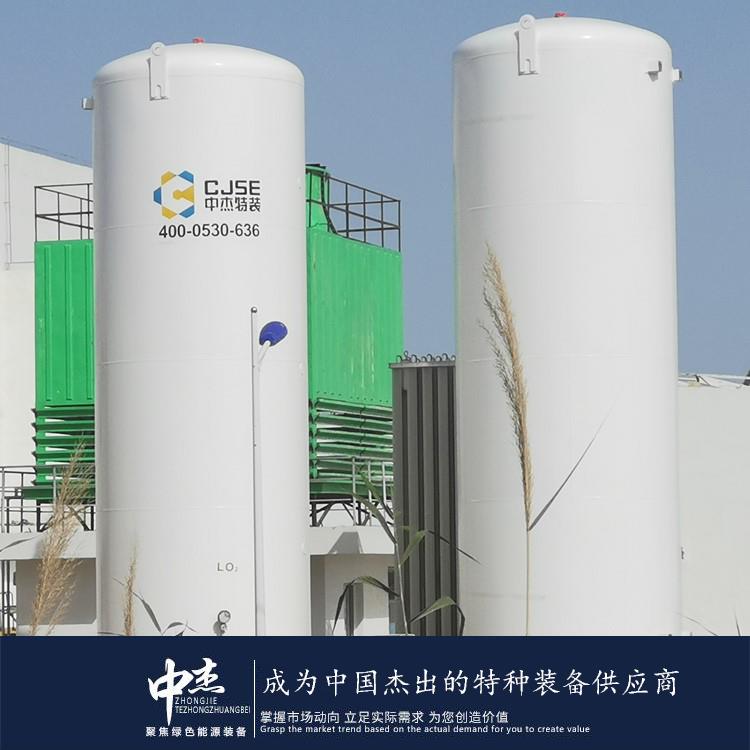
When selecting low-temperature liquefied natural gas (LNG) storage tanks, the following factors should be considered:
Tank Types: Common LNG tank types include vertical fixed-roof tanks, spherical tanks, and horizontal tanks. Choose the appropriate tank type based on specific application requirements and site conditions.
Tank Capacity: Determine the tank capacity based on the storage requirements and anticipated usage of LNG. The tank capacity should be sufficient to meet the expected storage duration and supply needs.
Material Selection: LNG tanks commonly use low-temperature steel or nickel alloy materials to ensure corrosion resistance and strength in low-temperature environments. Select appropriate materials based on the tank's design pressure and temperature requirements.
Safety Performance: LNG tanks should possess excellent safety performance, including seismic resistance, fire resistance, and leakage control capabilities. The tanks must comply with relevant safety standards and specifications, such as API 620, EN 1473, etc.
Maintenance and Inspection: Consider the maintenance and inspection requirements of the tank, including internal cleaning, coating protection, and corrosion prevention measures. The tank design should facilitate maintenance and inspection operations to ensure long-term reliable operation.
Environmental Impact: When selecting LNG tanks, consider their impact on the surrounding environment. The layout and design of the tanks should comply with environmental protection requirements, minimizing noise, vibration, and gas emissions, etc.
Cost-effectiveness: Consider the investment, operational, and lifecycle costs of the tank to select one with a favorable cost-performance ratio.
需要注意的是,选型LNG储罐时应遵循相关的和地区的法规、标准和规范。此外,咨询的工程师或储罐制造商,以获取更详细和准确的选型建议。
Nitrogen purge in liquid nitrogen tanks refers to the injection of nitrogen gas into the tank to increase the nitrogen concentration and pressure inside, in order to meet certain safety requirements and operational objectives. Here are some precautions to consider when performing nitrogen purge in liquid nitrogen tanks:
Safe Operation: Prior to conducting nitrogen charging operations on liquid nitrogen tanks, it is mandatory that operators possess relevant safety knowledge and skills. Operators should wear appropriate personal protective equipment, such as safety goggles, gloves, and protective clothing.
Nitrogen Quality: Utilize high-purity nitrogen for inerting operations to ensure the quality and purity of the nitrogen. Low-purity nitrogen may contain impurities or oxygen, which could adversely affect the liquid nitrogen within the storage tank.
Nitrogen purge speed control: During the nitrogen purge process, the speed of nitrogen purge should be controlled to avoid being too fast or too slow. Too fast a nitrogen purge speed may cause excessive internal pressure in the tank, while too slow a speed may result in extended purge time.
Pressure Monitoring: During the nitrogen charging process, regular monitoring of the internal pressure changes within the storage tank is required. Ensure that the internal pressure of the tank remains within the safe range and adjust as necessary.
Temperature Control: During the nitrogen flushing process, attention should be given to controlling the tank's temperature. The low temperature of liquid nitrogen can lead to condensation and dew on the tank and pipes. Appropriate measures, such as heating or insulation, should be taken to prevent condensation and dew.
Post-nitrogen flushing treatment: After the nitrogen flushing operation is completed, the flushing device should be promptly shut off, and the tank should be inspected and cleaned. Ensure there is no residual nitrogen or impurities inside the tank.
Note: Nitrogen charging operations for liquid nitrogen tanks must be strictly adhered to the relevant safety standards.
Our company attaches great importance to technological innovation and R&D design, boasting one municipal-level enterprise technology center in Heze City. We have established testing facilities for non-destructive testing, physical and chemical testing, welding testing, hydrostatic testing, and more. We are equipped with over 600 pieces of various instruments and equipment, including CNC machine tools, X-ray flaw detectors, digital ultrasonic flaw detectors, mechanical property testing machines, chemical analyzers, spectrometers, tensile testing machines, plasma welding machines, and more. The key products and technologies we have developed, such as temperature and pressure vessel welding, biomass boiler emission reduction, and waste heat utilization, have successively been shortlisted for multiple Shandong Provincial Department of Industry and Information Technology science and technology projects, Shandong Provincial key projects, and Heze City innovative and excellent projects. We have cumulatively obtained 27 authorized utility model patents, 16 authorized invention patents, participated in drafting 2 standards, 2 industry standards, and registered 15 trademarks. Our technical team, in collaboration with Professor Yajiang Li from Shandong University, has developed deep cryogenic vessel processing technology using the internationally recognized plasma arc + wire filling tungsten inert gas arc welding (PAW-GTAW) technology. After being appraised as a provincial-level scientific and technological achievement, our technology level has reached international standards in the field of deep cryogenic vessel manufacturing. Choose ZJ Special Equipment, and let's create brilliance together!
Meishan Argon Gas Storage Tank - Comprehensive After-Sales Service
