




Shandong Zhongjie Special Equipment (formerly Heze Boiler Factory Co., Ltd.) holds an A-grade boiler manufacturing license, an A2-grade pressure vessel manufacturing license, an A2-grade pressure vessel design license, a B-grade boiler installation license, and GB2/Class and GC2/Class pressure pipeline installation licenses, as well as an electromechanical equipment installation contracting license. It is a member of the China Boiler and Water Treatment Association, the China Chemical Equipment Association, and the理事 unit of the Shandong Equipment Manufacturing Association. The company has also passed the ISO9001 Quality Management System, ISO14001 Environmental Management System, OHSAS18001 Occupational Health and Safety Management System certifications, and the American ASME/U2 certification.
Biomass boilers and coal-fired boilers differ in terms of fuel, environmental performance, and sustainability.
Fuel Type: Biomass boilers utilize renewable biomass fuels such as wood chips and straw, whereas coal-fired boilers use fossil fuels like coal. Biomass fuels are renewable and low-carbon, while coal is a finite resource and its combustion produces a large amount of carbon dioxide and other pollutants.
Environmental Performance: Biomass boiler combustion results in relatively low emissions of pollutants, such as carbon dioxide, nitrogen oxides, and particulates. In contrast, coal-fired boilers emit a higher amount of pollutants, including nitrogen oxides, particulates, and heavy metals, which have a significant impact on air quality and human health.
Sustainability: Biomass fuel is a renewable resource that can be cultivated and recycled within a regenerative cycle, offering good sustainability. Coal, on the other hand, is a finite resource, and mining and burning it can damage the environment.
Combustion Efficiency: The combustion efficiency of biomass boilers is relatively low due to the complex chemical and physical properties of biomass fuel, which tend to produce more ash and carbon deposits during combustion. In contrast, coal-fired boilers have a higher combustion efficiency, as the chemical properties of coal fuel are more stable, resulting in a more complete combustion process.
Technical Specifications: Biomass boiler compared to coal-fired boiler
The YGL series organic heat carrier boiler is a boiler equipment that utilizes organic heat carriers to transfer heat energy. Its main components and features are as follows:
Composition:
Furnace Body: The furnace body is the main component of the organic heat carrier furnace, including the furnace chamber, combustion chamber, and flue, etc. Made of steel, it boasts excellent high-temperature resistance properties.
Combustion System: The combustion system consists of burners, combustion fans, and combustion control systems, etc. The burners are responsible for injecting fuel into the furnace for combustion. The combustion fans supply the oxygen required for combustion, while the combustion control system achieves automatic control of the combustion process.
Heat Exchange System: The heat exchange system includes a heat carrier circulating pump, a heat carrier heater, and a heat carrier cooler, etc. The heat carrier circulating pump is responsible for circulating the heat carrier to the heater, where it is heated before returning to the furnace to transfer heat energy. The heat carrier cooler is used to cool the heat carrier to ensure the stability of the heat carrier circulation.
Control System: The control system includes temperature controllers, pressure controllers, and safety protection devices. The temperature controller is used for monitoring and regulating the furnace temperature, the pressure controller is for monitoring and regulating the pressure of the heat carrier, and the safety protection device ensures the safe operation of the furnace and the heat exchange system.
Features:
High Heat Efficiency: The YGL series organic heat carrier boiler utilizes organic heat carrier as the heat transfer medium, offering high heat transfer efficiency. The organic heat carrier can achieve liquid phase heat transfer at low temperatures, resulting in minimal heat loss and allowing for more efficient fuel utilization.
Current biomass boilers encounter the following issues in practical application:
Fuel supply instability: The supply of biomass fuel is subject to seasonal and regional limitations, leading to unstable fuel supply for biomass boilers. This may result in the inability of biomass boilers to operate continuously or the need for frequent fuel switching, which increases operating costs and management difficulties.
Low combustion efficiency: Due to the characteristics of biomass fuel and the complexity of the combustion process, the combustion efficiency of biomass boilers is relatively low. Some fuels have high volatile and ash content, which may result in excessive ash and particulate matter during combustion, reducing combustion efficiency and heat energy utilization.
NOx Emission Issue: Biomass boilers produce a high amount of nitrogen oxides (NOx) during the combustion process, which has a certain impact on the environment. Controlling and reducing NOx emissions is an important issue for biomass boilers.
Combustion Equipment Wear: The high ash content in biomass fuel leads to wear and clogging of the combustion equipment during the burning process. This may shorten the lifespan of the equipment, necessitating frequent maintenance and cleaning.
Ash residue from combustion: Ash residue from biomass boiler combustion requires proper handling and disposal. Improper treatment may lead to environmental pollution and hazards.
Lack of unified technical standards and specifications: Currently, there is no unified standard for biomass boiler technology.
Yes, biomass hot water boilers hold significant implications for energy conservation and emission reduction. Here are some related implications and advantages:
Energy-saving: Biomass hot water boilers burn renewable biomass fuel, offering higher energy utilization efficiency compared to traditional coal boilers. The heat generated during the combustion of biomass fuel can be more fully utilized, reducing energy waste, and achieving energy-saving effects.
Emission Reduction: Biomass hot water boilers emit relatively fewer pollutants during the combustion process, such as carbon dioxide, nitrogen oxides, and particulates. Compared to coal-fired boilers, biomass hot water boilers can significantly reduce greenhouse gas emissions and air pollutant releases, which is of great importance for improving atmospheric environmental quality.
Sustainability: Biomass fuel is a renewable resource that can be grown and recycled through regenerative cycles. Compared to finite coal resources, the sustainability of biomass fuel can meet long-term energy demands.
Supporting Rural Development: The use of biomass hot water boilers can promote the comprehensive utilization of agricultural and forestry waste such as crop straw and wood chips in rural areas. This not only reduces the open burning of crop straw, decreases environmental pollution, but also provides farmers with an additional source of income, fostering rural economic development.
In summary, the energy conservation and emission reduction significance of biomass hot water boilers is substantial. Not only do they reduce energy consumption and pollutant emissions, but they also promote sustainable development and the prosperity of rural economies.
Our company attaches great importance to technological innovation and research and development, boasting one municipal-level enterprise technology center in Heze City. We have established testing facilities for non-destructive testing, physical and chemical testing, welding testing, hydrostatic testing, etc., and are equipped with over 600 various instruments and equipment, including CNC machine tools, X-ray flaw detectors, digital ultrasonic flaw detectors, mechanical property testing machines, chemical analyzers, spectrometers, tensile testing machines, plasma welding machines, and more. The key products and technologies we have developed, such as welding of temperature and pressure vessels, emissions reduction of biomass boilers, and waste heat utilization, have successively been shortlisted for multiple Shandong Provincial Department of Industry and Information Technology science and technology innovation projects, key projects in Shandong Province, and Heze City innovation and excellence projects. We have cumulatively obtained 27 authorized utility models, 16 authorized inventions, participated in drafting 2 standards, 2 industry standards, and registered 15 trademarks. The technical team of our company, in collaboration with Professor Yajiang Li of Shandong University, has developed deep cryogenic container processing technology using the internationally recognized plasma arc + wire filling argon arc welding (PAW-GTAW) technology. After provincial-level scientific and technological achievement evaluation, the technological level has reached an international standard in the field of deep cryogenic container manufacturing. Choose Zhongjie Special Equipment, and let's create brilliance together!
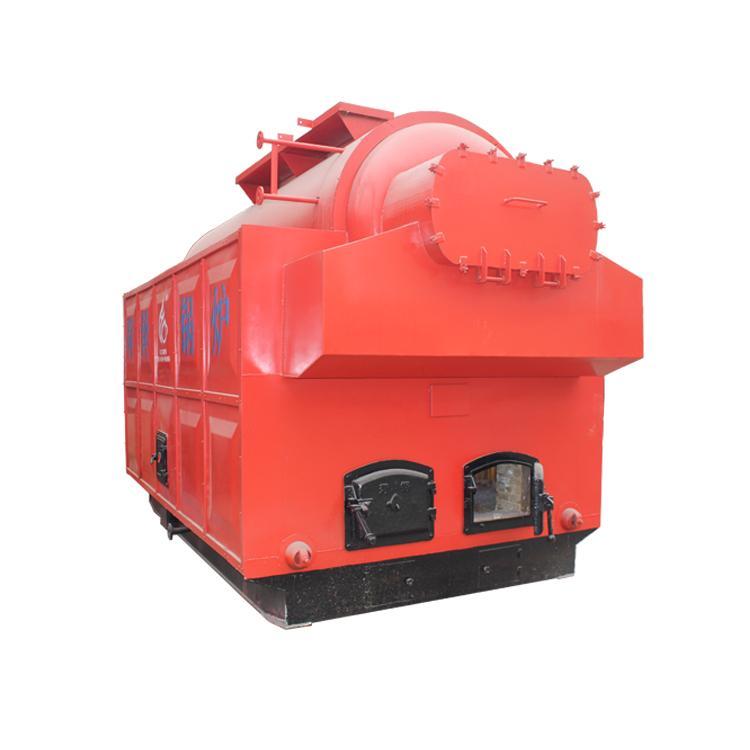
Tianmen 4-ton Biomass Boiler, Genuine Manufacturer
