


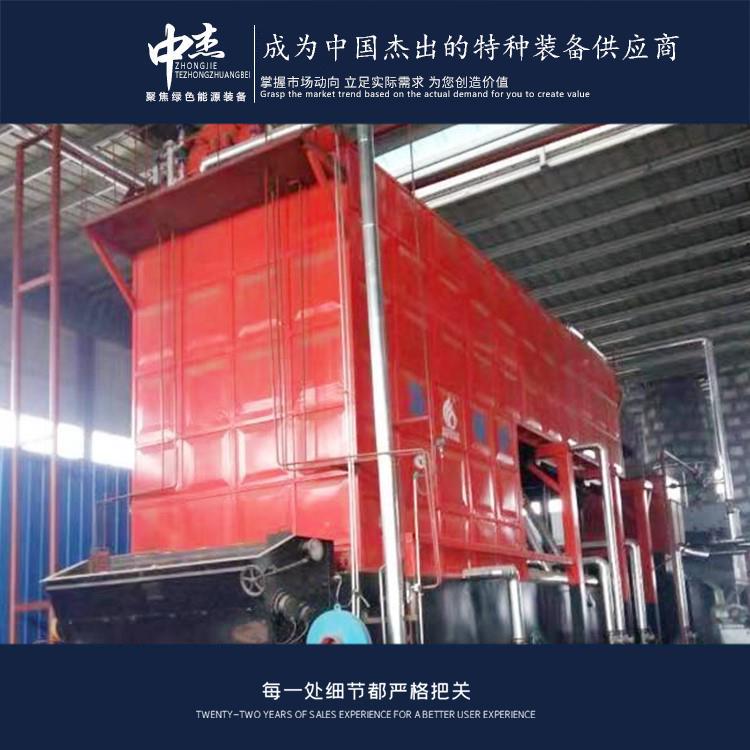


Shandong Zhongjie Special Equipment Co., Ltd. (formerly Heze Boiler Factory Co., Ltd.) was established in 2001, located at No. 2218 Jinan Road, Economic and Technological Development Zone, Heze City. With a registered capital of 50 million yuan and total assets of 500 million yuan, the company operates 7 major business centers: boilers, deep-freezing vessels, pressure vessels, central air conditioning, engineering installation, international trade, and Internet of Things. It has three factory sites on Jinan Road, East Yangtze Road, and Bohai Road, covering a total area of 200,000 square meters, with the main workshop spanning 83,000 square meters. The company currently employs 710 staff, including 247 engineering technicians and 82 middle-level technicians. Recognized as a "High-tech Enterprise" by the Science and Technology Department in December 2016, it was named a "Specialized and New Enterprise in Shandong Province" by the Industry and Information Technology Department in June 2021, a "Gazelle Enterprise in Shandong Province" in June 2022, and a "Specialized and New Small Giant Enterprise" by the Ministry of Industry and Information Technology in August 2022.
Biomass boilers offer the following advantages:
Renewable Energy: Biomass boilers utilize biomass fuels such as wood chips and straw, which are renewable and can be obtained through planting and regeneration cycles. These fuels have a lower carbon footprint compared to fossil fuels.
Environmental Protection and Low Carbon: The carbon dioxide produced during biomass combustion can be absorbed by plants, forming a cycle that reduces the burden on the atmosphere. Additionally, emissions and pollutants during biomass combustion are relatively low, causing minimal environmental impact.
Resource-rich: Biomass fuel sources are diverse, including crop straw, forest residues, and industrial by-products, with relatively abundant resources and a low risk of depletion.
High thermal efficiency: The biomass boiler's combustion technology and heat recovery system enable high thermal energy conversion and utilization, enhancing energy efficiency.
Versatility: Biomass boilers are not only used for heating but also for hot water supply and various industrial heating applications.
However, biomass boilers also have some drawbacks:
Fuel supply is unstable: The supply of biomass fuel is affected by factors such as seasons, regions, and crop yields, which may lead to supply instability.
Particulate matter produced by combustion: A certain amount of particulate matter is generated during biomass combustion, which can affect air quality. It requires treatment through flue gas purification equipment.
Fuel processing and storage costs: Biomass fuels require pretreatment, drying, and storage, which may add cost and complexity.
High technical requirements: Biomass pot
Yes, the biomass boiler market is expected to continue expanding. The following are some factors driving the growth of the biomass boiler market:
Rising Demand for Renewable Energy: As the demand for renewable energy continues to grow, biomass, as a renewable energy source, has a broad application prospect. Government and corporate support and promotion of renewable energy will drive the expansion of the biomass boiler market.
Increased environmental awareness: Biomass boilers have lower carbon emissions and environmental impact compared to traditional fossil fuel boilers. As environmental awareness grows, an increasing number of users are opting for biomass boilers to reduce environmental impact.
Policy Support: Many regions have implemented policies and measures to support the development of renewable energy, including tax incentives and energy regulations. These policies will drive the growth of the biomass boiler market.
Energy Security Needs: Biomass, as a domestic renewable energy source, can reduce dependence on imported energy and enhance energy security. In areas with scarce resources, the demand for biomass boilers will be more pronounced.
Technological advancement and cost reduction: With continuous technological progress and cost reductions, biomass boiler performance and efficiency have been enhanced, making them more competitive and viable.
In summary, the biomass boiler market is expected to expand continuously, driven by factors such as the increasing demand for renewable energy, rising environmental awareness, policy support, energy security needs, and technological advancements and cost reductions.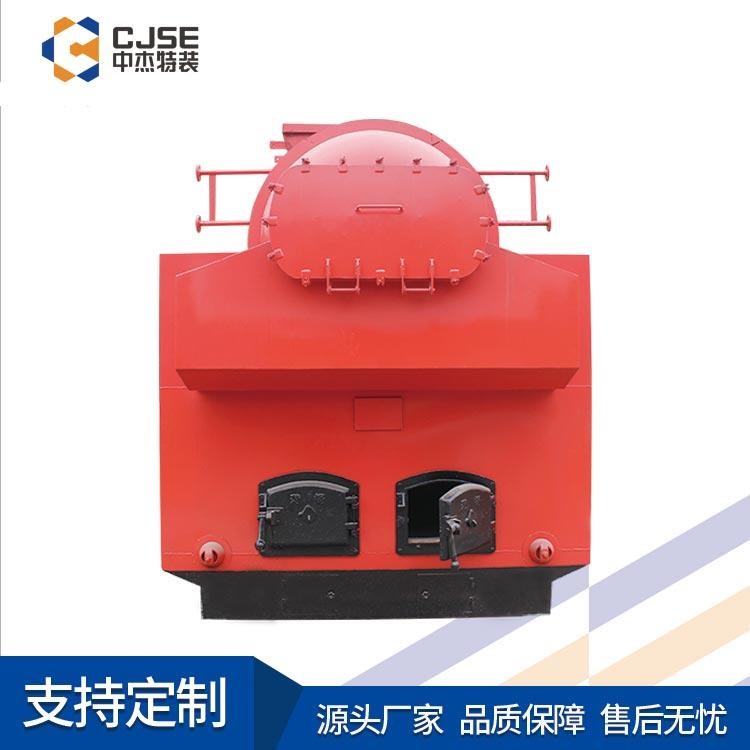
Biomass refers to renewable energy derived from organic matter such as plants, animals, and microorganisms. It includes wood, straw, waste crops, food scraps, and municipal solid waste, among others. Biomass has a wide range of sources and types and is a renewable energy that can substitute for fossil fuels.
A biomass boiler is a specialized equipment designed for burning biomass fuel. It combusts biomass fuel to produce high-temperature, high-pressure thermal energy, which is used for heating, power generation, or other industrial processes. Biomass boilers typically use granular, pelletized, or chipped biomass fuel, releasing thermal energy through the combustion process.
The advantages of biomass boilers include:
Renewable Energy: Biomass is a renewable energy source with lower carbon emissions and environmental impact compared to fossil fuels.
Diversity: Biomass fuel comes in various types, utilizing plant and animal waste and by-products to enhance resource utilization efficiency.
Environmental Friendliness: The carbon dioxide produced during biomass combustion can be absorbed by plants, forming a cycle that reduces air pollution.
Economic Efficiency: Biomass fuel is relatively cost-effective, can
Adjusting the combustion of biomass boilers can be done through the following steps:
Establish combustion parameters: Determine appropriate combustion parameters based on the biomass boiler's design and fuel characteristics, including combustion temperature, oxygen supply, and fuel supply rate.
Adjust combustion temperature: Adjust the combustion temperature based on the fuel characteristics and combustion requirements. Excessive combustion temperature may lead to overburning of the fuel and energy waste, while insufficient combustion temperature may result in incomplete combustion and increased emissions.
Control Oxygen Supply: Adjust the oxygen supply based on the oxygen content during the combustion process. Excessive oxygen supply may result in incomplete fuel combustion and energy waste, while insufficient oxygen supply may lead to incomplete combustion and increased emissions.
Adjust fuel supply rate: Adjust the fuel supply rate based on thermal load and fuel characteristics. Excessive fuel supply rate may lead to overburning and energy waste, while an insufficient fuel supply rate may result in incomplete combustion and inadequate heating.
Monitoring and Adjustment: By monitoring critical parameters during the combustion process, such as combustion temperature, oxygen content, and flue gas composition, adjust combustion parameters in a timely manner to ensure stability and efficiency.
Be mindful that adjusting the combustion of biomass boilers requires consideration of the specific kettle
Our company attaches great importance to technological innovation and research and development, boasting one municipal-level enterprise technology center in Heze City. We have established testing facilities for non-destructive testing, physical and chemical testing, welding testing, hydrostatic testing, etc., and are equipped with over 600 types of instruments and equipment including CNC machine tools, X-ray flaw detectors, digital ultrasonic flaw detectors, mechanical property testing machines, chemical analyzers, spectrometers, tensile testing machines, plasma welding machines, and more. The key products and technologies we have developed, such as temperature and pressure vessel welding, biomass boiler emission reduction, and waste heat utilization, have successively been selected for multiple Shandong Provincial Department of Industry and Information Technology science and technology innovation projects, Shandong Provincial key projects, and Heze City innovative and excellent projects. We have accumulated a total of 27 authorized utility models, 16 authorized inventions, participated in drafting 2 standards, 2 industry standards, and registered 15 trademarks. The technical team of our company, in collaboration with Professor Yajiang Li of Shandong University, has jointly developed deep cryogenic container processing technology, utilizing the international plasma arc + filler wire tungsten inert gas arc welding (PAW-GTAW) technology. After being appraised as a provincial-level scientific and technological achievement, our technology level has reached an international standard in the field of deep cryogenic container manufacturing. Choose Zhongjie Special Equipment, and let's create brilliance together!
Jilin Biomass Boiler Prices, Available for Custom Orders
