


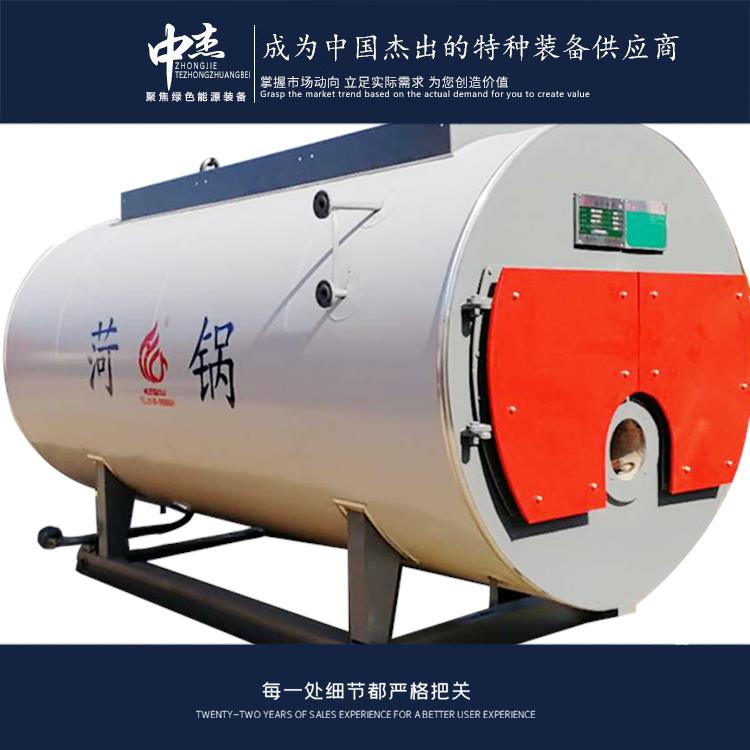
Shandong Zhongjie Special Equipment (formerly Heze Boiler Factory Co., Ltd.) holds an A-grade boiler manufacturing license, an A2-grade pressure vessel manufacturing license, an A2-grade pressure vessel design license, a B-grade boiler installation license, and GB2/GC2-grade pressure pipeline installation licenses, as well as an equipment and machinery installation contracting qualification. It is a member of the China Boiler and Water Treatment Association, the China Chemical Equipment Association, and a director unit of the Shandong Equipment Manufacturing Association. The company has also passed the ISO9001 Quality Management System, ISO14001 Environmental Management System, OHSAS18001 Occupational Health and Safety Management System certifications, and the American ASME/U2 certification.
Properly utilizing fuel-gas boilers can enhance energy efficiency and reduce consumption. Here are some suggestions:
1. Select the right boiler model: Choose a suitable fuel-gas boiler model based on actual needs, considering factors like heat load, fuel type, and combustion efficiency.
2. Regular inspection and maintenance: Conduct regular checks and maintenance to ensure the boiler operates smoothly. This includes cleaning burners, inspecting the combustion system, adjusting parameters, and promptly repairing or replacing damaged parts.
3. Control the combustion process: Manage the combustion process to ensure complete, stable, and efficient burning. Adjust burner parameters like air flow and fuel supply to boost efficiency and reduce waste.
4. Heat recovery: Utilize heat recovery systems to capture and reuse excess heat from flue gases, for heating water or other thermal processes, enhancing energy efficiency.
5. Control operating parameters: Adjust boiler operating parameters like water level, pressure, and temperature based on actual needs and conditions. Avoid extreme levels to improve efficiency and safety.
6. Regularly clean heat exchangers: Clean the heat exchangers of fuel-gas boilers regularly to remove dirt and deposits, maintaining their thermal conductivity and reducing energy loss.
7. Energy management: Establish an energy management system, monitor and analyze consumption, and develop reasonable usage plans and energy-saving measures. Scientific management can improve energy efficiency and reduce consumption.
These are common methods and suggestions, but specific application should be determined based on actual conditions and boiler characteristics. Also, comply with relevant laws, regulations, and safety procedures to ensure safe operation of fuel-gas boilers.
The purpose of oxygen removal from feedwater in industrial boilers is to reduce oxygen corrosion and bubble formation inside the boiler, ensuring the safety and normal operation of the boiler and piping system. The main methods of oxygen removal include:
1. Mechanical Oxygen Removal: This involves physically removing oxygen from the water. Common mechanical oxygen removal equipment includes deaerators and degassers. Deaerators remove oxygen by atomizing water into a thin film, utilizing the difference in solubility between gases. Degassers remove oxygen by atomizing water into tiny droplets, also using the difference in solubility.
2. Thermal Oxygen Removal: This method uses the property of oxygen solubility decreasing with temperature as water is heated to remove oxygen. Common thermal oxygen removal equipment includes deaeration pots and deaerators. Deaeration pots release oxygen from water by heating it to saturation temperature. Deaerators heat water to reduce oxygen solubility and remove oxygen.
3. Chemical Oxygen Removal: This involves adding chemicals to react with oxygen in the water, thereby removing it. Common chemical oxygen removal agents include salts and reducers. Chemical oxygen removal is often used in high-pressure boiler systems and can effectively remove oxygen from water.
The choice of oxygen removal method and technique depends on the specific boiler system and water quality. In practical applications, a combination of various oxygen removal methods is often used to achieve optimal results. The selection and operation of oxygen removal equipment should be assessed and adjusted according to actual conditions to ensure the safety and normal operation of the boiler system.
Yes, durable thermal oil boilers typically have a longer service life. Here are some reasons: Material Quality: Thermal oil boilers are made with high-quality materials such as heat-resistant and corrosion-resistant steel and alloy materials. These materials can withstand high temperatures and pressures, offering good durability and corrosion resistance, thereby extending the boiler's lifespan. Design and Manufacturing Process: Durable thermal oil boilers usually employ designs and manufacturing processes that ensure longevity. Reasonable structural design and precise manufacturing techniques reduce stress concentration and thermal stress, enhancing the boiler's stability and durability. Regular Maintenance and Care: Regular maintenance and care are crucial for extending the service life of thermal oil boilers. Regularly cleaning and inspecting the internal pipes, flues, and burners, and promptly replacing worn parts, can minimize malfunctions and damage, thereby extending the boiler's life. Proper Operation and Management: Correct operation and management are also vital factors in ensuring the longevity of thermal oil boilers. Operators should follow the operation manual and procedures, avoid overloading and improper operation, and ensure the boiler runs safely and stably. It's important to note that even durable thermal oil boilers require regular inspections and maintenance to ensure proper operation and extend their service life. Additionally, the lifespan of the boiler is influenced by factors such as the operating environment, load conditions, and operating methods. Therefore, proper use and maintenance are key to ensuring the longevity of thermal oil boilers.
When operating a gas boiler, there are three important points to note:
1. Safe Operation: A gas boiler is a thermal energy device, and safety must be a priority. First, ensure that the operator has the relevant skills and knowledge, understanding the boiler's working principle and operation procedures. Second, strictly prohibit storing flammable materials around the boiler and maintain good ventilation. Additionally, regularly inspect and maintain the safety valve, pressure gauge, and other safety devices to ensure they function properly.
2. Proper Gas Supply Adjustment: The combustion of a gas boiler requires an appropriate amount of gas supply. During operation, adjust the gas supply according to actual needs to ensure stable combustion. At the same time, regularly check the sealing of the gas pipeline and valves to prevent gas leaks.
3. Regular Maintenance and Cleaning: Regular maintenance and cleaning of a gas boiler are crucial for maintaining proper operation and extending its lifespan. Regularly inspect all parts of the boiler, clean the burner, flue, and heat exchanger to remove accumulated dust and dirt, ensuring efficient heat transfer and combustion. Moreover, regularly replace filters and clean water treatment equipment to ensure clean water quality and prevent scale and corrosion.
It should be noted that these three points are just basic operational guidelines, and specific operational and maintenance requirements may vary depending on the model and specifications of the gas boiler. Therefore, it is advisable to refer to the boiler's operation manual or consult with experts before operating a gas boiler to ensure correct and safe operation.
Shandong Zhongjie Special Equipment, welcome customers to our factory for cooperation discussions.
Hangzhou 15-ton gas boiler, stable performance
