


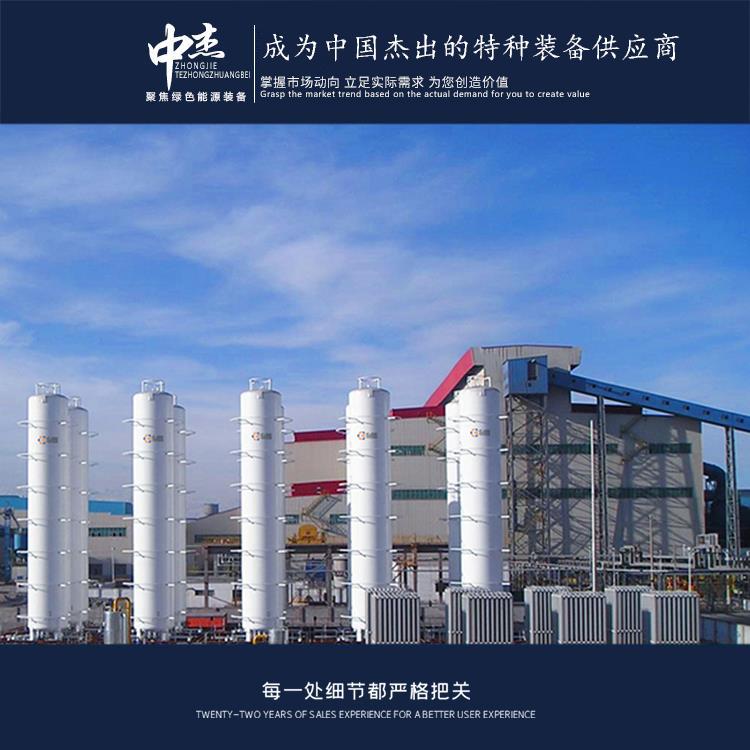

Shandong Zhongjie Special Equipment (formerly Heze Boiler Factory Co., Ltd.) holds an A-grade boiler manufacturing license, an A2-grade pressure vessel manufacturing license, an A2-grade pressure vessel design license, a B-grade boiler installation license, and GB2/Class and GC2/Class pressure pipeline installation licenses, as well as a mechanical and electrical equipment installation contracting qualification. It is a member of the China Boiler and Water Treatment Association, the China Chemical Equipment Association, and the理事 unit of the Shandong Equipment Manufacturing Association. The company has also passed certifications for the ISO9001 Quality Management System, ISO14001 Environmental Management System, OHSAS18001 Occupational Health and Safety Management System, and the American ASME/U2 certification.
When selecting the support for a liquid argon tank, consider the following factors:
Load Capacity: The support must be capable of bearing the weight of the liquid argon tank. Select a support with adequate load capacity based on the tank's capacity and dimensions. Typically, the weight of the liquid argon tank is specified in the design specifications, allowing for the determination of the support's load capacity.
Stability: The support must provide sufficient stability to prevent the tank from tilting or swaying during use. The design of the support should consider the tank's center of gravity and its changes to ensure stable support.
Corrosion Resistance: Liquid argon has low temperatures and corrosive properties; the material for the support should have good corrosion resistance to prevent corrosion and damage. Common support materials include stainless steel, aluminum alloys, etc.
Insulation: Liquid argon storage tanks typically require thermal insulation. The supports should possess certain insulation properties to minimize heat transfer and evaporation of the liquid argon. The design of the supports should consider the installation and protection of the insulation layer.
Installation and Maintenance: The bracket should feature ease of installation and maintenance to facilitate the installation of the tank and its daily maintenance operations.
When selecting the support for liquid argon tanks, it's advisable to consult with engineers or suppliers. Choose the appropriate support based on the specific tank requirements and operating environment. At the same time, adhere to relevant design specifications and safety standards to ensure the quality and reliability of the support.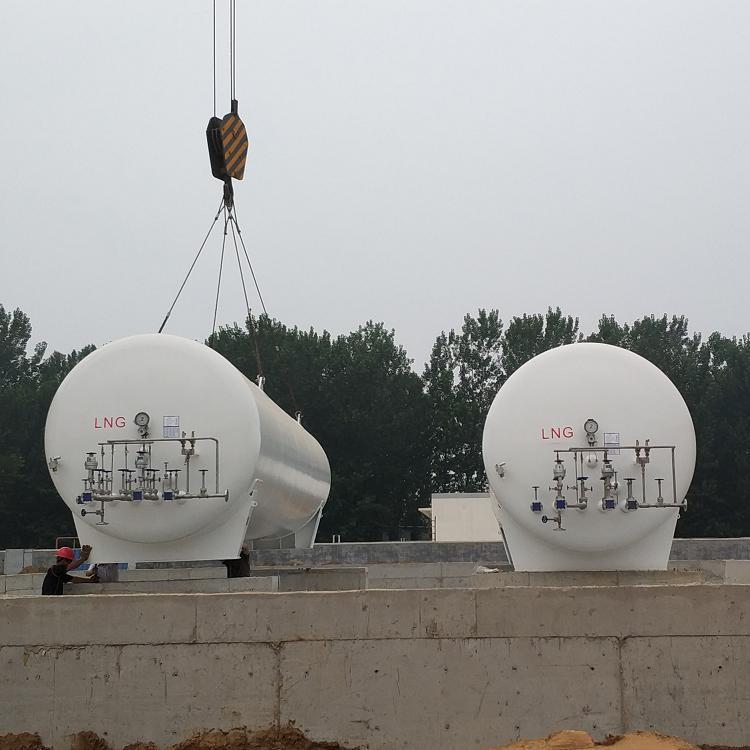
When using a 50-cubic-liter liquid oxygen storage tank, the following safety issues should be noted:
Tank Pressure Control: Ensure the liquid oxygen pressure within the tank remains within a safe range. Monitor and control the tank's pressure to avoid risks from excessive or low pressure.
Leakage and Fire Prevention: Regularly inspect the tank and related pipelines for sealing integrity to prevent oxygen liquid leakage. Oxygen liquid is highly flammable and fire prevention measures must be implemented to ensure there are no ignition sources around the tank.
Explosion-proof measures: Oxygen in the liquid oxygen tank may cause an explosion upon contact with flammable materials. Ensure there are no flammable items around the tank and implement explosion-proof measures, such as explosion-proof electrical equipment and static grounding.
Safety valves and discharge systems: Tanks should be equipped with safety valves and discharge systems to prevent overpressure conditions. Ensure the proper operation of the safety valves and the unobstructed flow of the discharge systems.
Routine Maintenance and Inspection: Regularly perform maintenance and inspection on the storage tank, including cleaning, coating protection, and anti-corrosion treatment. Ensure the structural integrity and safety of the tank.
Safety Operation and Training: Operators must undergo relevant safety training, familiarize themselves with the safe operation procedures for liquid oxygen tanks, and understand emergency response measures. Adhere to correct operational steps to ensure safe operation.
Environmental Monitoring: Regularly monitor environmental parameters such as oxygen concentration and temperature around the storage tanks to ensure safety.
Emergency Preparedness: Develop an emergency response plan including measures for leaks, fires, and explosions. Equip with appropriate emergency equipment and firefighting supplies to handle unforeseen incidents.
Above are some safety issues to be aware of when using 50-cubic-liter liquid oxygen tanks. To ensure safety, it is recommended to follow relevant safety regulations and operational guidelines, and seek assistance and guidance from professionals when necessary.
Low-temperature liquid oxygen storage tanks typically require some safety accessories to ensure safe operation and to address potential risks. The following are some common safety accessories for low-temperature liquid oxygen storage tanks:
Pressure Sensor: Used to monitor pressure changes within storage tanks. In the event of pressure exceeding the set range, it will trigger an alarm or automatically stop filling measures to prevent overpressure in the tank.
Safety Valve: Used to automatically release gas when the pressure inside the storage tank exceeds the set value, preventing overpressure. The safety valve should be selected and installed according to the design pressure and capacity of the tank.
Pressure relief device: Used to discharge gas into a safe area when the pressure inside the storage tank is too high, thereby reducing the pressure on the tank. The pressure relief device typically includes relief valves, relief pipes, etc.
Level sensor: Used to monitor the liquid oxygen level inside storage tanks to ensure sufficient oxygen and prevent overfilling.
Temperature sensor: Used to monitor temperature changes within the storage tank to ensure the liquid oxygen temperature remains within a safe range.
Fire Detectors and Fire Suppression Systems: Designed to monitor fire risks around storage tanks and activate fire suppression systems as needed to prevent the spread of fire to adjacent areas.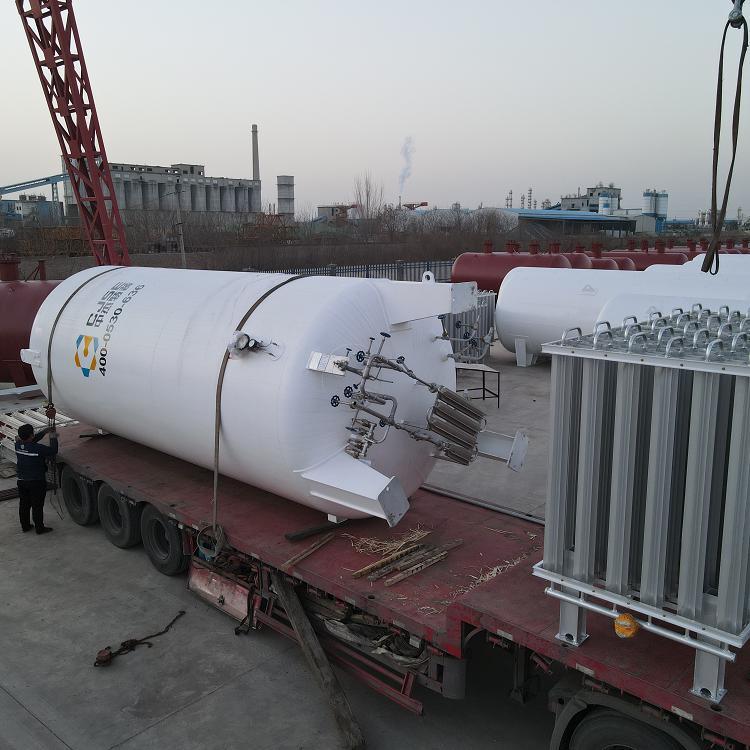
Liquid nitrogen storage tanks are equipment used for storing and transporting liquid nitrogen. To ensure safe operation, here are some common operational safety procedures for liquid nitrogen storage tanks:
Tank Installation: Tanks should be installed on a sturdy and level foundation, away from fire sources and flammable materials. Good ventilation around the tank is essential to prevent gas accumulation. The tank should maintain a safe distance from other equipment and buildings.
Liquid Nitrogen Filling: When filling with liquid nitrogen, use liquid nitrogen transfer equipment to avoid direct contact. During the filling process, be mindful to control the flow rate and pressure of liquid nitrogen to prevent over-filling and excessive tank pressure.
Tank Pressure Control: Tanks should be equipped with pressure control devices to ensure internal pressure remains within safe limits. Regularly inspect and maintain these devices to ensure proper operation.
Leak Detection and Alarm Systems: Tanks should be equipped with leak detection and alarm systems to promptly identify and alert for any tank leaks. Regularly inspect and maintain the leak detection equipment to ensure proper functioning.
Fire and explosion prevention measures: A fire-resistant isolation area should be set around the storage tank, away from fire sources and flammable materials. The tank itself should adopt fire and explosion prevention measures, such as fire-resistant coatings and explosion-proof devices, to prevent fires and explosions.
Regular Inspections and Maintenance: Regularly inspect the tank's exterior, valves, and connections to ensure they are undamaged. Conduct regular leak tests and pressure tests to ensure the tank's safety performance meets requirements.
Safety Training and Awareness Enhancement: Conduct safety training for operators to enhance their awareness and ability in the safe operation of liquid nitrogen tanks. Regularly hold safety training and drills to respond to emergencies.
Manage records and documents: Establish comprehensive management records and documents, including tank usage, inspection logs, maintenance records, etc. Regularly review and update management records to ensure safe management and maintenance of the tanks.
Note that the above are some common protection procedures, which may vary depending on the type of tank and application. When using liquid nitrogen tanks, operate according to relevant specifications and standards, and consult with experts to ensure safety and effectiveness.
Zhongjie Special Equipment upholds the great vision of "realizing employees' dreams, creating value for customers, and striving for the prosperity and strength of our motherland," and is dedicated to the development of the green energy equipment industry. We offer society products and services with high cost-performance!
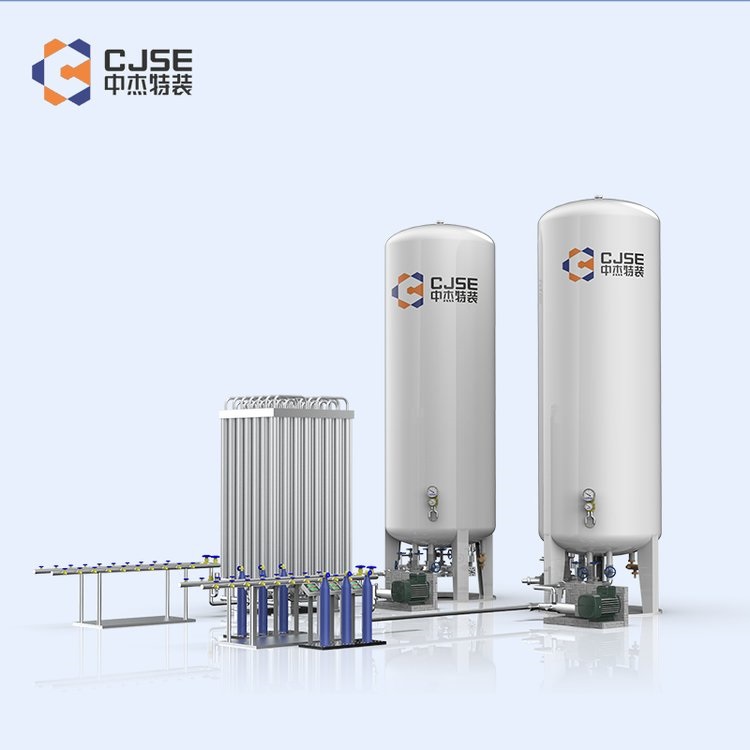
Nujiang 5 cubic meter argon storage tank, available for customization
