


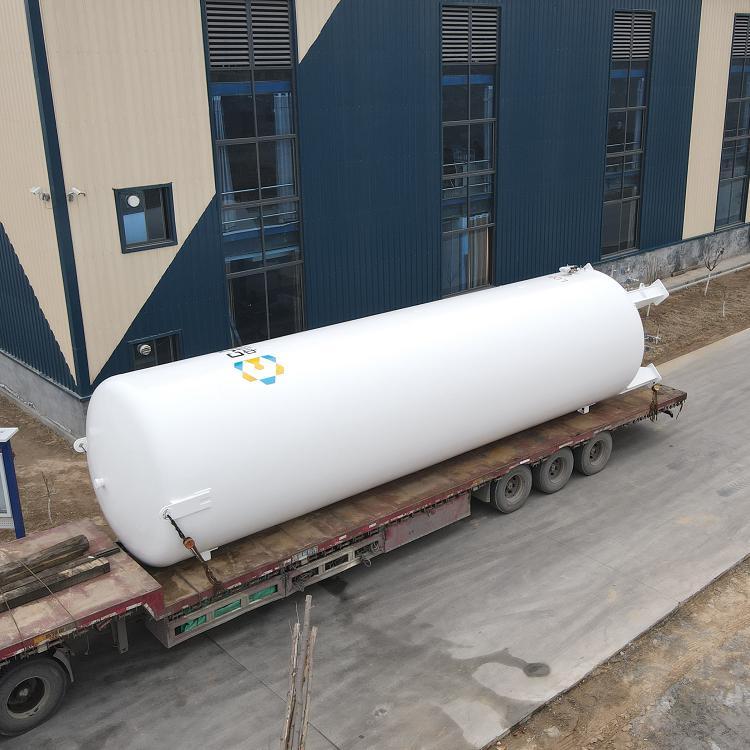


Shandong Zhongjie Special Equipment Co., Ltd. specializes in: fuel (gas) boilers, organic heat carrier boilers, biomass boilers, waste heat recovery boilers, and other boiler products; vacuum insulation deep-freeze pressure vessels such as LNG storage tanks, oxygen/nitrogen/argon storage tanks, and CO2 storage tanks; pressure vessel products including denitrification engineering equipment, heat storage and energy storage equipment, and complete chemical equipment; central air conditioning and HVAC equipment such as ground (water) source heat pumps, air source units, water-cooled screw units, and air-cooled modules. Planned products include large-scale energy centers, LNG transport vehicles, LNG tank containers, and other green energy equipment.
In daily operation, CO2 storage tanks require protection and maintenance to ensure proper functioning and safety. Here are some common protection and maintenance methods:
- Visual Inspection: Regularly check the tank's exterior for signs of corrosion, wear, and cracks. Take prompt repair actions upon discovering any anomalies.
- Sealing Integrity Check: Regularly inspect the tank's sealing performance, particularly at valves, pipe connections, and the tank itself. Ensure there are no leaks, and address any promptly.
- Temperature Control: Maintain a suitable ambient temperature around the tank and implement appropriate insulation measures to ensure the tank's internal low-temperature state.
- Pressure Relief Device Inspection: Regularly check the tank's pressure relief devices, such as safety valves, to ensure they are functioning correctly. Verify that the set pressure meets requirements and perform regular maintenance and replacements.
- Level Monitoring: Regularly monitor the tank's liquid level to ensure accurate measurements. Take immediate action to investigate and address any abnormal levels.
- Regular Cleaning: Regularly clean the interior of the tank to remove accumulated impurities and dirt. Pay attention to safety during cleaning and avoid using flammable and corrosive substances.
- Regular Testing: Regularly conduct pressure tests and leak inspections on the tank to ensure safety performance meets requirements. The frequency and methods should comply with relevant regulations and standards.
- Storage Capacity Control: Control the tank's storage capacity to prevent exceeding the rated capacity. Overfilling can lead to excessive pressure and increased safety risks.
It should be noted that specific protection and maintenance methods may vary depending on the type of tank and its application.
To maintain the stability of CO2 storage tanks, attention should be given to the following details:
- Foundation Design: The tank's foundation design must comply with relevant standards and regulations, ensuring sufficient strength and stability. The foundation should consider the tank's weight, pressure, and geological conditions to ensure the tank is securely placed on the foundation.
- Lining and Fastening Devices: Appropriate linings, such as rubber pads or steel plates, should be installed between the tank and the foundation to reduce friction and vibration. Additionally, use fastening devices like bolts or welding to secure the tank to the foundation, preventing movement and tilting.
- Leveling the Site: The site for tank installation should be kept level with no significant inclines or unevenness. If the site is uneven, adjustments and corrections should be made to ensure tank stability.
- Seismic Measures: In earthquake-prone areas, additional seismic measures are required, such as installing seismic supports and enhancing the tank's seismic resistance to improve stability.
- Regular Inspections: Conduct regular inspections of the tank's fastening devices and connection points to ensure they are intact. Any signs of loosening, wear, or damage should be addressed promptly with repairs or replacements.
- Load Distribution: Uniformly distribute loads above the tank, such as platforms or pipelines, to balance the weight distribution and reduce the impact of uneven loads on stability.
- Safety Distance: The tank should maintain adequate safety distances from other equipment, buildings, and fire sources to prevent accidental collisions or fires from affecting stability.
It is important to note that the installation of CO2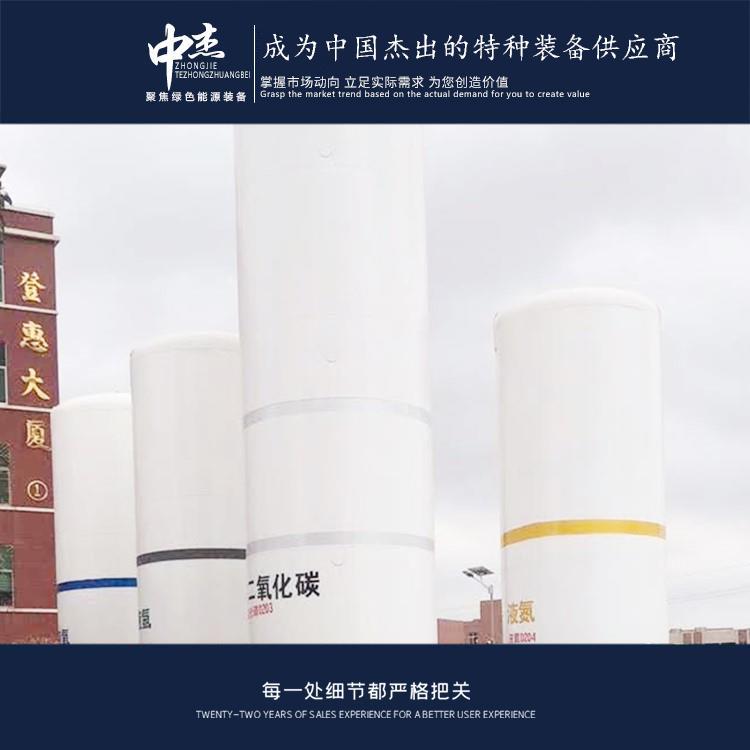
Carbon dioxide and liquid oxygen storage tanks are equipment used for storing different gases, with some differences in their physical properties:
- Physical State: Carbon dioxide (CO2) is a gas at room temperature and requires low temperatures and high pressures to become liquid. Liquid oxygen (LOX) is a liquid at room temperature and can maintain its liquid state without special conditions.
- Storage Temperature: The liquid storage temperature of carbon dioxide typically ranges from -40°C to -78.5°C, while that of liquid oxygen usually ranges from -183°C to -183.15°C. The storage temperature of liquid oxygen is lower, requiring more stringent insulation measures.
- Storage Pressure: The liquid storage pressure of carbon dioxide usually ranges from 5 to 20 MPa, while that of liquid oxygen typically ranges from 0.2 to 2 MPa. The storage pressure of liquid oxygen is lower.
- Density: The density of liquid carbon dioxide is approximately 0.8 g/cm³, while that of liquid oxygen is about 1.14 g/cm³. The density of liquid oxygen is greater.
- Safety: Liquid oxygen has a high oxygen content, making it highly flammable and oxidizing, necessitating stricter safety measures. Carbon dioxide is relatively safe but can still pose a risk to humans at high concentrations.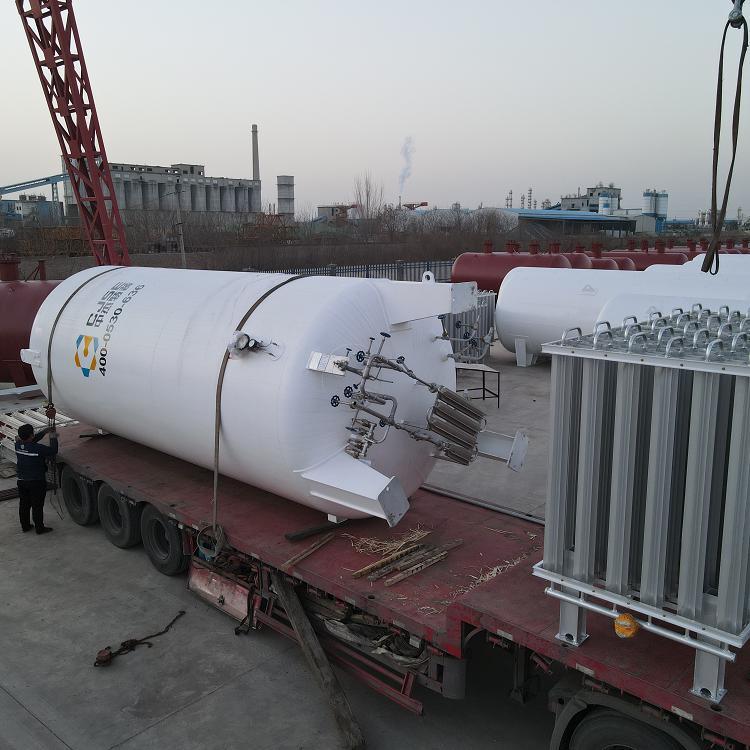
Construction features of carbon dioxide storage tanks mainly include the following aspects: Material selection: Carbon dioxide storage tanks are typically made of carbon steel or stainless steel to ensure their corrosion resistance and pressure resistance. Welding technology: The welding process of the tank is crucial for its quality and safety. The welding process should comply with relevant standards and specifications to ensure the quality and strength of the welds. Corrosion prevention measures: Due to the corrosive nature of carbon dioxide, both the internal and external surfaces of the tank should be treated with corrosion prevention. Common corrosion prevention measures include applying anti-corrosion paint, coating with a corrosion-resistant layer, or using corrosion-resistant coatings. Safety valves and pressure sensors: The tank should be equipped with safety valves and pressure sensors to monitor and control the internal pressure of the tank, ensuring safe operation. Steps for properly installing a carbon dioxide storage tank are as follows: Site preparation: Select a suitable site for installation, ensuring the site is level, stable, and meets safety distance requirements. Clear the site to ensure there are no obstructions or fire sources. Foundation construction: Construct the foundation according to the size and weight of the tank. The foundation should have sufficient strength and stability to support the weight and pressure of the tank. Tank installation: Place the tank on the foundation, ensuring there is adequate padding and fastening equipment between the tank and the foundation. Connect and secure the tank according to the design requirements. Piping connection: Connect the tank to the piping system as needed. Ensure that the connections are sealed properly to prevent leaks. Safety equipment installation: Install the required safety equipment for the tank, such as safety valves, pressure sensors, temperature sensors, etc. Ensure that these facilities are installed and connected correctly.
ZJ Special Equipment adheres to the grand vision of "realizing employees' dreams, creating customer value, and striving for the prosperity and strength of our motherland," focusing solely on the development of green energy equipment. We dedicate high-value products and services to society!
Jiyuan 80 Cubic CO2 Storage Tank, available for customization
