


Shandong Zhongjie Special Equipment (formerly Heze Boiler Factory Co., Ltd.) was established in 2001, located at No. 2218 Jinnan Road, Development Zone, Heze City, with a registered capital of 50 million yuan and total assets of 500 million yuan. The company has 7 business centers: boilers, deep-freeze containers, pressure vessels, central air conditioning, engineering installation, international trade, and Internet of Things. It has three factory sites on Jinnan Road, East Changjiang Road, and Bohai Road, covering a total of 200,000 square meters, with the main workshop spanning 83,000 square meters. It currently employs 710 people, including 247 engineers and technicians, and 82 intermediate-level technicians. In December 2016, it was recognized as a "High-tech Enterprise" by the Science and Technology Department. In June 2021, it was identified as a "Specialized and New Enterprise in Shandong Province" by the Ministry of Industry and Information Technology. In June 2022, it was recognized as a "Gazelle Enterprise in Shandong Province" and in August 2022, it was identified as a "Specialized and New Small Giant Enterprise" by the Ministry of Industry and Information Technology.
The primary reason for pre-cooling a CO2 storage tank before use is to ensure that the CO2 inside the tank remains in a liquid state and maintains a stable temperature during storage and supply. The pre-cooling process typically involves the following steps: Tank Cooling: Before the tank is put into service, it needs to be cooled internally to a sufficiently low temperature to convert the CO2 from a gaseous to a liquid state. This can be achieved by injecting a cooling medium (such as liquid nitrogen) into the tank or by using an external cooling unit. Tank Pre-filling: After the tank is cooled, liquid CO2 needs to be pre-filled into the tank to fill it and maintain a certain pressure. The purpose of pre-filling is to provide an adequate supply of CO2 during storage and supply and to maintain stable pressure within the tank. Through the pre-cooling process, it ensures that the CO2 inside the tank remains in a liquid state, avoiding premature evaporation and energy loss. Additionally, pre-cooling helps to lower the tank's temperature in advance, reducing CO2 evaporation and pressure fluctuations, thereby improving the tank's operational efficiency and safety. It should be noted that the specific operation methods and requirements for pre-cooling may vary depending on the tank design and application scenarios. When performing pre-cooling operations, it is necessary to follow relevant safety operation procedures and standards to ensure the safety and effectiveness of the operation.
Carbon dioxide storage tanks are equipment designed for storing and transporting carbon dioxide gas, operating on the principles of pressure vessels and the physical properties of carbon dioxide. Pressure Vessel Principle: A carbon dioxide storage tank is a pressure vessel capable of withstanding the internal pressure of the gas. Typically made of high-strength materials like steel, the tank's design and structure can withstand high pressures, ensuring safe storage and transportation of the gas. Compressed Gas Storage: Carbon dioxide is a gas at room temperature but can be compressed into a liquid under high pressure. Storage tanks utilize high pressure to compress the gas into a liquid state, achieving higher storage density. The volume occupied by liquid carbon dioxide is relatively small, allowing for the storage of more gas. Level Control: The tank is equipped with a level control system to monitor and regulate the liquid level of carbon dioxide. The level control system usually includes level sensors and control valves, ensuring the tank's level remains within a safe range. Pressure Control: The tank also features a pressure control system to monitor and regulate the internal gas pressure. The pressure control system typically includes pressure sensors and safety valves, ensuring the pressure within the tank stays within safe limits to avoid damage or safety risks from excessive or insufficient pressure. Through these principles, carbon dioxide storage tanks can safely store and transport carbon dioxide gas to meet the needs of various fields, such as food processing, beverage manufacturing, and fire extinguishing. When using carbon dioxide storage tanks, it is necessary to follow relevant safety operation procedures and guidelines to ensure safe operation and use.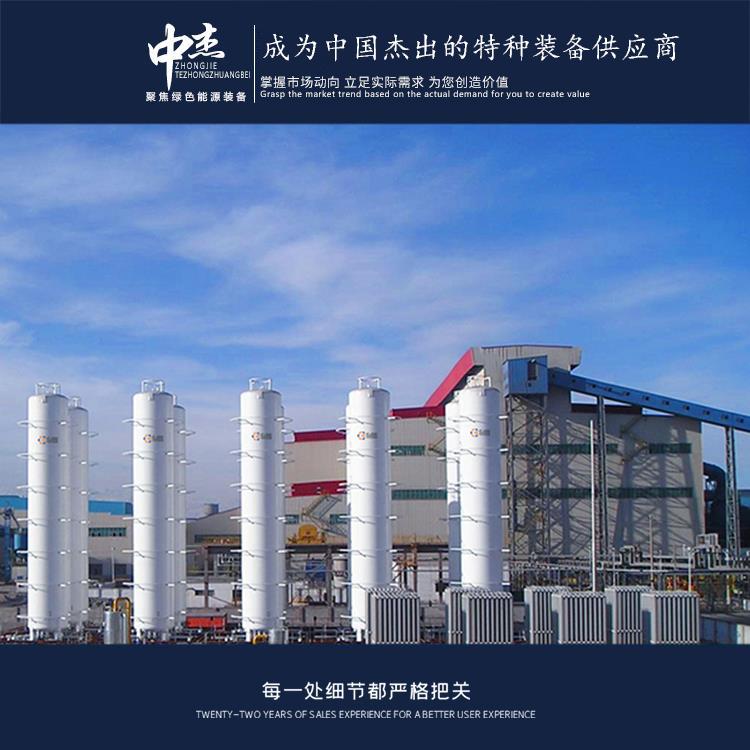
Common drawbacks of corrosion in pressure vessels during use include:
- Chemical media: Certain chemical substances, such as acids, bases, and salts, can be corrosive. Contact with these media may cause corrosion when they come into contact with the vessel material.
- Humidity and moisture: High humidity environments or prolonged exposure to moisture can lead to corrosion on the vessel surface. Especially in the presence of oxygen, the corrosion rate may increase.
- Rusting: When the protective layer on the vessel surface (such as coatings or plating) is damaged or destroyed, rusting may occur. Rusting can damage the surface of the vessel and may lead to further corrosion.
- Electrochemical corrosion: When different metals or metals and non-metals come into contact, an electrochemical corrosion battery may form. This type of corrosion can cause localized corrosion on the vessel surface.
- Welding defects: Defects such as weld pores and cracks may be introduced during the welding process. These defects may become starting points for corrosion.
- Corrosion weakens the structural integrity of the vessel, increasing the risk of leakage or bursting. Therefore, it is important to regularly inspect and maintain the anti-corrosion coating, plating, or layer of pressure vessels. If corrosion issues are detected, appropriate measures should be taken to repair or replace damaged parts.
- Additionally, selecting appropriate materials, anti-corrosion measures, and proper operation and maintenance methods can reduce the risk of corrosion in pressure vessels. Adhering to relevant safety operation procedures and standards ensures the safe operation of pressure vessels.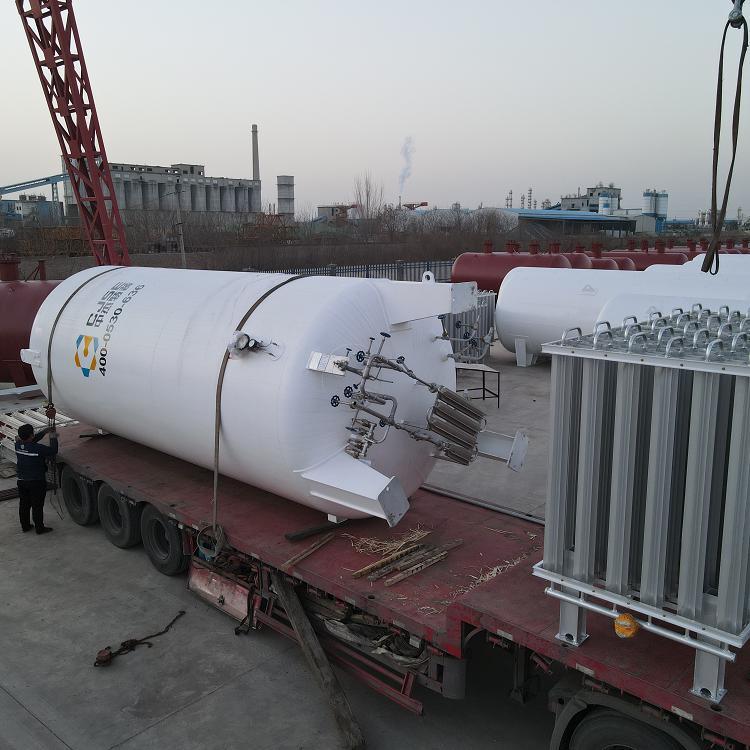
Carbon dioxide storage tanks possess the following characteristics:
- High-pressure Vessel: Carbon dioxide storage tanks are typically designed as high-pressure vessels, capable of withstanding high pressure. This is because carbon dioxide requires high pressure at room temperature to maintain a liquid state.
- High Oxidizing: Carbon dioxide has a high oxidizing nature, supporting combustion. Therefore, when using and storing carbon dioxide, precautions must be taken to prevent contact to avoid the risk of fire and explosion.
- Low-Temperature Storage: Carbon dioxide is gaseous at room temperature but can be compressed into a liquid at lower temperatures. Consequently, carbon dioxide storage tanks usually need to have good insulation properties to maintain the low-temperature liquid state of the stored carbon dioxide.
- High Density: Liquid carbon dioxide has a high density, allowing for the storage of large amounts of carbon dioxide in a relatively small volume. This makes carbon dioxide storage tanks useful in scenarios requiring substantial carbon dioxide supply.
- Safety Valves and Pressure Control: To ensure the internal pressure of the tank remains within a safe range, carbon dioxide storage tanks are commonly equipped with safety valves and pressure control devices. These devices monitor and control the tank's internal pressure to prevent excessive pressure from causing tank rupture.
- Corrosiveness: Carbon dioxide has some degree of corrosiveness, especially in high humidity environments. Therefore, the materials and corrosion prevention measures for the tank need to consider the corrosiveness of carbon dioxide to ensure the tank's durability and safety.
These characteristics make carbon dioxide storage tanks widely applicable in various industries, such as the food and beverage industry, fire suppression, and gas industry. When using carbon dioxide storage tanks, it is necessary to follow relevant safety operation procedures and standards to ensure operational safety.
Shandong Zhongjie Special Equipment, welcome customers to visit our factory for business discussions.
Tianjin 15 cubic meter CO2 storage tank, manufacturer
