


Shandong Zhongjie Special Equipment (formerly Heze Boiler Factory Co., Ltd.) holds an A-grade boiler manufacturing license, an A2-grade pressure vessel manufacturing license, an A2-grade pressure vessel design license, a B-grade boiler installation license, and GB2/Class and GC2/Class pressure pipeline installation licenses, as well as a qualification for electromechanical equipment installation contracting. It is a member of the China Boiler and Water Treatment Association, the China Chemical Equipment Association, and a council member of the Shandong Equipment Manufacturing Association. The company has also passed certifications for the ISO9001 Quality Management System, ISO14001 Environmental Management System, OHSAS18001 Occupational Health and Safety Management System, and the American ASME/U2 certification.
Prior to filling the liquid nitrogen tank, the following checks must be conducted:
Tank exterior inspection: Check for any obvious damage, deformation, corrosion, etc., on the tank's exterior, including the tank wall, valves, pipes, and joints.
Sealability Inspection: Inspect the storage tank's sealing performance, including checking for any leakage at valves and pipe connections, to ensure the tank maintains good sealing integrity.
Pressure Check: Verify that the storage tank's pressure gauge is functioning properly and that the pressure is within the normal range to ensure the tank operates normally.
Level Check: Inspect the tank's liquid level to ensure it is within the normal range, avoiding issues caused by either excessive or insufficient levels.
Insulation Layer Inspection: Check if the insulation layer of the tank is intact, for any signs of damage or detachment, to ensure effective insulation and reduce evaporation losses of liquid nitrogen.
Leak Inspection: Check for signs of liquid nitrogen leakage around the storage tank, including frost, ice, or liquid nitrogen stains on the ground.
Safety Equipment Inspection: Verify that the storage tank's safety equipment, such as leak detectors, alarm systems, and safety valves, is functioning properly to ensure the tank's safety.
Clean Inspection: Ensure the interior of the tank is clean, free of accumulated impurities and dirt, to maintain the tank's cleanliness and hygiene.
The above outlines the checks required prior to filling a liquid nitrogen tank, ensuring safe operation of the tank and proper storage of liquid nitrogen. During the inspection process, strict adherence to operational procedures and safety requirements must be maintained to ensure operational safety.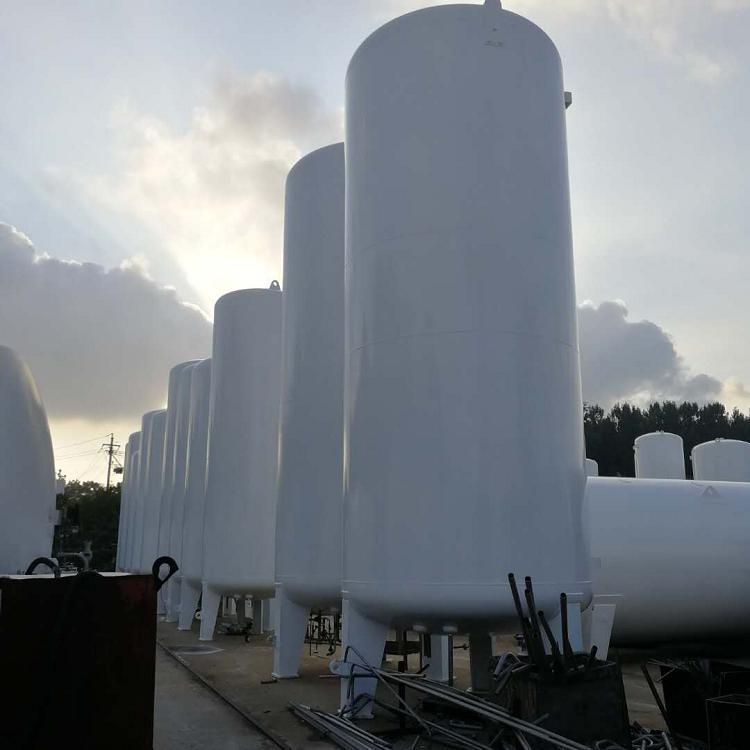
Liquid nitrogen tanks feature the following characteristics during the construction process:
Low Temperature Construction: Construction of liquid nitrogen tanks must be carried out in low-temperature environments due to the low boiling point of liquid nitrogen, approximately -196 degrees Celsius. Construction personnel must take appropriate protective measures, such as wearing thermal protective clothing and gloves, to safeguard against low-temperature injuries.
Welding Technology: A substantial amount of welding is required during the manufacturing process of liquid nitrogen tanks, including the connections of wall plates, bottom plates, top plates, and seams. Welding technology is crucial for the quality and safety of the tank, necessitating the use of appropriate welding methods and materials to ensure the strength and密封ness of the welds.
Insulation Layer Installation: Liquid nitrogen tanks must have excellent insulation properties to reduce heat conduction and maintain the low-temperature state of liquid nitrogen. The installation of the insulation layer requires materials such as polyester foam and glass wool, ensuring the thickness and quality of the insulation layer.
Proper installation steps for a liquid nitrogen tank are as follows:
Site Preparation: Select an appropriate site for tank installation, ensuring it is level, sturdy, and has adequate load-bearing capacity. The site should be located away from flammable, explosive materials, and other hazardous sources.
Foundation Construction: Construction of the foundation based on the tank's dimensions and weight, including excavation of the foundation pit and pouring concrete foundation. The design and construction of the foundation must comply with relevant standards and regulations.
Tank Installation: Transport the tank to the site and perform vertical installation. Appropriate lifting equipment and safety measures must be used during the installation process to ensure the stability and safety of the tank.
Pipe Connections: Connect the storage tank to the relevant pipeline system as required, including intake pipes, exhaust pipes, and liquid supply pipes, etc. Sealing and testing must be conducted during the connection process to ensure the safety of the pipes.
Liquid nitrogen storage tanks are widely used in meat freezing. Here are several main applications of liquid nitrogen storage tanks in meat freezing:
Rapid Freezing: Liquid nitrogen tanks can provide low temperatures to quickly freeze meat to the desired temperature. Due to the low-temperature characteristics of liquid nitrogen, meat temperatures can be rapidly reduced in a short amount of time, effectively preserving the quality and texture of the meat.
Chilled Storage: Liquid nitrogen tanks are suitable for long-term freezing storage of meat products. Placing meat in a liquid nitrogen tank can maintain it at low temperatures, preventing the growth of bacteria and microorganisms, and extending the shelf life of the meat.
Chilled Transportation: Liquid nitrogen tanks are suitable for the frozen transportation of meat products. Placing the meat in a liquid nitrogen tank maintains its low temperature, ensuring the quality and freshness of the meat throughout the transportation process.
Chilled Processing: Liquid nitrogen tanks can be used for meat chilling. By exposing meat to liquid nitrogen, the surface can be quickly frozen, forming a chilled layer, thereby preserving the meat's moisture and nutritional content.
Chilled Processing: Liquid nitrogen tanks are suitable for meat freezing processing. Placing meat in liquid nitrogen makes it harder and crisper, facilitating cutting, slicing, and processing.
Be mindful that when using liquid nitrogen tanks for meat freezing, it is crucial to adhere to the relevant safety operating procedures and guidelines. Ensure that operators are equipped with the necessary safety awareness and operational skills to prevent accidents. Additionally, consult with food safety experts.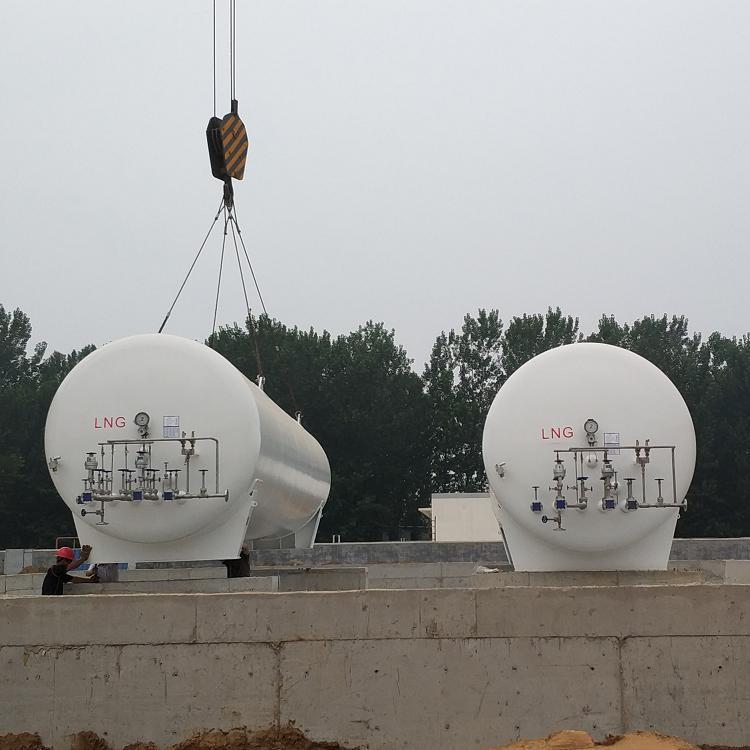
Liquid Argon Storage Tanks are specialized equipment designed for storing liquid argon, featuring the following parameters, functions, and characteristics:
Parameters:
Tank Capacity: The capacity of liquid argon tanks can be customized to meet requirements, with various sizes available, such as 500L, 1000L, 2000L, and so on.
Work Pressure: The working pressure of liquid argon tanks is typically atmospheric or slightly above atmospheric pressure.
Storage Temperature: The storage temperature for liquid argon tanks is typically -196 degrees Celsius, which is the boiling point of argon, maintaining its liquid state.
Feature:
Store Liquid Argon: Liquid argon tanks are primarily used for storing liquid argon, maintaining its liquid state at low temperatures for supply and use.
Insulation: The liquid argon storage tank is equipped with high-quality insulation materials and structural design to minimize heat conduction and retain the low-temperature state of the liquid argon.
Safety Control: The liquid argon storage tank is equipped with safety devices such as pressure relief valves and level alarms to ensure safe operation and use.
Features:
High Purity Supply: Liquid Argon Tanks provide high purity liquid argon to meet application needs such as cryogenic storage, gas shielding welding, and semiconductor manufacturing.
Long-term Storage: Liquid argon cylinders are designed for long-term storage of liquid argon, extending their service life. By controlling the temperature within the cylinder and the performance of the insulation layer, the evaporation and oxidation of liquid argon are slowed down.
Broad Applications: Liquid Argon Storage Tanks are widely used in industries such as cryogenic applications, semiconductor manufacturing, and more.
Environmental Protection and Energy Conservation: Liquid argon tanks enable efficient storage and utilization of liquid argon, reducing energy waste and environmental pollution.
In summary, liquid argon storage tanks are designed for storing liquid argon, thermal insulation, and safety.
Our company highly values technological innovation and R&D, boasting one municipal-level enterprise technology center in Heze City. We have established testing facilities for non-destructive testing, physical and chemical testing, welding testing, hydrostatic testing, and more. Equipped with over 600 various instruments and equipment, including CNC machine tools, X-ray flaw detectors, digital ultrasonic flaw detectors, mechanical property testing machines, chemical analyzers, spectrometers, tensile testing machines, plasma welding machines, and others, our developed technologies for welding of temperature and pressure vessels, biomass boiler emission reduction, and waste heat utilization have been selected for multiple Shandong Provincial Department of Industry and Information Technology scientific and technological innovation projects, key provincial projects, and Heze City innovative and excellent projects. We have cumulatively obtained 27 authorized utility models, 16 authorized inventions, participated in drafting 2 standards, 2 industry standards, and registered 15 trademarks. The technical team, in collaboration with Professor Li Yajiang of Shandong University, has developed deep cryogenic vessel processing technology using the internationally recognized plasma arc + filler wire tungsten inert gas (PAW-GTAW) welding technology. After provincial technological achievement evaluation, the technology level has reached international standards in the field of deep cryogenic vessel manufacturing. Choose ZJ Special Equipment, and let's create brilliance together!
Visiting 5-liter Liquid Nitrogen Tank - Reliable
