


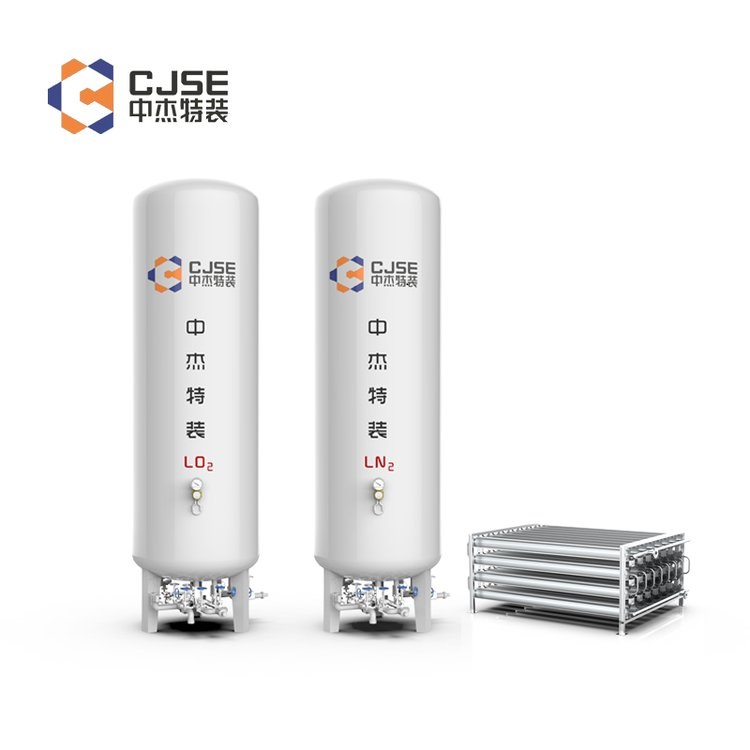
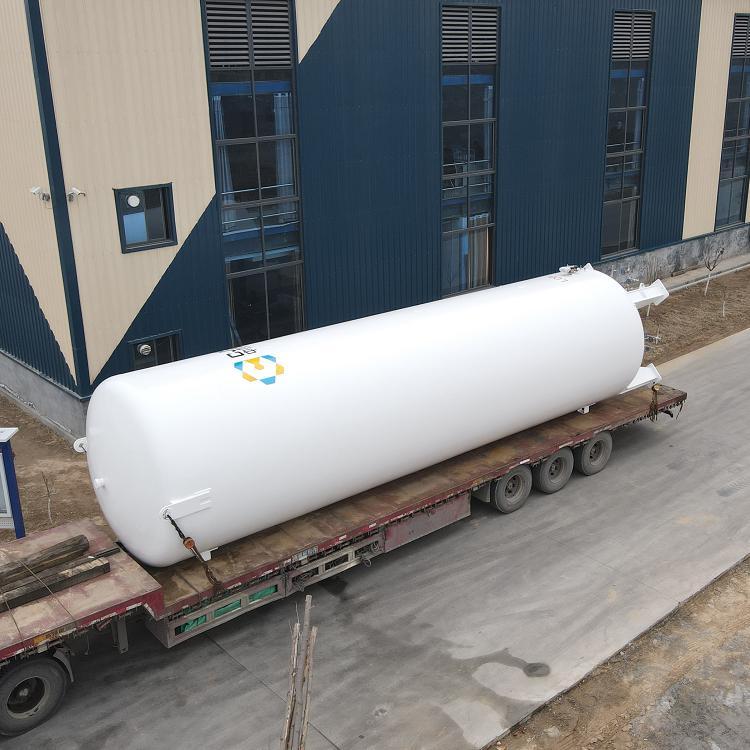
Shandong Zhongjie Special Equipment Co., Ltd. specializes in the following products: fuel (gas) boilers, organic heat carrier boilers, biomass boilers, waste heat recovery boilers, and other boiler products; vacuum insulation cryogenic pressure vessels such as LNG tanks, oxygen/nitrogen/argon tanks, and CO2 tanks; pressure vessel products including denitrification engineering equipment, heat storage and energy storage equipment, and complete chemical equipment sets; central air conditioning and HVAC equipment such as ground (water) source heat pumps, air source units, water-cooled screw units, and air-cooled modular units. Planned products include large-scale energy centers, LNG transport vehicles, LNG tank containers, and other green energy equipment.
The reason for regular inspections of low-temperature liquid carbon dioxide tanks is to ensure their safety and proper operation. As these tanks operate under low temperatures and high pressures, they pose certain safety risks, such as leaks or structural failures. Regular inspections can help identify potential issues early, allowing for corrective or maintenance measures to ensure the tank's safe operation. The specific inspection frequency should be determined according to relevant regulations and standards, and it is generally recommended to conduct regular inspections and maintenance. Typically, the interval between scheduled inspections for low-temperature liquid carbon dioxide tanks is between 1 to 3 years, with the exact interval varying based on factors such as usage, age, and design standards. The content of regular inspections usually includes visual inspections of the tank, checks of valves and connections, leak detection, pressure testing, and regular maintenance of the insulating layer to ensure thermal insulation performance. It is important to note that the specific inspection frequency and content should be determined based on local regulations, standards, and the manufacturer's recommendations. Inspections should be conducted by qualified personnel, and the results and maintenance records should be documented for tracking and managing the tank's safety performance.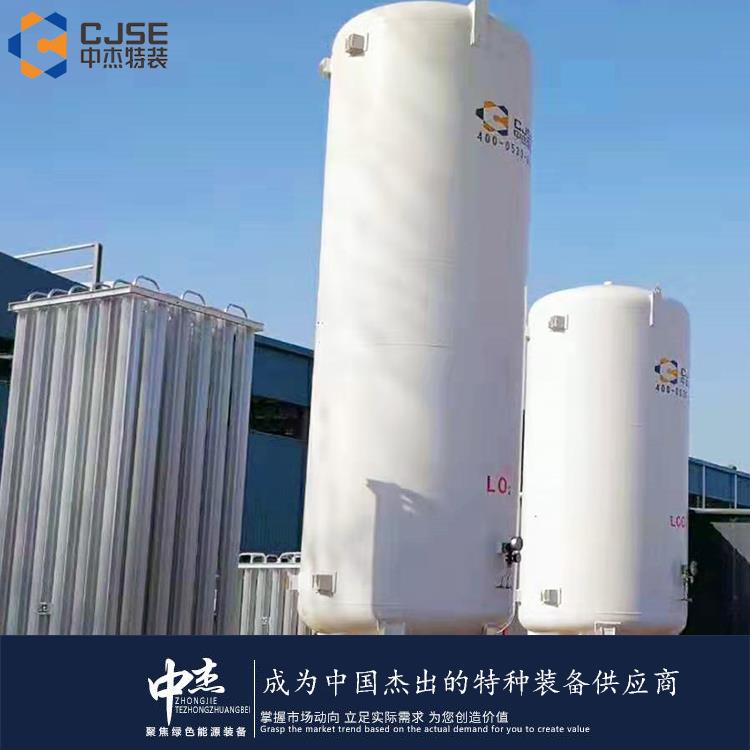
The quality of CO2 storage tanks is influenced by several factors:
Material Quality: The quality of the tank material directly affects its corrosion resistance, strength, and sealing performance. Common materials include carbon steel and stainless steel. Choosing high-quality materials can enhance the tank's quality and lifespan.
Manufacturing Process: The manufacturing process significantly impacts the tank's quality. Welding, heat treatment, and surface treatment during production must meet relevant standards and specifications to ensure structural integrity and performance stability.
Design Specifications: The tank's design must comply with applicable design standards and regulations, such as industry standards. A well-designed tank ensures sufficient strength and safety under normal operating conditions.
Safety Components: The tank's safety components, such as safety valves, pressure sensors, and temperature sensors, play a crucial role in quality and safety. Selecting high-quality components and ensuring proper installation and tuning can improve the tank's quality and safety.
Inspection and Testing: Inspections and tests, such as material inspections, weld inspections, and pressure tests, are required during the manufacturing process. These tests ensure the tank meets quality requirements and adheres to safety standards.
Usage and Maintenance: The tank's usage and maintenance also impact its quality. Proper usage and regular maintenance can extend the tank's lifespan and maintain its optimal operating condition.
In summary, the quality of CO2 storage tanks is influenced by various factors, including material quality, manufacturing process, design specifications, safety components, inspection and testing, and usage and maintenance. When selecting and using storage tanks, attention should be given to these factors to ensure quality and safety.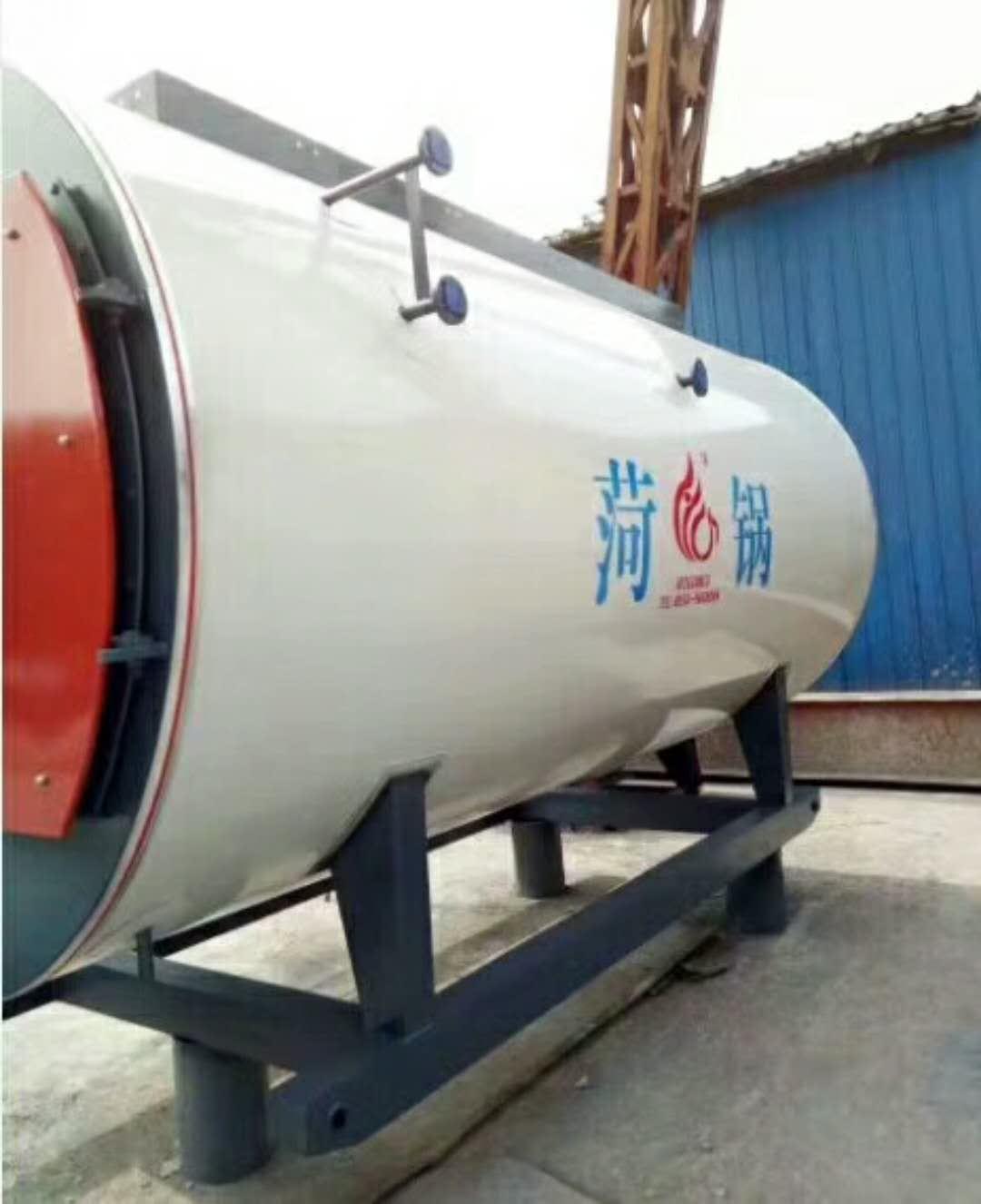
Dry ice is a solid form of carbon dioxide gas produced by directly converting it under high pressure. It has several applications:
- Refrigeration of Food and Pharmaceuticals: Dry ice is widely used for the transportation and storage of food and pharmaceuticals. Its low temperature and rapid cooling speed effectively maintain the freshness and quality of the products.
- Special Effects and Stage Performances: Dry ice is also extensively used in special effects and stage performances. When it comes into contact with environmental heat, it quickly turns into gas, producing a large amount of white smoke, creating a mysterious and dramatic atmosphere.
- Cleaning and Disinfection: Dry ice can also be used for cleaning and disinfection. When it comes into contact with surfaces, the combination of temperature reduction and the physical impact of the vaporization process effectively removes dirt, bacteria, and viruses without leaving residues.
- Laboratories and Scientific Research: Dry ice finds applications in laboratories and scientific research as well. It can be used to freeze samples, create low-temperature experimental environments, and make cold traps and condensers.
It is important to note that safety should be a priority when using dry ice, avoiding direct contact with skin and eyes, and not using it in confined spaces to prevent the accumulation of carbon dioxide, which can lead to oxygen deficiency.
Carbon dioxide storage tanks offer the following features and advantages: High storage density: These tanks can compress carbon dioxide gas into a liquid state, significantly increasing storage density. Compared to storing it in a gaseous state, liquid carbon dioxide can be stored in a smaller tank, saving space and costs. Multiple application fields: Carbon dioxide storage tanks are widely used in various industries, including food and beverage, industrial, fire suppression, and gas supply. Carbon dioxide serves as a preservative, beverage effervescent agent, gas, and fire extinguisher, with broad applications and market demand. Environmental friendly and renewable: Carbon dioxide is an environmentally friendly gas, and its increased concentration in the atmosphere can lead to warming and climate change. By storing and utilizing carbon dioxide, we can reduce its emissions into the atmosphere, achieving environmental protection and sustainable development. Safe and reliable: During design and manufacturing, carbon dioxide storage tanks typically use high-strength materials (such as carbon steel or stainless steel) with excellent pressure resistance and safety. The tanks are usually equipped with safety valves, pressure gauges, level indicators, and other accessories to ensure safe operation. Additionally, carbon dioxide is a non-flammable and non-explosive gas, making it relatively safe. Supply: Carbon dioxide storage tanks provide a stable supply of carbon dioxide. Through tank design and control systems, precise measurement and supply of carbon dioxide can be achieved, meeting the needs of various industries and applications. In summary, carbon dioxide storage tanks offer high storage density, multiple application fields, environmental friendliness, renewable energy, safety, reliability, and supply. This makes them an important storage and supply equipment, widely used in various industries. However, when using carbon dioxide storage tanks, it is still necessary to follow relevant safety operating procedures.
Our company highly values technological innovation and R&D design. We have one municipal-level enterprise technology center in Heze City, equipped with non-destructive testing, physical and chemical testing, welding testing, hydrostatic testing, and other testing facilities. We possess over 600 types of equipment, including CNC machine tools, X-ray flaw detectors, digital ultrasonic flaw detectors, mechanical property testing machines, chemical analyzers, spectrometers, tensile testing machines, plasma welding machines, and more. Our key products such as welding technology for temperature and pressure vessels, biomass boiler emission reduction, and waste heat recovery have successively been included in multiple Shandong Provincial Department of Industry and Information Technology science and technology projects, Shandong Provincial key projects, and Heze City innovation and excellence projects. We have cumulatively obtained 27 authorized utility models, 16 authorized inventions, participated in drafting 2 standards, 2 industry standards, and registered 15 trademarks. The technical team, in collaboration with Professor Yajiang Li of Shandong University, has developed deep cryogenic container processing technology using the international plasma arc + filler wire argon arc welding (PAW-GTAW) technique, which has been appraised as reaching international standards in the deep cryogenic container manufacturing field by the provincial-level scientific and technological achievement evaluation. Choose Zhongjie Special Equipment, and let's create brilliance together!
Pingliang 10 cubic CO2 storage tank, over 20 years of experience for added peace of mind
