


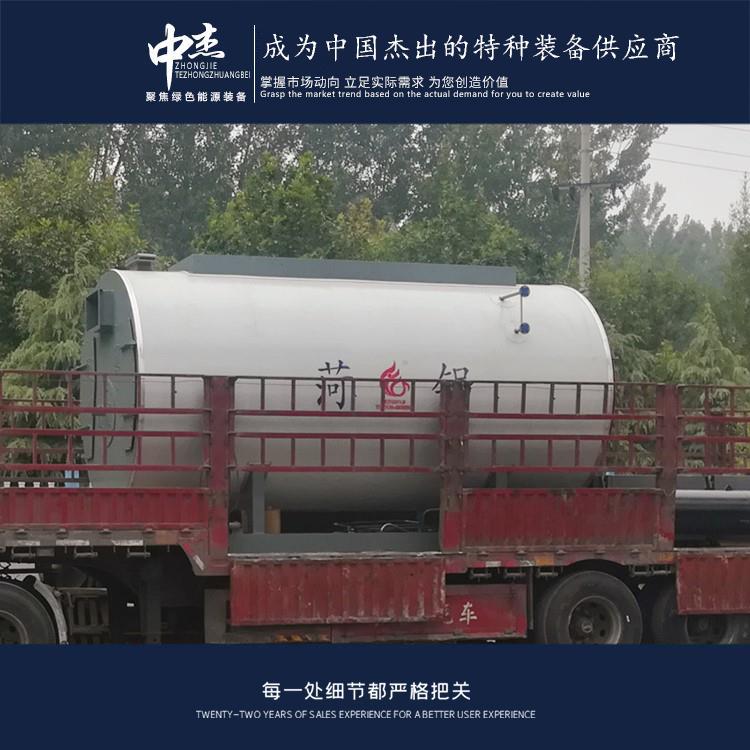

Shandong Zhongjie Special Equipment's main products include: fuel (gas) boilers, organic heat carrier boilers, biomass boilers, waste heat boilers, and other boiler products; vacuum insulation cryogenic pressure vessels such as LNG tanks, oxygen/nitrogen/argon tanks, and CO2 tanks; pressure vessel products such as denitrification engineering equipment, heat storage and energy storage equipment, and complete chemical equipment; central air conditioning and HVAC equipment such as ground (water) source heat pumps, air source units, water-cooled screw units, and air-cooled modules. Planned products include large-scale energy centers, LNG transport vehicles, LNG tank containers, and other green energy equipment.
Gas boiler temperature control methods typically include:
- Manual Adjustment: Control the boiler's temperature by manually operating valves or regulators. Adjust the valve opening or regulator settings as needed to achieve the desired temperature.
- Automatic Regulation: Gas boilers can be equipped with automatic control systems that utilize sensors and controllers for temperature regulation. Sensors detect the boiler's temperature and send signals to the controller, which then automatically adjusts the gas supply and burner status within a set temperature range to maintain the desired temperature.
- Proportional Control: Temperature regulation in gas boilers can also be done through proportional control. Adjust the valve or regulator opening based on temperature changes to maintain a proportional relationship between gas supply and burner status.
- PID Control: PID control is a commonly used temperature regulation method. The PID controller adjusts the gas supply and burner status based on temperature deviation, rate of change, and integral values to control the temperature.
- Note: Different gas boilers may use various temperature control methods. The specific method and operation should be determined according to the boiler model and control system. When adjusting the temperature, follow safety operation procedures to ensure normal operation and safety of the boiler.
If gas boiler gas leakage is detected, the following measures must be taken immediately to handle the situation:
1. Immediately shut off the gas supply: First, quickly close the gas supply valve to cut off the gas supply. This prevents further leakage and reduces safety risks.
2. Ventilation: Open windows and doors to ensure proper indoor air circulation and expel any remaining gas. This lowers the indoor gas concentration, reducing the risk of explosion and poisoning.
3. Avoid open flames and electrical appliances: In the event of gas leakage, avoid using open flames and electrical equipment to prevent fires or sparks that could trigger an explosion.
4. Do not operate electrical switches: Do not operate electrical switches, including lights, televisions, computers, etc., to prevent sparks that could cause an accident.
5. Contact the gas company or personnel: Promptly contact the local gas company or personnel to report the gas leakage and request them to inspect and handle the situation.
6. Do not use a phone or make calls: In case of suspected gas leakage, do not use a phone or make calls to prevent static electricity from causing an explosion.
7. Keep away from the leakage area: Stay as far away from the leakage area as possible to ensure personal safety. Avoid approaching the gas boiler and the leakage point to prevent injury.
Remember, handling gas boiler gas leakage is a dangerous task that requires caution. It is best left to trained personnel to ensure safety.
Steam boilers produce a certain amount of waste water during operation, which requires effluent treatment. Here are the general steps for steam boiler effluent discharge: Preparation: Before effluent discharge, ensure the steam boiler is shut down and the pressure inside the boiler has been reduced to a safe level. Open the Drain Valve: Locate the corresponding drain valve according to the steam boiler's design and open it. The drain valve is typically found on the bottom or near the bottom of the boiler's drain pipe. Discharge Waste Water: After opening the drain valve, waste water will flow out of the drain pipe. Depending on the need, use a drain pump or gravity to expel the waste water. Observe the Waste Water: During the discharge process, observe the waste water's color, turbidity, and odor to determine if there are any abnormalities, such as sediments, impurities, or strange smells. Close the Drain Valve: Once the waste water has been fully discharged or the predetermined effluent target is reached, close the drain valve. Clean the Drain System: Regularly clean the drain system to prevent blockages or accumulation of debris, ensuring the free flow of the drain system. It's important to note that the specific steps and frequency of steam boiler effluent discharge may vary depending on the model, operating conditions, and requirements of the boiler. Therefore, it is advisable to refer to the boiler's operation manual or consult with experts when performing steam boiler effluent discharge operations to ensure correct and safe operation.
Industrial boilers, during their long-term operation, can accumulate scale and sediments, which affect the efficiency of heat exchange and the normal operation of the boiler. Below are some effective descaling methods:
1. Mechanical Cleaning: Utilizes cleaning equipment and tools to wash away scale and sediments inside the boiler using high-pressure water or mechanical brushes. This method is suitable for lighter scale and sediments.
2. Chemical Cleaning: Uses chemical cleaning agents to dissolve scale and sediments through chemical reactions. Select an appropriate cleaning agent based on the composition and nature of the scale, and operate according to the instructions provided. Chemical cleaning requires safe operation to avoid damage to equipment and the environment.
3. Acid Cleaning: A common descaling method for hard-to-dissolve scale and sediments. Common acid cleaning agents include, etc., and the appropriate cleaning agent and concentration should be selected based on the specific situation. Acid cleaning requires safe operation to avoid harm to equipment and personnel.
4. Alkaline Cleaning: A descaling method for specific types of scale, suitable for alkaline scale. Common alkaline cleaning agents include, etc., and the appropriate cleaning agent and concentration should be selected based on the specific situation. Alkaline cleaning requires safe operation to avoid harm to equipment and personnel.
5. Physical Descaling: Physical descaling methods include ultrasonic cleaning and electro-descaling. Ultrasonic cleaning uses the vibration effect of ultrasound to shake the scale into pieces. Electro-descaling uses the principle of electrolysis to dissolve scale through the action of electricity. These physical descaling methods are suitable for special situations and specific types of scale.
When selecting a descaling method, it is necessary to consider the specific conditions of the boiler.
Shandong Zhongjie Special Equipment, welcome customers to our factory for business discussions.
Guangzhou 8-ton gas boiler, large size, sturdy, high output
