


Shandong Zhongjie Special Equipment (formerly Heze Boiler Factory Co., Ltd.) was established in 2001, located at No. 2218 Jinnan Road, Development Zone, Heze City, with a registered capital of 50 million yuan and total assets of 500 million yuan. The company has 7 business centers: boiler, deep-freezing vessel, pressure vessel, central air conditioning, engineering installation, international trade, and Internet of Things. It has three factory sites on Jinnan Road, East Changjiang Road, and Bohai Road, covering a total of 200,000 square meters, with the main workshop spanning 83,000 square meters. It currently employs 710 staff, including 247 engineers and technicians, and 82 intermediate-level technicians. In December 2016, it was recognized as a "High-tech Enterprise" by the Science and Technology Department. In June 2021, it was identified as a "Specialized and New Enterprise in Shandong Province" by the Ministry of Industry and Information Technology. In June 2022, it was recognized as a "Gazelle Enterprise in Shandong Province" and in August 2022, as a "Specialized and New Small Giant Enterprise" by the Ministry of Industry and Information Technology.
Standard specifications for liquid oxygen tanks may vary by region. Here are examples of common standards:
- U.S. Standards: The American National Standards Institute (ANSI) and the American Petroleum Institute (API) have issued a series of standards for liquid oxygen tanks, such as ANSI/API Standard 2510 "Design and Construction of Liquid Oxygen Tanks" and ANSI/API Standard 2510A "Supplement to the Design and Construction of Liquid Oxygen Tanks."
- European Standards: The European Committee for Standardization (CEN) has issued a series of standards for liquid oxygen tanks, such as EN 13458 "Liquid Oxygen Tanks. Design and Manufacture" and EN 14015 "Vertical Welded Steel Fixed Tanks. Design and Manufacture."
- Chinese Standards: The Standardization Administration of the People's Republic of China (SAC) has issued a series of standards for liquid oxygen tanks, such as GB/T 18442 "Design Code for Liquid Oxygen Tanks" and GB/T 18443 "Construction and Acceptance Code for Liquid Oxygen Tanks."
These standards typically cover requirements for the design, manufacture, installation, operation, maintenance, and inspection of liquid oxygen tanks. They encompass regulations on the tank's structure, materials, safety valves, insulation, leak control, fire protection measures, and safety distances to ensure the safety and reliability of liquid oxygen tanks.
When designing, manufacturing, and using liquid oxygen tanks, it is crucial to adhere to applicable standards and regulations and collaborate with local regulatory authorities and personnel to ensure compliance with relevant safety requirements and regulations.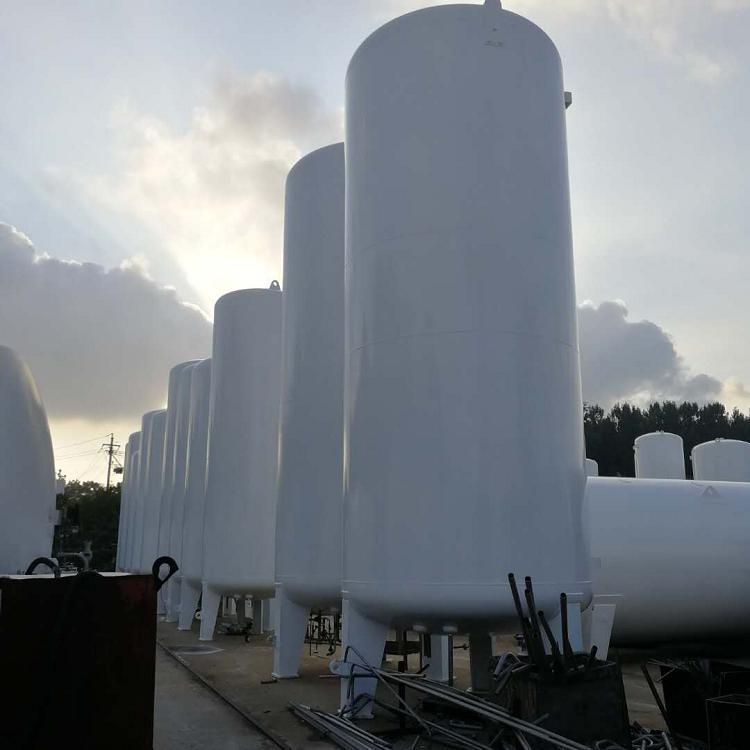
Prior to filling the liquid nitrogen tank, the following checks must be conducted:
Tank exterior inspection: Check for any visible damage, deformation, or corrosion on the tank's exterior, including the tank wall, valves, pipes, and joints.
Sealability Inspection: Verify the sealing performance of the storage tank, including checking for any leaks at valves and pipe connections, to ensure the tank maintains good sealing integrity.
Pressure Check: Verify that the tank's pressure gauge is functioning properly and that the pressure is within the normal range to ensure the tank operates correctly.
Level Check: Inspect the liquid level in the tank to ensure it is within the normal range, avoiding issues caused by levels that are too high or too low.
Insulation Layer Inspection: Check if the insulation layer of the tank is intact, for any signs of damage or detachment, to ensure effective insulation and reduce evaporation losses of liquid nitrogen.
Leak Inspection: Check for signs of liquid nitrogen leakage around the storage tank, including checking for frost, ice, or liquid nitrogen stains on the ground.
Safety Equipment Inspection: Verify that the storage tank's safety equipment, such as leak detectors, alarm systems, and safety valves, are functioning properly to ensure the tank's safety.
Cleaning Inspection: Ensure the interior of the tank is clean, removing accumulated impurities and dirt to maintain the tank's cleanliness and hygiene.
The above lists the checks required prior to filling a liquid nitrogen storage tank, ensuring safe operation of the tank and proper storage of liquid nitrogen. During the inspection, strictly adhere to the relevant operational procedures and safety standards to ensure the safety of the operation.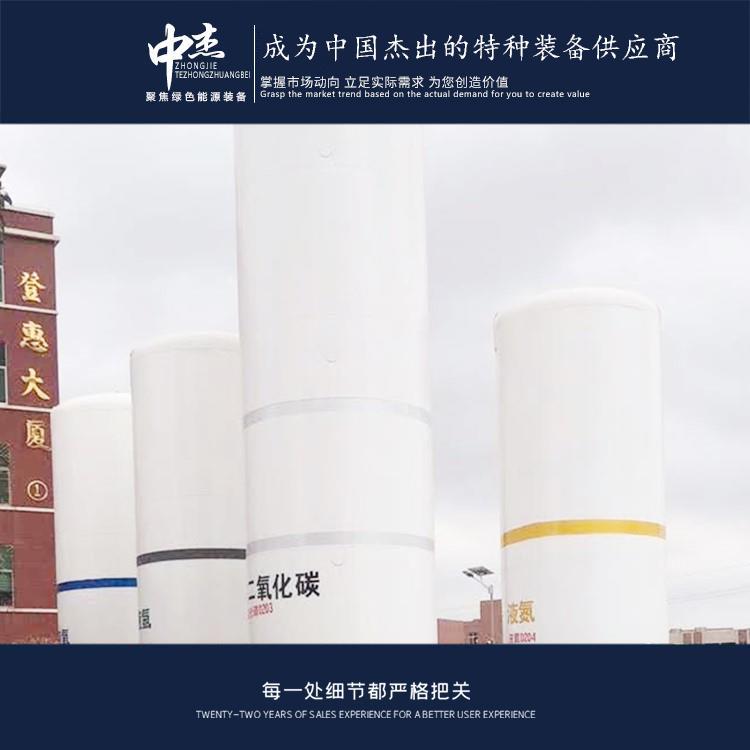
The reasons for the peak popularity of low-temperature liquid storage tanks in recent years are as follows:
Rising Demand: With the development of industries such as manufacturing and scientific research, there is a growing demand for low-temperature liquids. Low-temperature liquid storage tanks can effectively store and supply liquid oxygen, liquid nitrogen, and other low-temperature liquids, meeting the needs of various fields.
Technological Advancements: In recent years, the manufacturing and material technologies for low-temperature liquid storage tanks have continuously improved and innovated. The application of new insulation materials, advanced refrigeration systems, and safety control devices has enhanced the performance and safety of the tanks, making them more reliable and secure.
Enhanced Environmental Awareness: Low-temperature liquid storage tanks enable effective storage and utilization of low-temperature liquids, reducing energy waste and environmental pollution. Amidst the rising environmental awareness, low-temperature liquid storage tanks, as environmentally friendly and energy-saving equipment, have garnered more attention and applications.
Emerging Application Fields: There is an increasing demand for low-temperature liquid storage tanks in emerging application fields. For instance, the application of liquid nitrogen in frozen food, biomedicine, and semiconductor manufacturing is becoming more widespread, propelling the development of low-temperature liquid storage tanks.
Policy Support: The government has provided support and encouragement for the development of low-temperature liquid storage tanks. Through policy guidance and financial support, the industry has been promoted and expanded.
In summary, the peak popularity of low-temperature liquid storage tanks in recent years is mainly due to increasing demand, technological advancements, heightened environmental awareness, the development of new application areas, and policy support. These factors have collectively spurred the rapid growth of the low-temperature liquid storage tank industry.
Nitrogen charging of liquid nitrogen tanks refers to the process of injecting nitrogen gas into the tank to increase the nitrogen concentration and pressure inside, in order to meet certain safety requirements and operational objectives. Here are some precautions to consider when nitrogen charging liquid nitrogen tanks:
Safe Operation: Prior to conducting nitrogen purge operations on liquid nitrogen tanks, it is mandatory that operators possess relevant safety knowledge and operational skills. Operators must wear appropriate personal protective equipment, such as safety goggles, gloves, and protective clothing.
Nitrogen Quality: Utilize high-purity nitrogen for nitrogen blanketing operations to ensure its quality and purity. Nitrogen of low purity may contain impurities or oxygen, which could negatively impact the liquid nitrogen within the tank.
Nitrogen Inerting Speed Control: During the nitrogen inerting process, the speed of nitrogen inerting should be controlled to avoid being too fast or too slow. Excessive speed of nitrogen inerting may cause the internal pressure of the storage tank to rise too high, while a slow speed may lead to extended inerting time.
Pressure Monitoring: During the nitrogen charging process, the internal pressure of the tank should be monitored regularly. Ensure the internal pressure of the tank remains within the safe range and adjust as necessary.
Temperature Control: During the nitrogen blanketing process, attention should be given to controlling the temperature of the storage tank. The low temperature of liquid nitrogen can cause condensation and frost on the storage tank and pipelines. Appropriate measures, such as heating or insulation, should be taken to prevent condensation and frost from occurring.
Post-nitrogen flushing treatment: After the nitrogen flushing operation is completed, the nitrogen flushing unit should be promptly turned off, and the tank should be inspected and cleaned. Ensure there are no residual nitrogen gas or impurities inside the tank.
Note: Nitrogen charging operations for liquid nitrogen tanks must strictly adhere to relevant safety standards.
Zhong Jie Special Equipment upholds the grand vision of "realizing employees' dreams, creating value for customers, and striving for the prosperity and strength of our motherland," and is dedicated to the development of the green energy equipment industry. We offer society products and services with high cost-performance!
Xuzhou 5 cubic meter liquid nitrogen tank - High product safety level
