
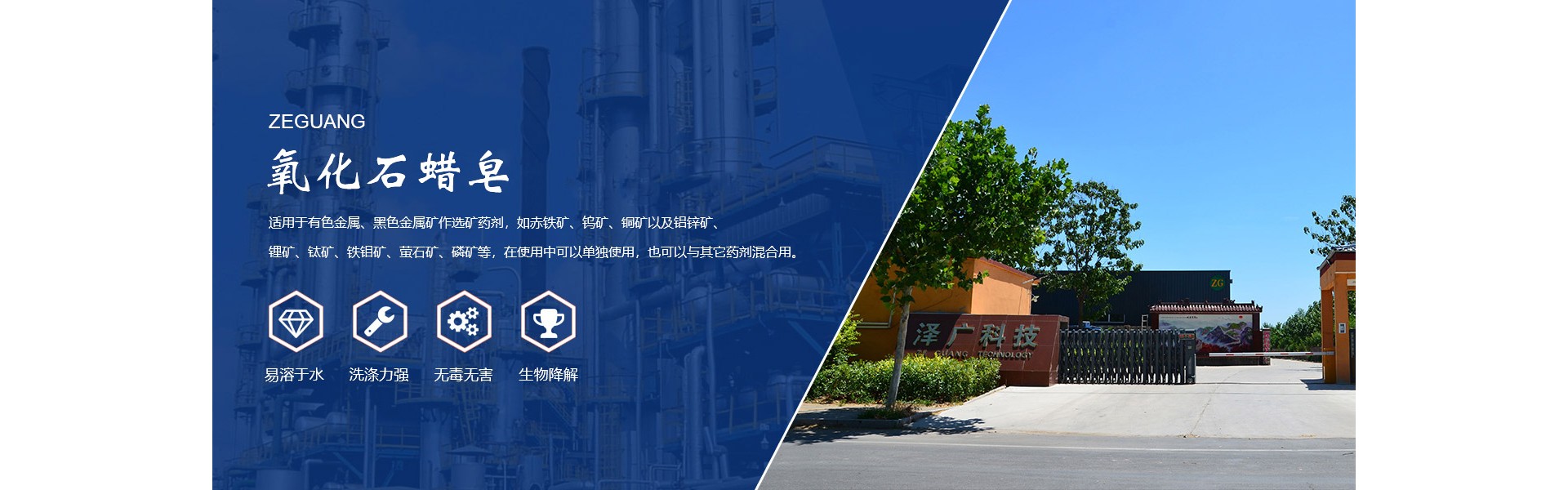
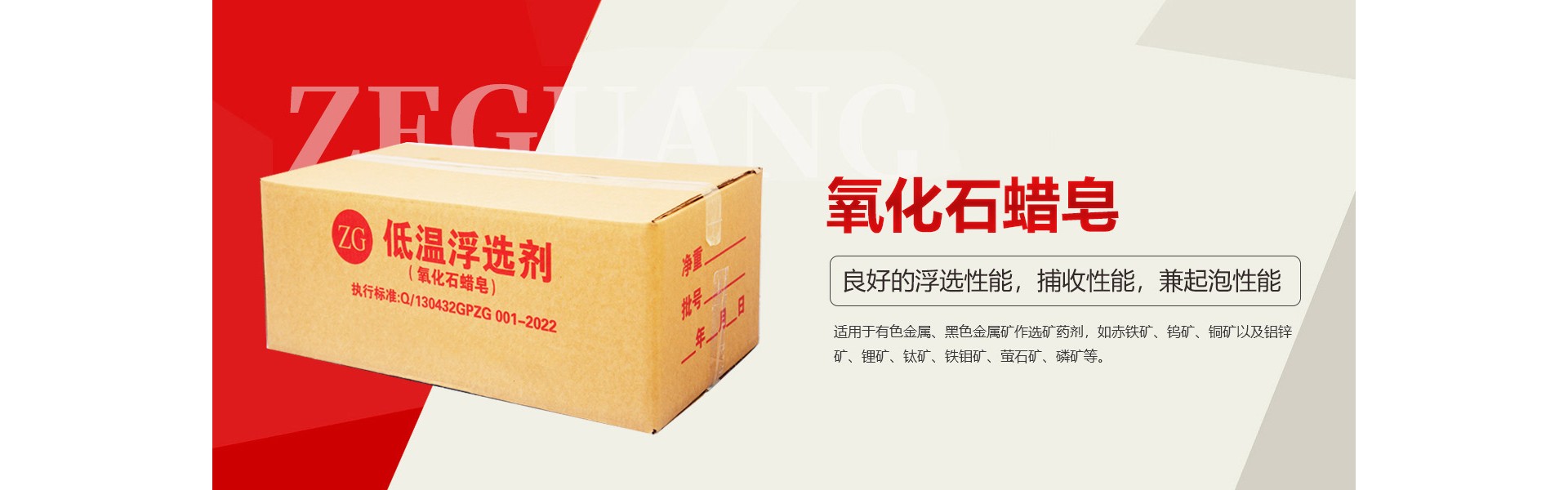

Paraffin wax soap is commonly used as a collector and frother in the flotation of various non-metallic and metallic minerals such as phosphate ore, tungsten ore, fluorite ore, spodumene ore, molybdenite, hematite, and bauxite. As a fatty acid collector, it contains long-chain fatty acids that readily form complexes with the surface of mineral metals, significantly enhancing the hydrophobicity of the mineral surface. Additionally, it possesses frothing properties, making it a suitable substitute for anionic collectors of various fatty acid soaps.
Post-oxidized paraffin soap wastewater, if not handled carefully and discharged into natural water bodies, can increase the organic carbon content and biochemical oxygen demand, leading to an increase in organic pollutants and disrupting the ecological environment of the water bodies. Therefore, properly treating wastewater containing oxidized paraffin soap is of positive significance for the governance and improvement of the ecological environment.
Phosphogypsum is a byproduct of wet-process phosphoric acid production, while fly ash is the fine dust collected from the flue gas after coal combustion. Both are industrial solid wastes. Properly utilized, they can have a positive impact on environmental improvement and the secondary utilization of resources. Phosphogypsum and fly ash have certain adsorption capacities for metal ions and organic matter, but the adsorption effect is not ideal.
CeO2, as a rare earth reagent, is primarily used as a catalyst, catalyst carrier (additive), and ultraviolet absorber. The reagent is stable in nature, does not react with water or organic substances, making it ideal for adsorbing organic solutions without affecting the test results. It is particularly suitable as an additive for photocatalysis.
News Center Co., Ltd.
