

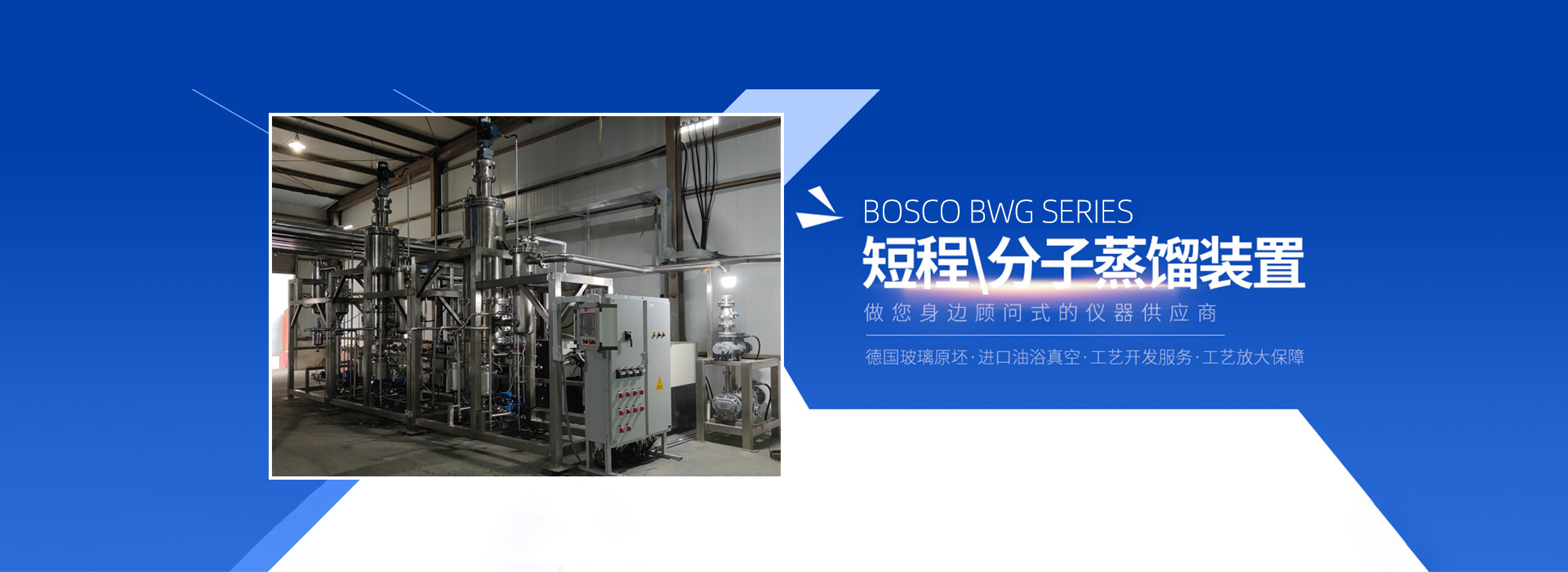
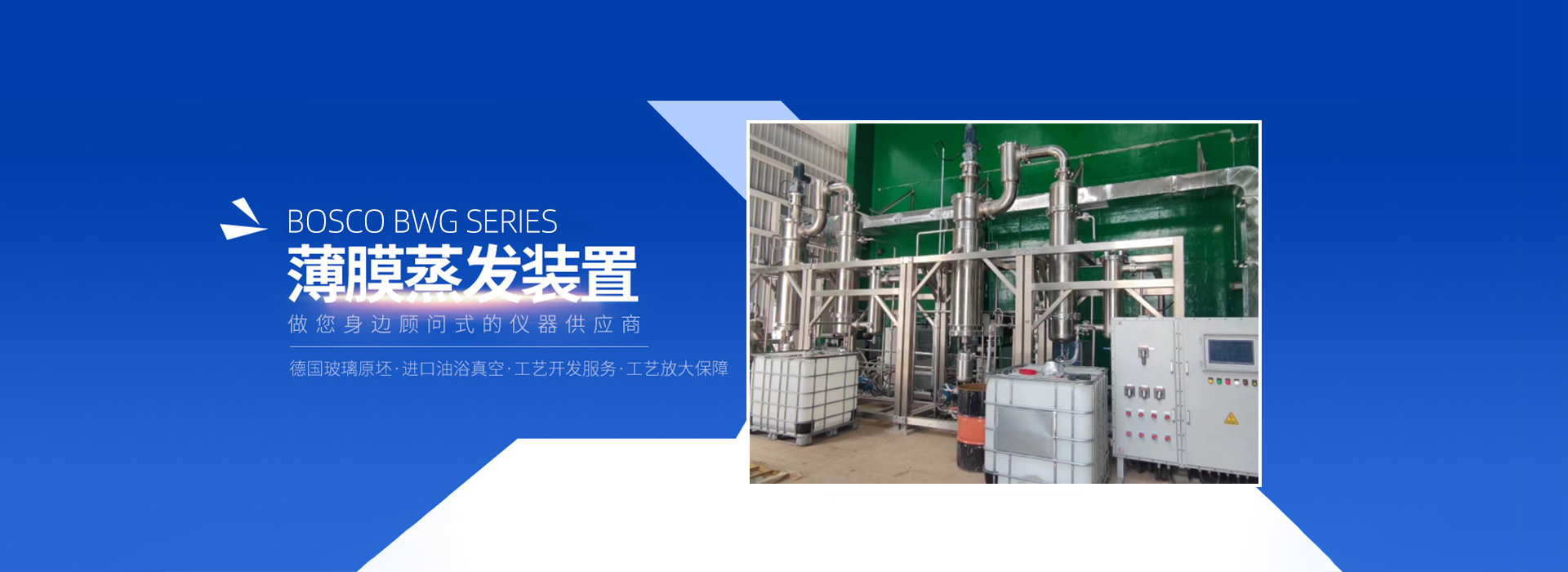


In liquid-liquid separation technology, distillation (including fractional distillation) is one of the most common and widely applied techniques. We've heard of ordinary fractional distillation, extractive distillation, azeotropic distillation, thermosyphon distillation, and reactive distillation, among others.
Short-path distillation, also known as molecular distillation, is a rapidly evolving separation technology in recent years, capable of addressing the separation challenges of substances with thermosensitive and high-boiling-point properties [1]. Although it's called distillation, the principle is quite different. Conventional distillation relies on the difference in boiling points, whereas molecular distillation depends on the average free path of molecules. What is the free path? It's the straight-line distance a molecule travels between successive collisions with other molecules (a rough interpretation would be how far a molecule can move in its thermal motion), and the average free path is a statistical average of these distances.
The principle diagram of molecular distillation is as shown above. Light components have a longer free path, while heavy components have a shorter one. It's like throwing a thin person and a fat person in a room; the fat person can't throw high, and they fall back down halfway due to gravity, but the thin person can throw high, and wham, hits the ceiling, and then the fat person and the thin person separate (still better to be a fat person, though...).
Above is a comparison between molecular distillation and conventional distillation, with several key characteristics of molecular distillation technology: 1) High vacuum distillation. The ability of the molecular distillation unit to create a high vacuum environment is largely due to its excellent sealing, which can reduce internal pressure to below 0.1 Pa. 2) Low distillation temperature. Molecular distillation separates based on the difference in the average free path of molecules, resulting in a distillation temperature significantly lower than the boiling point of the raw material, addressing the issue of thermosensitivity in high-value-added chemicals. 3) High separation efficiency. The irreversible nature of the molecular distillation process allows it to separate materials that conventional distillation cannot, making it applicable in food industries that require high purity products. 4) Short heat exposure time. The刮膜器 of the molecular distillation unit forms a uniform film on the evaporator surface, increasing the evaporation area and shortening the distillation time, reducing the likelihood of material decomposition due to prolonged heat exposure, making the separation more efficient and saving time costs.
Molecular distillation is utilized in various fields such as petrochemicals, food, and perfumery, particularly in the separation and purification of natural products and thermally sensitive materials. For instance, in the refinement of fish oil extraction, where EPA and DHA (also known as "brain gold," a common ingredient in many baby products) are primarily sourced from marine fish oil, molecular distillation produces fish oil products with good color, pure scent, and low peroxide value. Additionally, molecular distillation is used for the extraction of natural pigments, vitamins, and essential oils. In the petrochemical industry, it can be applied in the refining of base oils for synthetic lubricants and in oil analysis, particularly in the deep stripping of vacuum distillate oil.
The combination of molecular distillation technology with other techniques can address more practical issues. However, the research on the fluid mechanics and mass transfer and heat transfer mechanisms within molecular distillation instruments is still insufficient. Further study should be conducted to establish corresponding mathematical models, providing a theoretical foundation for molecular distillation technology to tackle real-world problems. Additionally, there is a need to vigorously develop low-cost, high-capacity molecular distillation equipment to enable large-scale industrial applications of the technology.
