
As summer approaches, vectors are once again in their breeding season. Vectors are biological agents that can directly or indirectly transmit and spread diseases, posing a threat to human health. Vectors include vertebrates and invertebrates, with vertebrates numbering over 40,000 species, primarily rodents, which belong to the mammal class and the rodent order. Invertebrates are mainly insects such as mosquitoes, flies, cockroaches, fleas, and arachnids like ticks and mites.Earthworms, leeches, nematodes, sandworms, radiolarians, squids, and hydra.The four most common pests are: flies, rodents, cockroaches, and mosquitoes. Mites, on the other hand, are omnipresent but not as...*Discovery.

What are the hazards of disease vectors?
Pathogens can not only directly impact human normal life through biting and contaminating food, but also spread a series of important infectious diseases through various means. Many of the infectious diseases reported by law in our country are vector-borne, such as plague, epidemic hemorrhagic fever, leptospirosis, malaria, dengue fever, endemic typhus, and filariasis. Some gastrointestinal infectious diseases, such as dysentery and typhoid fever, spread among people through the mechanical transmission of vectors.
The Importance of Vector ControlMedia-borne diseases are one of the severe challenges humanity faces. With the global warming, the accelerated process of urbanization, the development of tourism and trade, and the continuous changes in the ecological environment, there have been new changes in the types, densities, and distributions of vector organisms. Not only has the range, frequency, and intensity of existing vector-borne diseases expanded, but also some new ones have emerged. Media-borne diseases are characterized by their rapid transmission and easy spread, posing a serious threat to public health. Effective control of vector organisms can reduce their interference and economic losses to the population, as well as prevent and control the occurrence and spread of vector-borne diseases. In recent years, outbreaks of some vector-borne diseases have posed threats to our country.
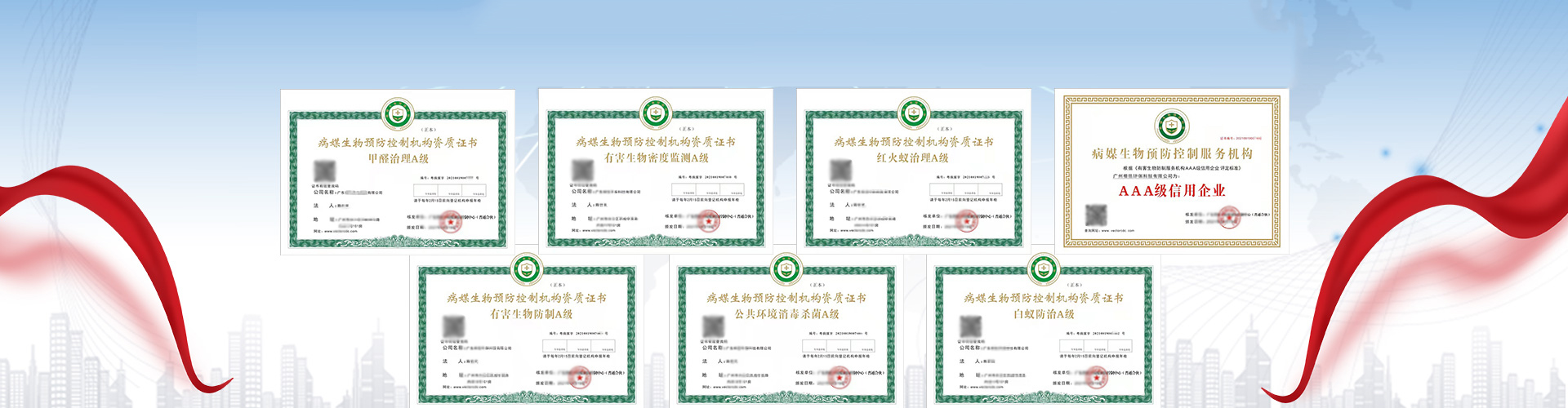
Pest Control Companies Need Qualification Certificates. Let's Understand the Qualification Certificate for Pest Control Services. The qualification certificate for pest control demonstrates a company's ability to prevent and control disease vectors, enabling business expansion, enhancing corporate reputation, gaining points in tenders, and reinforcing employees' confidence in the company. What documents are required to apply for the qualification certificate for pest control services?