
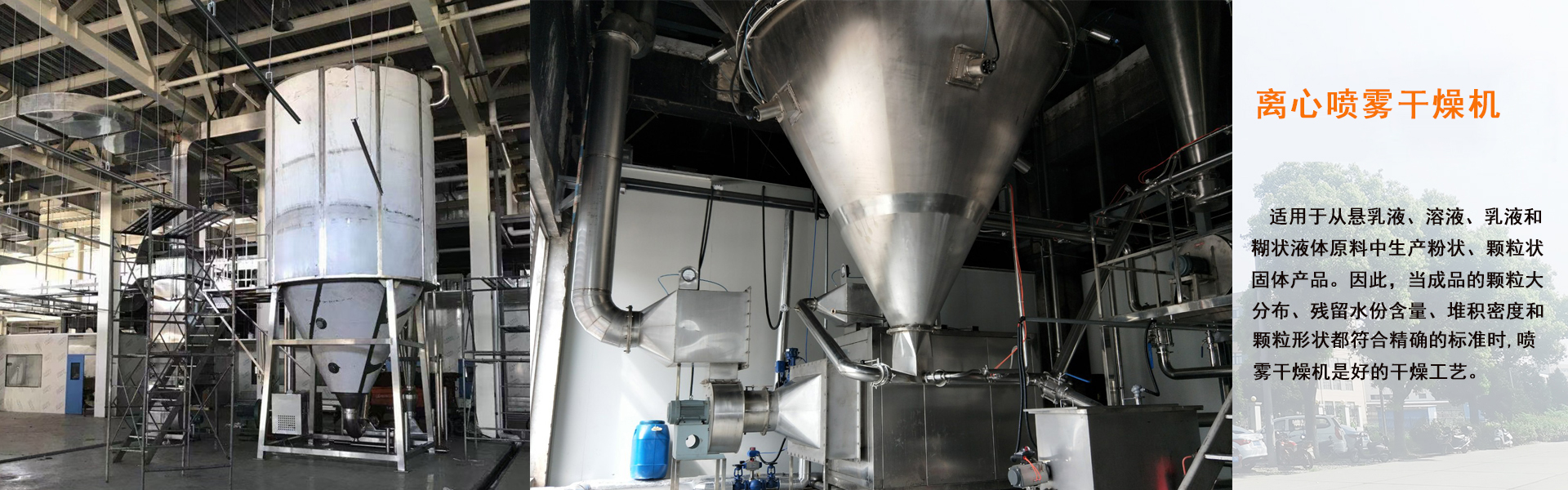
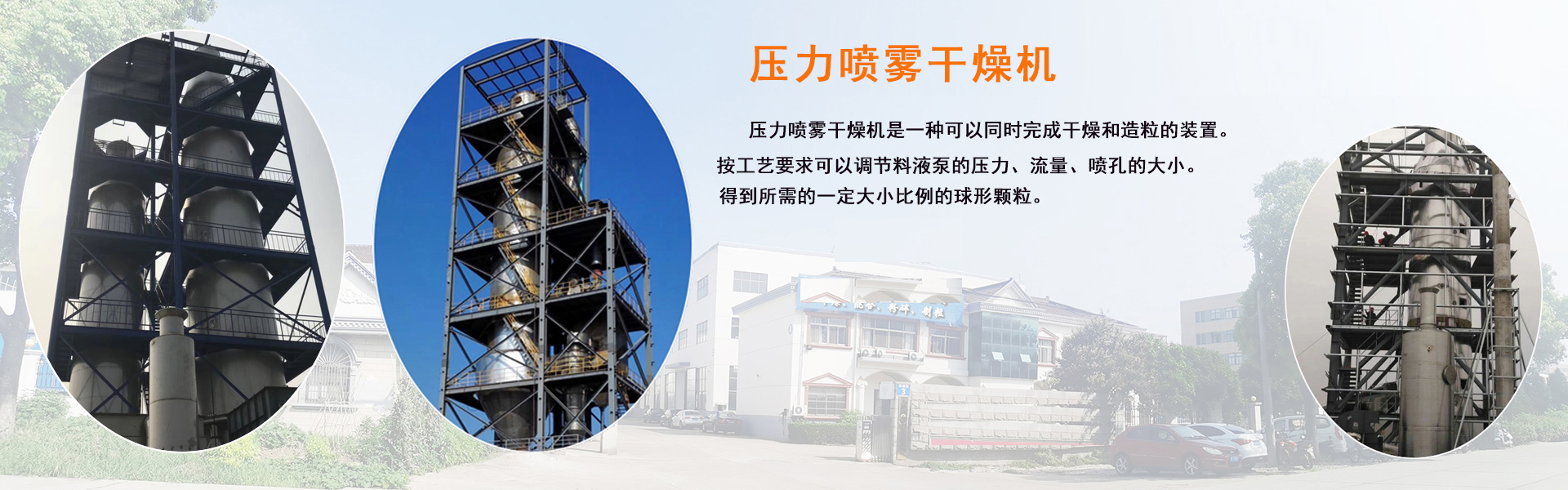

Now, dried materials have become an essential component in many production fields, and the choice of drying equipment directly impacts the drying effect. Here is an introduction to the wet material drying process of pressure spray drying equipment:
1. Wet Material Drying Process
Dry Conditions: Flow, humidity, and temperature of the drying medium (hot air).
Due to the presence of hot air and cold materials, a heat transfer driving force is generated between the hot air and the material when the hot air flows steadily over the wet material surface. The hot air transfers heat to the material through cross-ventilation, causing the water in the material to vaporize using the heat and then be continuously carried away by the air flow, resulting in a continuous decrease in the material's humidity. Once it reaches the equilibrium moisture content, the drying process of the pressure spray dryer is complete.
During the drying process, there are two interacting processes: heat transfer and mass transfer. Heat transfer refers to the heat carried by hot air being transferred to the material, used to vaporize moisture and heat within the material; mass transfer involves evaporating the moisture from the material and mixing it with the hot air, followed by drying through the reduction of moisture content.
2. Characteristics of the Drying Process
During the drying process of the pressure spray drying equipment, due to the material's specific particle size, it can be considered as particles of that size on a microscopic level, or it may be very fine powder. In reality, the mechanisms of heat transfer and mass transfer between hot air and material particles, as well as within the material particles themselves, are different. Theoretically, it divides heat transfer and mass transfer into two processes: heat and mass transfer between the hot gas flow and the material surface, and heat and mass transfer within the material.
These two distinct processes affect the drying of materials, each playing a different role in the various drying stages. This results in wet materials drying at a consistent and stable rate in the initial phase, and at an increasingly slower rate in the later stages. Consequently, the drying process is divided into constant rate drying and decreasing rate drying.
