
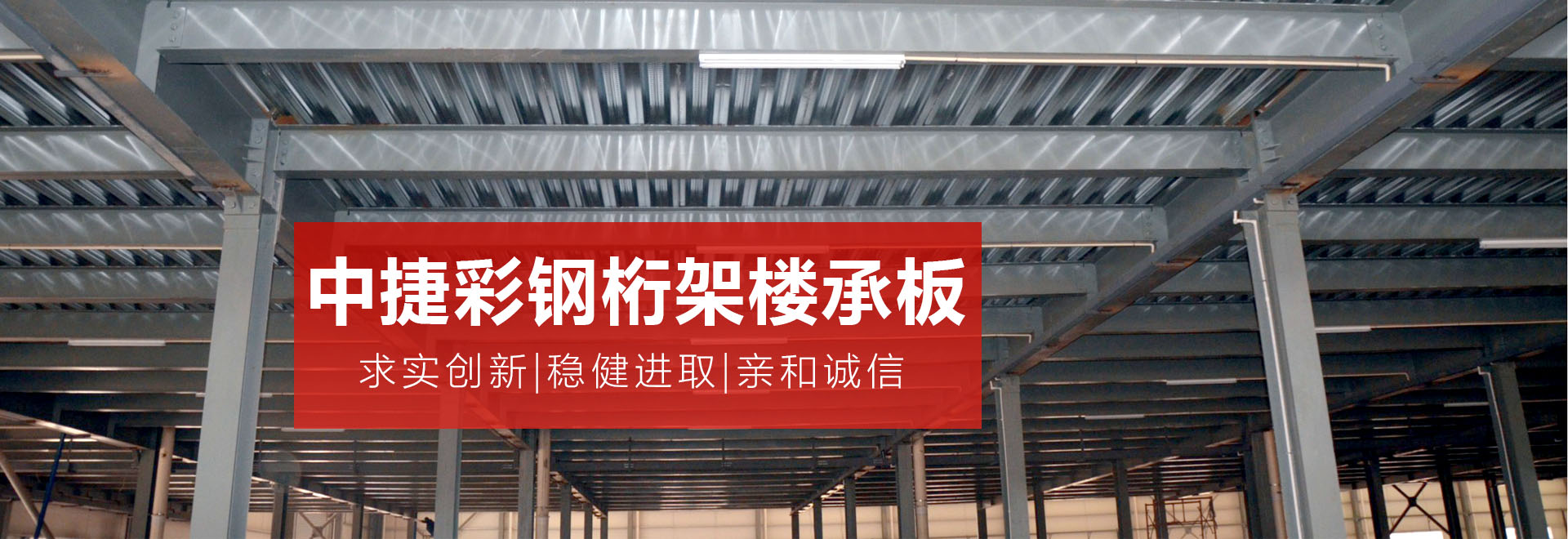
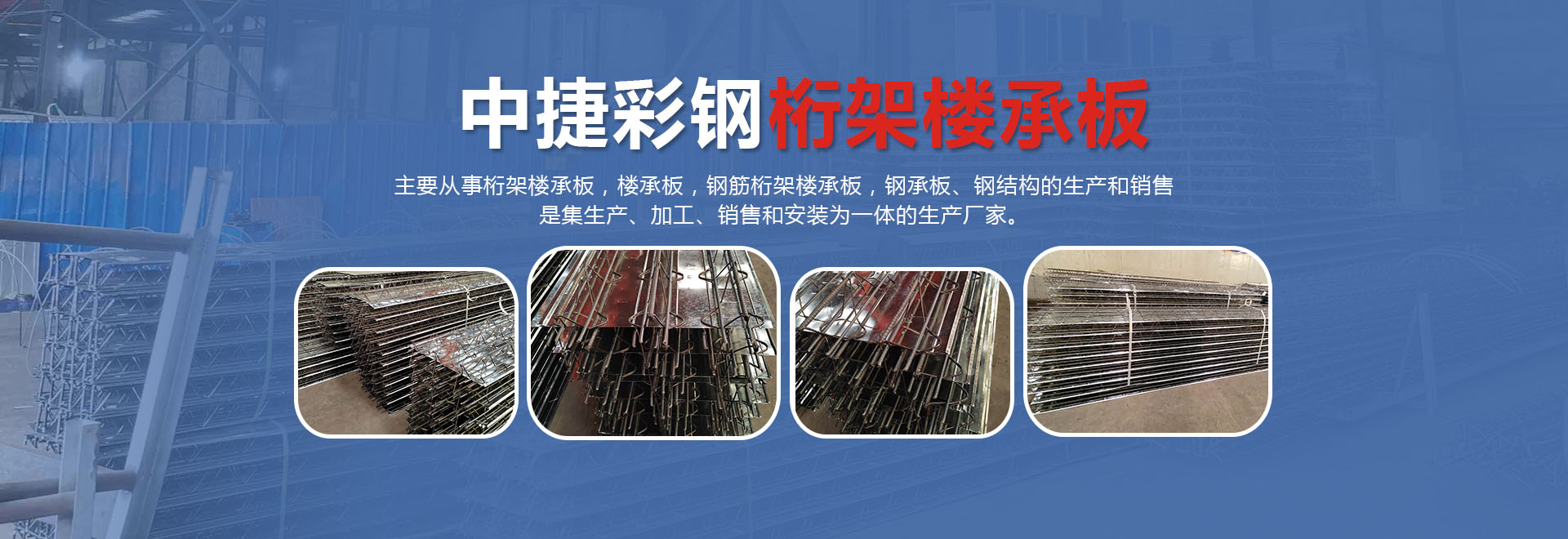


Reinforcing truss deck panels significantly reduce the amount of on-site reinforcing bar binding work, accelerate construction progress, and enhance construction safety, making them highly applicable in factory and residential housing construction. To ensure construction safety, we must correctly carry out the construction in the following sequence and methods!
Reinforced truss floor deck installation sequence
(1) Construction sequence
A. The flat construction sequence: The laying of steel truss floor slabs on each floor should be based on the starting position of the construction drawing and laid in one direction, followed by the treatment of the edge and corner parts.
B. Facade Construction Sequence: Lay the corresponding floor steel truss decks in sequence as the main structure is installed.
(2) The installation of steel truss floor decks is recommended to be carried out after the next section of steel columns and the corresponding steel beams have been installed.
Prior to laying the floorboards, place the reference line at the starting position as shown in the drawings. Align the line, install the best-selling panels first, and then proceed to install the other panels. The floorboards are connected using a locking mechanism, ensuring a tight fit between the hooks to prevent leakage when pouring concrete.
(4) After the steel truss floor deck is positioned, the vertical steel bars at the ends and the bottom formwork should be securely spot-welded to the steel beam. The bottom formwork and steel beam should be spot-welded along the width of the deck, with the welding performed using manual arc welding and spacing not exceeding 300mm.
Vertical support steel bars welded to steel beams
(5) After confirming the area for paving, it is essential to promptly tie the bottom reinforcement bars to prevent lateral instability of the steel truss. Additionally, temporary supports must be set up in accordance with design specifications immediately, and their stability and quality must be verified.
(6) There must be no gaps where the board end and edge overlap with the beam.
Additional reinforcing steel work and pipeline installation.
Once the area to be laid is confirmed, the floor support stirrups, reinforcing bars, and negative reinforcement, etc., should be set according to the design requirements.
In the openings of the floor slabs, reinforcing ribs should be installed at the edges according to the design specifications, with side formwork set around the perimeter. The reinforcement of the steel truss floor deck and the bottom formwork can only be cut after the concrete in the floor slab has reached the designed strength.
In the installation of pipelines within the C. board, rigid pipelines should be used during straight crossings, while flexible materials are preferable for diagonal crossings.
Screw Welding
(8) Nail Welding
The gap between the bottom form of the steel truss floor slab and the base material should be kept within 1.0mm to ensure excellent bolted welding quality.
(9) Edge Template Installation
During installation, the side mold should be tightly adhered to the steel beam surface, with weld seams 25mm long and 2mm high spaced every 300mm along the steel beam surface. After installation, a full check must be conducted to confirm that all side molds have been installed according to the construction drawings, ensuring that there are no leakage areas.
Edge Template Installation
Installation and Acceptance
The installation acceptance inspection includes:
A. The model number of steel truss floor slab for each section.
B. Are the vertical reinforcement and the edge of the plate welded to the steel beam?
Rebar length and spacing arrangement;
Inspect the quality, quantity, and spacing of the bolt welds.
Is there a possibility of leakage at the edge of the E. board?
Connection between steel truss floor deck and shear wall
G. Temporary Support Status.
Reinforcement Truss Deck Installation Method
Prior to laying the reinforced truss floor deck, place the datum line at the starting position shown in the drawings. Align with the datum line, install the popular block panels, and weld the vertical support rebars to the steel beam for fixation. Then, install the other panels sequentially. During the laying process, check the dimensions marked in the drawings for each span of the deck; adjust as necessary if there are deviations.
(2) The floor connection employs a locking mechanism, ensuring a tight hook connection between panels to prevent leakage during concrete pouring. Additionally, attention must be paid to aligning the panel orientation consistently, with truss joint spacing at 200mm. It is also crucial to align the transverse joints of different formwork templates.
(3) At locations where the flat shape changes, such as at the corners of steel columns, the intersections of core shafts, and the connection plates on beam surfaces, the ends of the sheets can be cut. Before cutting, the dimensions to be cut should be laid out and reviewed. The ends of the cut sheets must still be welded with horizontal and vertical support rebars according to the original specifications. If a cut is made in the middle of the joint, the web rebars must also be welded to the vertical rebars before installation.
(4) If the width of the inter-panel joint is less than 576mm, the plate can be cut along the length direction of the steel truss. After cutting, there should be one or two steel trusses on the plate, and the steel trusses must not be severed.
(5) Reinforcing trusses should be parallel to the ends of the steel beams. The bottom formwork should overlap the steel beams by no less than 30mm. The galvanized steel plates should be spot-welded to the steel beams along the length, with a welding interval of 300mm, using manual arc welding.
(6) The vertical steel bars at the ends of the steel beam should overlap by at least 5d on the beam, and not less than 50mm, while ensuring the galvanized formwork can be properly overlapped onto the steel beam.
Once the area to be laid is confirmed, the floor support stirrups, reinforcing bars, and negative reinforcement, etc., should be set according to the design requirements.
(8) During the installation of the edge formwork, it should be aligned using a string. After adjusting appropriately, weld one end of the reinforcing bar to the bolt points and the other end to the edge formwork, securing the formwork. The welding distance between the bottom of the edge formwork and the upper flange of the steel beam should be 300mm.
(9) If it is necessary to drill holes in the floor slabs, construction should reserve space for them. Reinforcement around the hole edges should be installed according to design specifications, with side forms set up around the perimeter. The steel truss forms and the bottom form can be cut after the concrete in the floor slab reaches the designed strength. It is advisable to cut from bottom to top to prevent the bottom form edges from detaching from the freshly poured concrete. Cutting can be done using mechanical or oxygen-based cutting methods.
After the steel truss floor deck is installed, it is prohibited to cut any steel bars from the steel truss. If it is necessary to cut the steel truss, it should be re-bonded with steel bars of the same type, ensuring the design-specified overlap length.
(11) After the steel truss floor deck is laid, proper product protection should be ensured to prevent any damage caused by human factors, and it is prohibited to stack any debris.
Installation Precautions for Steel Truss Floor Decking
Reinforced truss deck is a type of unsupported composite deck; the reinforced truss is prefabricated in the back-end processing workshop. On-site construction requires first positioning the truss deck correctly, then welding the reinforcement, followed by welding the anchor bolts, and finally placing the reinforced truss for binding. After inspection, concrete is poured.
How to ensure the quality of truss deck installation and the safety of the installation personnel? Here are the main points to be aware of:
(1) Absolutely prohibit personnel from passing beneath the construction floor with steel truss girders.
(2) During the installation of steel truss floor decks, it is essential to lay them as they are unpacked, ensuring they are焊接 fixed in place simultaneously. It is strictly prohibited to leave boards loose or to use truss floor decks as temporary installations. If the structure has irregular corners or sharp edges, please exercise caution.
(3) It is strictly prohibited to walk on truss floor slabs that are not securely fixed or not constructed according to design specifications. Walking on these slabs is also forbidden to step on galvanized bottom form steel plates to prevent accidents.
(4) After the steel truss floor deck is laid, the openings should be promptly sealed, guardrails set up, and clear signage provided.
(5) Pay special attention to the surrounding and below the flame-cutting area, ensuring thorough cleaning and inspection to prevent fire hazards. It is essential to equip with high-quality fire extinguishing equipment and have a dedicated person conducting patrols.
Reinforced Truss Floor Deck Leaking Analysis
We previously introduced the features and advantages of steel truss floor slabs. Regarding the potential drawbacks, customers may inquire about the possibility of leakage when using steel truss floor slabs. The answer is yes. What specific factors can affect leakage? Details are as follows:
(1) The spacing between supports is too wide, leading to uneven stress distribution and subsequent deformation, which causes water leakage.
(2) The T-shaped support was not perpendicular to the lead strip during installation, resulting in excessive gaps between the aluminum magnesium manganese roof panels, leading to leaks.
(3) The worker on the construction site was not proficient in operating the edging machine, resulting in a poor seal and subsequent leakage.
(4) The roof design features a large curve, and the roof panels are not perpendicular to the secondary joists, with the joint positions being weak spots. This has a definite impact on performance stability and quality.
(5) At the welding joint of the downspout and the gutter, due to the large deformation in stainless steel welding, local bulges have formed, leading to water accumulation.
(6) The installation of the gutters was not standardized, with an excessive number of sections and a lack of slope in the structural design along the length, resulting in a too small runoff slope and causing water to accumulate.
