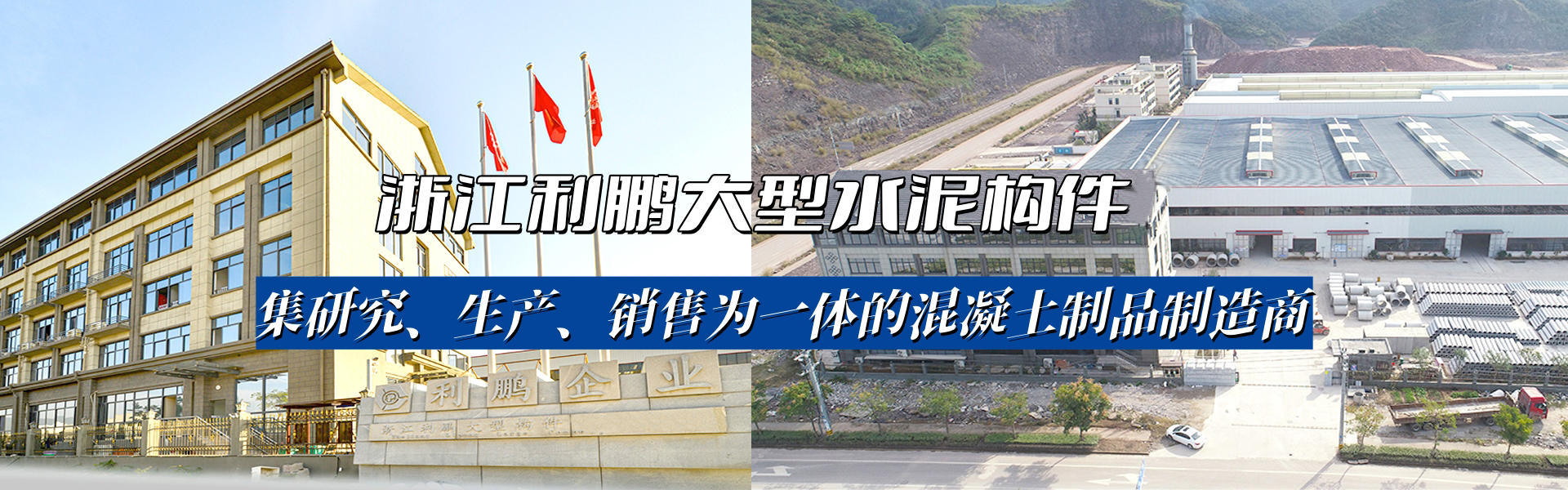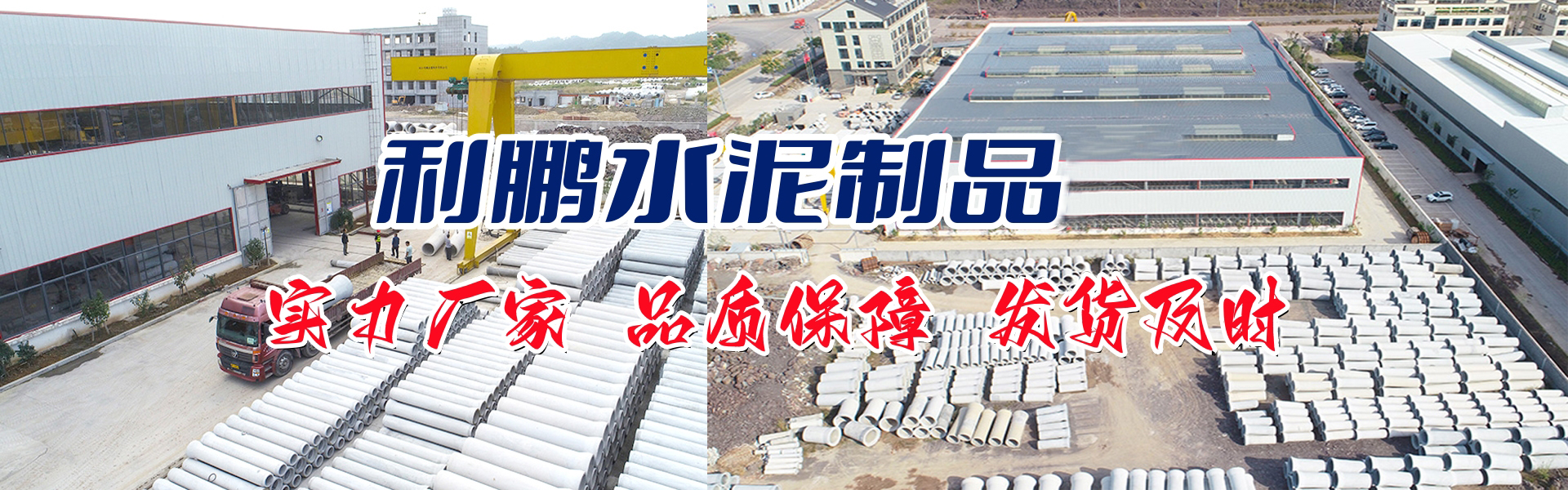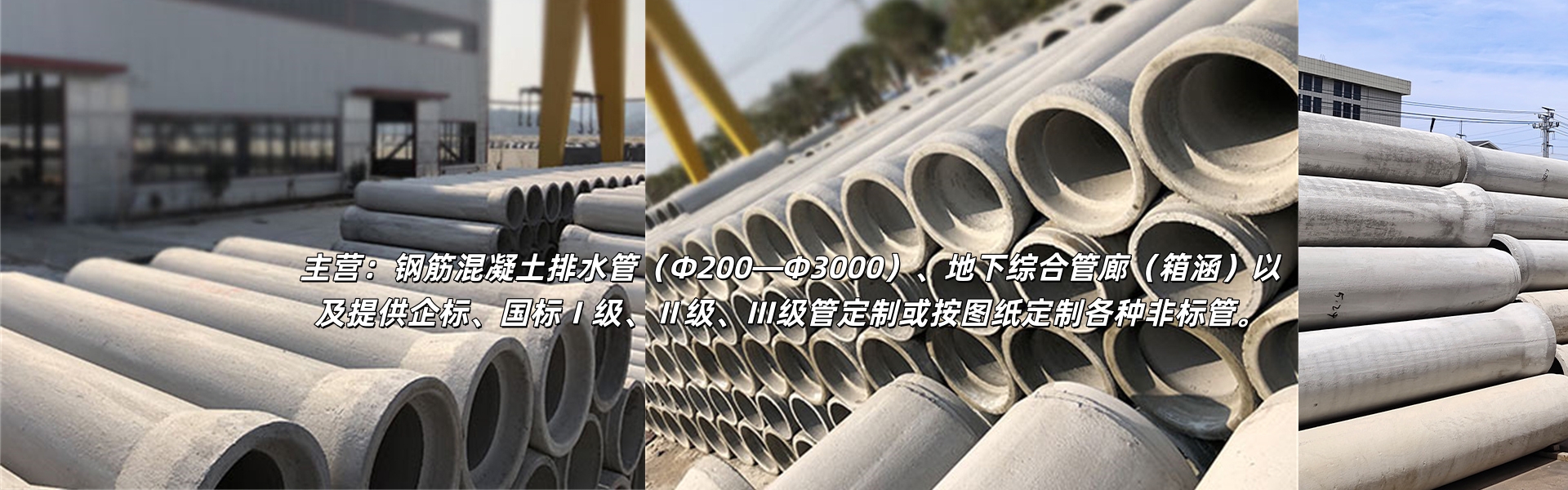
公司主营:Reinforced concrete drainage pipes (Φ200—Φ3000), underground utility tunnels (box culverts), and custom non-standard pipes as per drawings provided.
13645788727


企业资质
Key Specifications for Concrete Culvert Construction (Including Installation and Connection Points)
2025-09-20
Pre-construction preparations
Blueprint VerificationBased on the engineering design drawings, specify the diameter, length, installation location, slope requirements of the cement culvert pipe, as well as the connection parameters with other pipes and structures (such as joint type, elevation difference). Pay particular attention to the consistency of the centerline and elevation of the culvert installation with the design drawings, ensuring that deviations are within the permissible limits of the specifications.
Material InspectionPrior to the pipe's installation, conduct a thorough visual quality inspection of each pipe to ensure there are no cracks, missing corners, exposed reinforcement, honeycomb surface, or other defects. Measure the pipe's diameter, wall thickness, and length, ensuring the dimensions are within the relevant standards (e.g., diameter deviation ≤ ±5mm, wall thickness deviation ≥ -5mm). Conduct batch sampling for concrete strength (measured by rebound meters) and impermeability performance (through impermeability tests) to ensure the material quality meets the required standards.
Site and Equipment PreparationThe construction site will be cleared, the working surface leveled, and areas designated for culvert storage (to be elevated 30-50cm to prevent moisture damage), material storage, and construction operations; suitable lifting equipment (such as cranes, forklifts) will be provided based on the weight of the culverts and installation requirements, with equipment performance checked; interface sealing materials (such as rubber gaskets, waterproof mortar), bedding materials (graded sand and gravel, plain concrete), and compaction equipment (small rollers, tamper) will be prepared.
Foundation TreatmentBased on geological survey reports, the foundation of the culvert installation must be treated. If the soil is in its original state and meets the bearing capacity requirements (bearing capacity must be ≥120 kPa), it should be directly leveled and compacted. If the soil is soft, silt, or other weak foundations, it is necessary to first replace it with graded sand and gravel (replacement depth is determined by geological conditions, usually 50-100cm), compacted in layers (each layer thickness 20-30cm, compaction rate ≥93%), or pour a C15 plain concrete cushion layer (thickness 10-15cm) to ensure the stability of the foundation and prevent settlement and deformation of the culvert.
2. Core Construction Process
Surveying and StakingUsing a total station, the center line for culvert installation is laid out according to the design drawings. A control pile is set every 20-30 meters, marking the installation position and elevation of the culvert. The excavation edge line is marked with white lime, with the excavation width needing to be 30-50 cm wider than the external diameter of the culvert, to provide ample working space.
Excavation of the foundation pitOur excavation process involves layer-by-layer digging with excavators, continuously monitored for depth using a level instrument to prevent over-excavation. If the excavation depth exceeds 1.5 meters, we must slope the soil according to its type (e.g., for silty clay, a slope ratio of 1:0.5) or set up support structures (e.g., sheet piles) to prevent collapse. Once the excavation reaches 10-15 cm above the designed elevation, manual cleaning is employed to remove debris and level the base surface.
Sub-base constructionAfter the foundation pit passes the acceptance, the bedding material is laid. If a graded sand and gravel bedding is used, the thickness should be 10-20cm and compacted in layers; if plain concrete bedding is used, the strength grade should be C15, with a thickness of 10-15cm. After pouring, the surface should be smoothed and leveled. The涵管 installation can only be carried out after the bedding material's strength reaches 70%.
Pipe Hanger Installation and PositioningSelect appropriate lifting equipment and accessories (such as lifting straps, special clamps) based on the weight of the culvert. Set the lifting points symmetrically to prevent the culvert from tilting or colliding. Gently lower the culvert into the foundation pit, placing it in order (from downstream to upstream), aligning the centerline of the culvert with the centerline of the pit, and ensuring the pipe ends are aligned with a 5-10mm gap left for the joint.
Interface Processing:
The flat pipe: Clean the pipe mouth surface, apply a layer of waterproof mortar 5-10mm thick, lay waterproof membrane with a width of 20-30cm, align and compact the pipe mouths of adjacent culverts, tie wire mesh (10x10mm grid) outside the joints, then apply another layer of waterproof mortar to form a sealing layer.
Socket pipe sleeve: Apply lubricant (special pipe lubricant or soap water) evenly to the rubber seal ring, insert it into the socket's groove, ensuring the seal ring is flat and undistorted; clean the surface of the insertion sleeve, and slowly insert it into the socket, aligning with the marked line on the socket for depth. Maintain alignment of the culvert axis during insertion to prevent deformation of the seal ring; after the joint installation is complete, fill the gap between the socket and insertion sleeve with cement mortar, compact and smooth it.
Gland Pipe: Fill the gland groove with a sealing gasket to interlock the adjacent gland pipes, ensuring a tight fit at the joints; apply two layers of polyurethane waterproof coating (thickness ≥1.5mm) on the exterior of the joints, or wrap with glass fiber cloth followed by waterproof mortar to enhance the sealing.
Pipe fixing and slope calibrationFor every 3-5 installed culverts, provide temporary support with sand and gravel on both sides to prevent the culvert from rolling or shifting; use a level to check the gradient of the culvert to ensure it meets design requirements (such as drainage culverts typically not less than 0.3%), and if there is a deviation in gradient, gently adjust by placing a small amount of sand and gravel at the bottom of the culvert (thickness not exceeding 5cm), strictly prohibiting excessive elevation or depression of the culvert.
Returfing and CompactionOnce the涵管installation and interface processing are completed, the backfilling can proceed upon passing inspection. Use clean soil or graded sand and gravel (free of large stone or frozen blocks) for backfilling. Fill symmetrically from both sides of the culvert, with each layer being 20-30cm thick to prevent the culvert from shifting or interfaces from deforming. Within a 30cm radius of the culvert wall, use a small compactor for light compaction (density ≥90%) to avoid damaging the culvert with the compaction equipment. From 30cm above the culvert top to 50cm above, compact normally with a compactor (density ≥93%). Beyond 50cm above the culvert top, a small roller compactor can be used for compaction (density to be determined by engineering requirements, generally not less than 95%).
Special Site Construction Precautions
Rainy Season ConstructionAfter excavation, it is essential to promptly set up drainage ditches and sump pits to remove accumulated water in the foundation pit and prevent the subsoil from being softened by water immersion; check if the joints are damp before installing culverts, and select waterproof sealing materials; avoid using soil with excessive humidity during backfilling. In case of rain, cover the backfilled area with a rainproof tarpaulin, and then promptly drain and dry the area after the rain stops before continuing with the backfilling.
Winter ConstructionThe concrete base and culvert joint mortar must be mixed with hot water (water temperature ≤ 80℃) and mixed with an early-strength anti-freezing agent (in accordance with specification requirements) to ensure normal hardening of the concrete under sub-zero temperatures. After the culvert installation is completed, insulate the joints and backfill soil (e.g., cover with rock wool blankets or straw mats) to prevent freezing and cracking of the joints. Do not use frozen soil blocks for backfilling; if the soil is frozen, it must be thawed and crushed before use.
Road Construction Across the IntersectionWhen culverts need to cross through highways, railways, and other major transportation routes, a traffic疏导 plan must be established in advance and warning signs set up. Pre-stressed reinforced concrete culverts are selected to enhance their load-bearing capacity. Ground treatment requires replacing and compacting graded sand and gravel (compaction ratio ≥95%) or reinforcing the foundation with methods such as lime soil compaction piles. During backfilling, a steel mesh (φ12 steel, spacing 150mm) is laid above the culvert top, and a C30 concrete cover slab (thickness ≥10cm) is poured to enhance road-bearing capacity and prevent damage to the culvert from vehicle碾压.
Underwater ConstructionIf涵管 needs to be installed underwater in rivers, ponds, etc., the cofferdam method must be used. First, construct a dam to pump out water, clean the riverbed sediment, and then proceed with the foundation treatment and涵管 installation. The涵管 joints must use extremely sealed rubber gaskets, and waterproof tape should be wrapped around the exterior of the joints, with waterproof coatings applied to ensure no leakage at the underwater joints. After the涵管 installation is complete, conduct a water-tightness test first, and only after passing, dismantle the cofferdam and release the water to restore the water flow.
吕总 (Ms.)
13645788727
13645788727
168 Xianglong Road, Nanning Mountain Street, Liandu District, Lishui City, Zhejiang Province
www.114global.com © Zhongshang 114 Hebei Network Technology Co., Ltd.Address: Room 6009, Oriental New World Center, No.118 East Zhongshan Road, Qiaoxi District, Shijiazhuang City, Hebei ProvincePlatform Service Hotline: 4006299930