
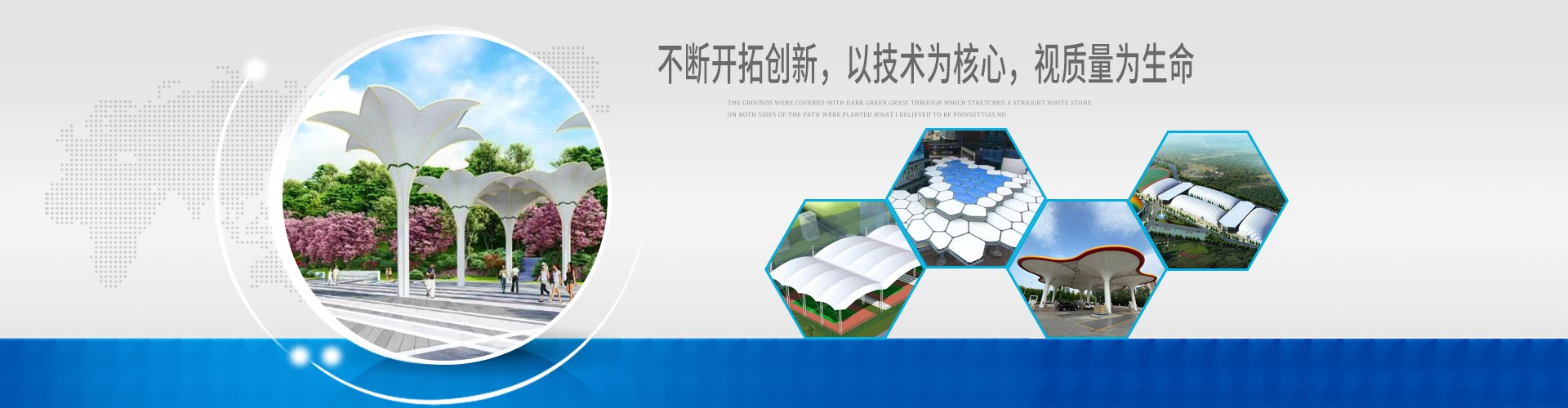
Feature of Landscape Membrane Structure: Lightweight
Tensioned membraneThe reason for its low self-weight structure is that it relies on prestressed shapes rather than materials to maintain structural stability. This makes the landscape membrane structure significantly lighter than traditional architectural structures.No content provided for translation.The product offers a wide variety, yet maintains excellent stability. Architects can leverage its lightweight and large-span characteristics to design and organize detailed structural components, harmoniously integrating its delicate and stable structural properties.
Characteristics Two of Landscape Membrane Structures: Transparency
Translucency is one of the widely recognized features of modern membrane structures. The translucency of the membrane material can provide the necessary lighting for buildings.MingNatural light integration is crucial for energy-efficient architecture, especially for commercial buildings that demand ample lighting and brightness. The combination of natural and artificial lighting enhances the transparency of the film materials, offering architects greater aesthetic creative space in design. At night, the transparency transforms the membrane structure into a sculpture of light.
The light transmittance of the film material is determined by its base fiber, coating, and color. The standard film material's spectral transmittance ratioPlease provide the Chinese content that needs to be translated into American English.The spectral transmittance of some films can reach up to 40%, while others are completely opaque. The transparency of the films and the selection of light colors can be adjusted by the color of the coating or the surface layer. By appropriately combining films with transparent insulation materials, multi-layer films with insulation layers can achieve transparency. Even with a spectral transmittance of only a few percentage points, the film roof remains bright and translucent to the human eye, giving the appearance of a lightweight roof.
Feature Three: Landscape Membrane Structure Characteristics Flexible
Tensioned membrane structures are not rigid; they deform under the influence of wind or snow loads. The membrane structure adapts to external loads through deformation, during which the curvature radius of the membrane surface in the direction of the load decreases until it can more effectively resist the load.
Zhang LaFilmThe structural flexibility allows for significant displacement without deformation. The elastic properties of the membrane material and the level of prestress determine the deformation and response of the membrane structure. The adaptable, flexible characteristics inspired by nature can ignite architectural design inspiration.
Different membrane materials exhibit varying degrees of flexibility. Some are highly flexible and do not crack or break upon folding, making them the foundation and prerequisite for effectively implementing portable and expandable structures.

Feature 4: Landscape Membrane Structure CharacteristicsSculptural vibe
The unique curved shape of the tensile membrane structure gives it a strong sculptural feel. The membrane surface achieves self-balance through tension. The sense of balance in the起伏of the membrane surface makes larger structures appear to float effortlessly between heaven and earth, free from the constraints of gravity. This sculptural texture is exhilarating, whether indoors or outdoors.
Tensioned membrane structures allow architects to design a variety of tensionally self-balanced, complex, and dynamic spatial forms. Throughout the day, as light changes, the sculptural membrane structures present different shapes through light and shadow. At sunrise and sunset, low-angle sunlight accentuates the curvature and relief effects of the roof, while at the farthest point of the sun, the streamlined boundaries of the membrane structures cast wavy shadows on the ground. By utilizing the transparency and reflectivity of the membrane material, artificially designed lighting can also transform the membrane structures into sculptures of light.
Feature Five: Landscape Membrane Structure CharacteristicsSafety
The lightweight tensile membrane structures, designed according to existing international standards and guidelines, offer sufficient safety. These structures maintain excellent stability under horizontal loads such as earthquakes.
Due to their light weight, lightweight structures pose less danger even in the event of accidental collapse compared to traditional building structures. The risk is further reduced when the structural arrangement ensures that rigid support components like masts and beams do not collapse during membrane structure tears.