
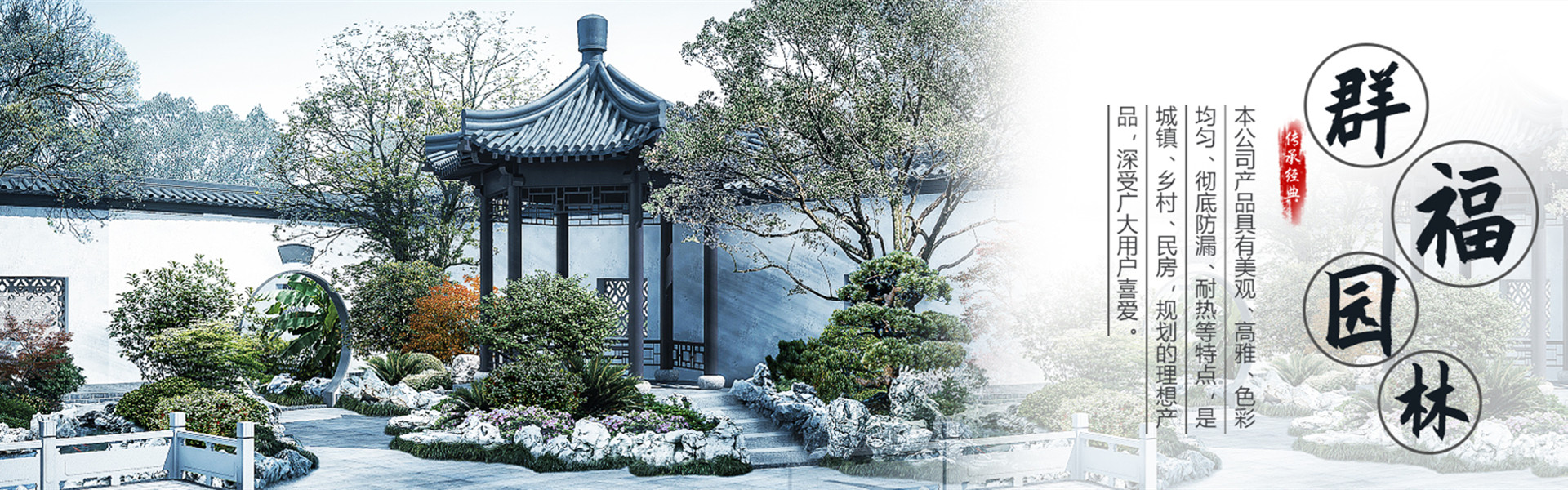
Our bricks are primarily made from clay (including materials like shale and coal slag in powdered form) through a process of processing, shaping, drying, and firing the clay. Contrary to the name, they are not green but rather deep blue and gray blue in color. China has a long history of producing these bricks, which are mainly used for roofing and ridge covering, and also as tiles. These bricks exude an elegant, stable, simple, and tranquil aesthetic.
The grey bricks inherit a 3,000-year-old architectural history, evolving in form, size, and craftsmanship. They are beautiful, simple, waterproof, and insulating, having become one of the indispensable main materials in traditional Chinese architecture. The ancient term "Han tiles," akin to Jingdezhen's porcelain, refers to the blue tiles of the Shu Han period, which surpass other regions in terms of material, aesthetics, and application. Dayi is located in the Hemeishan area in western Sichuan. It is the convergence point of the Longmen and Gulin Yong mountains within the Cretaceous Geopark. Rich in "clay," it is the primary raw material for fired tiles, and with such advantageous conditions, the history of grey tiles is long-standing.
Brick tiles, a type of architectural ceramics, are primarily used for the decorative purposes of buildings' interiors and exteriors. Don't underestimate these small bricks; they hold profound cultural significance! As is widely known, ancient brick tiles evoke a sense of simplicity, elegance, subtlety, and tranquility. Their shallow and deep bas-reliefs, as well as machine-made bricks, exude a modern vibe. The artistic forms are centered around traditional Chinese anecdotes, featuring exquisite patterns with profound meanings. The design approach is innovative, blending the essence of Chinese culture. It can be collected, decorated, and appreciated through experience. It can endure the warmth and simplicity of life; it cannot be replicated or imported, marking a true return to civilization. Brick art not only decorates, inherits, and passes on history but also serves as a piece of art for appreciation and performance. The doctrine of the mean merges harmony with tradition, nurturing the soul with bricks. Blue-gray hues are rare in brick-making. Color variations are visible: if you frequently touch it, it absorbs the body's Qi, taste, and moisture, nourishing itself; if you step on it, it glows. Water is used to nourish natural changes, simple and natural. It is like the color and aroma of tea when serving tea. The embellishments of painting enrich one's artistic soul.


通过认证