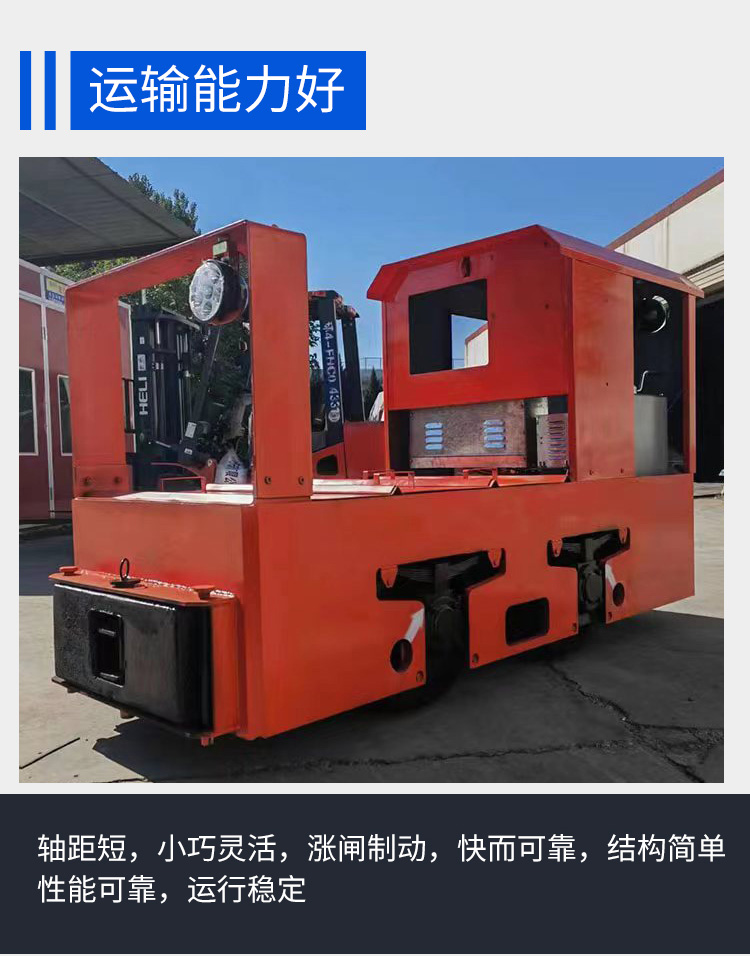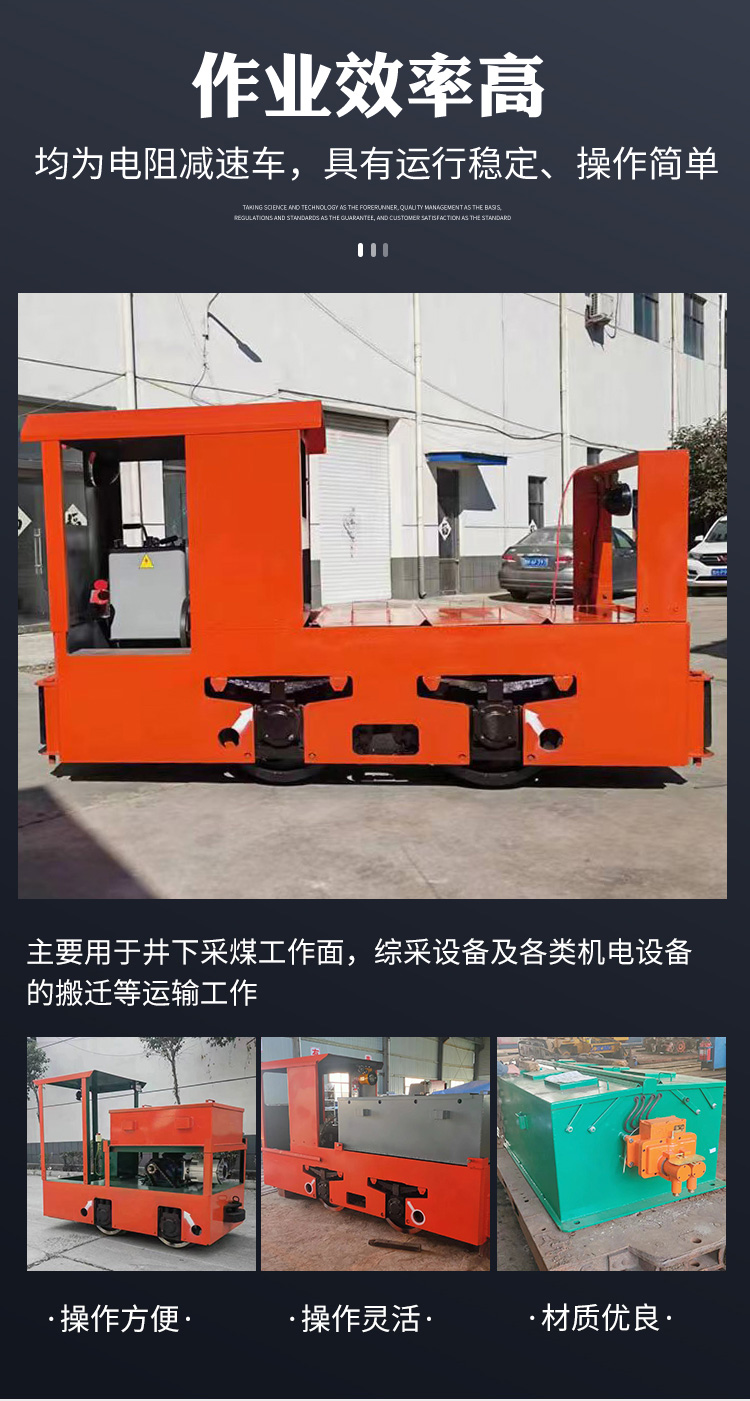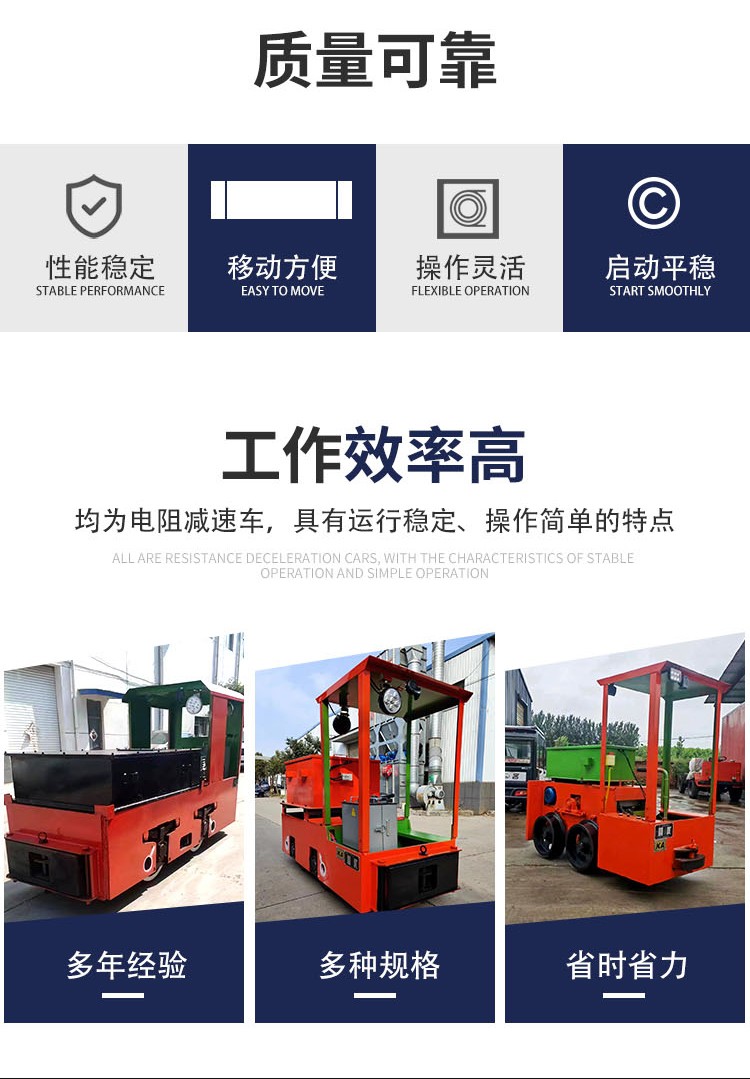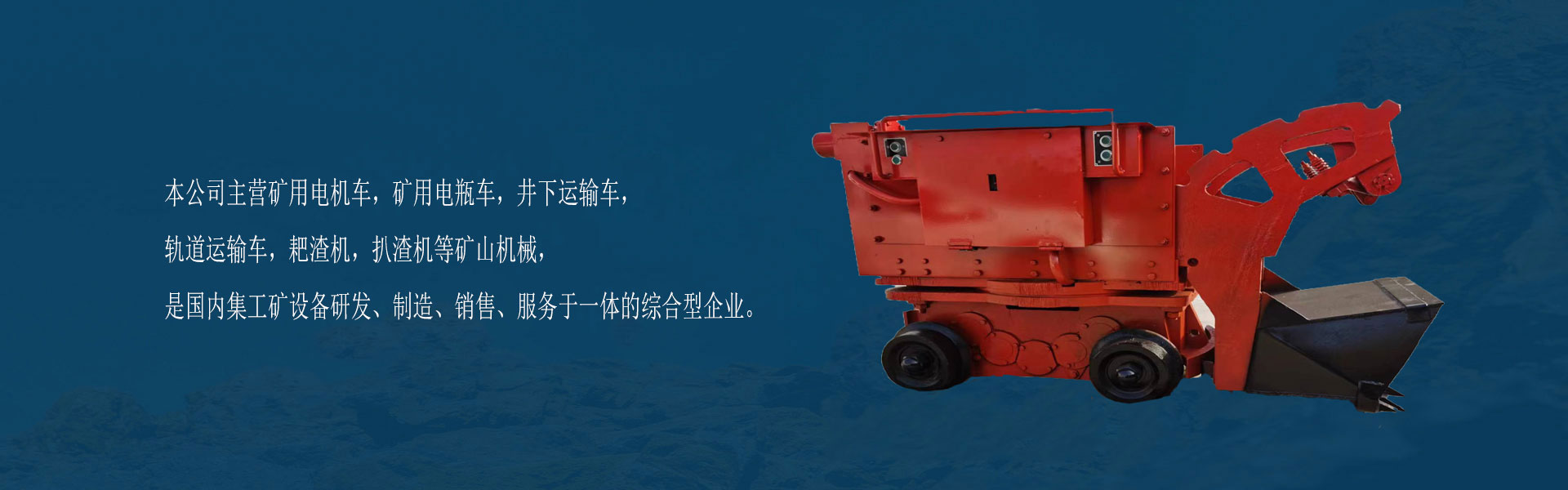


 Motor cars are a type of traction equipment for rail vehicle transportation, powered by a traction motor that drives the wheel rotation. It operates by utilizing the friction between the wheels and the rail surface. This mode of operation is limited by the power of the traction motor (or internal combustion engine) as well as the friction between the wheels and the rail. The gradient the locomotive can travel is also limited; typically, the gradient of the transport track is around 3‰, with no local gradient exceeding 30‰. They are categorized structurally into overhead wire motor cars and battery-powered motor cars.
Track-mounted electric vehicle
The process of overhead trolley: After the high-voltage AC power is stepped down and rectified by the traction converter, the positive pole is connected to the overhead wire, and the negative pole to the rail. The trolley's collector makes contact with the overhead wire, introducing the current into the carriage. It then passes through an air automatic switch, controller, and resistor box to the traction motor, driving the motor to operate. The motor, via the transmission device, rotates the wheels, thereby pulling the train. The current flowing out of the motor returns to the converter through the rail.