
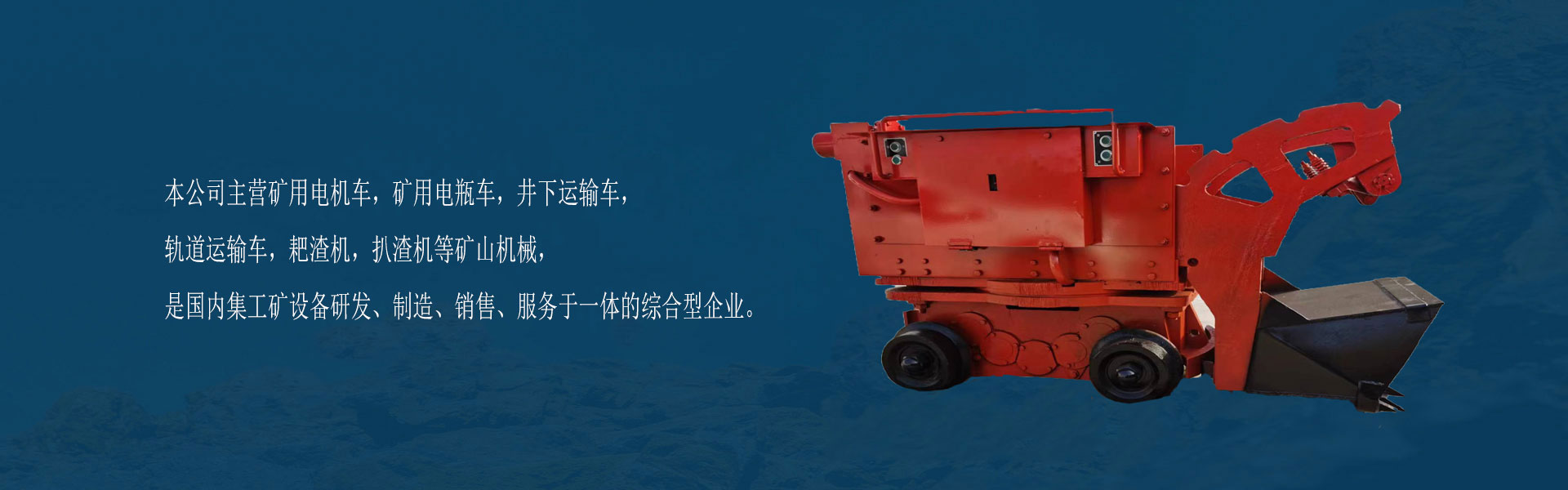




A Rock Loader [1] is a mechanical device used for loading ore or rock in horizontal or gently inclined tunnels. It boasts flexible and reliable operation, high production efficiency in rock loading, and is suitable for geological exploration tunnels. It can be categorized into various types based on the form of its working mechanism, such as bucket, crab claw, pick, and clamshell types. It is primarily used in coal mines, metallurgical mines, and tunneling projects for loading operations, often paired with ore cars or buckets. The article provides a detailed description of the structural composition, working principle, and applications of bucket, crab claw, and pick loaders. Additionally, it covers maintenance and operation procedures for rock loaders.

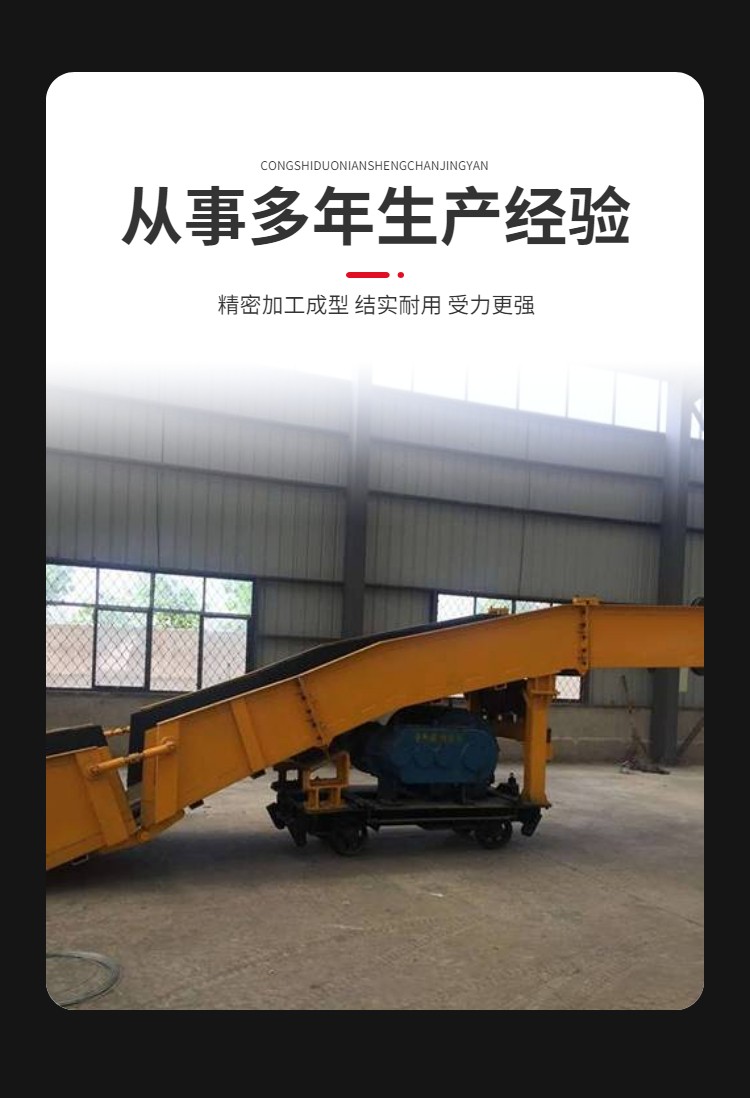
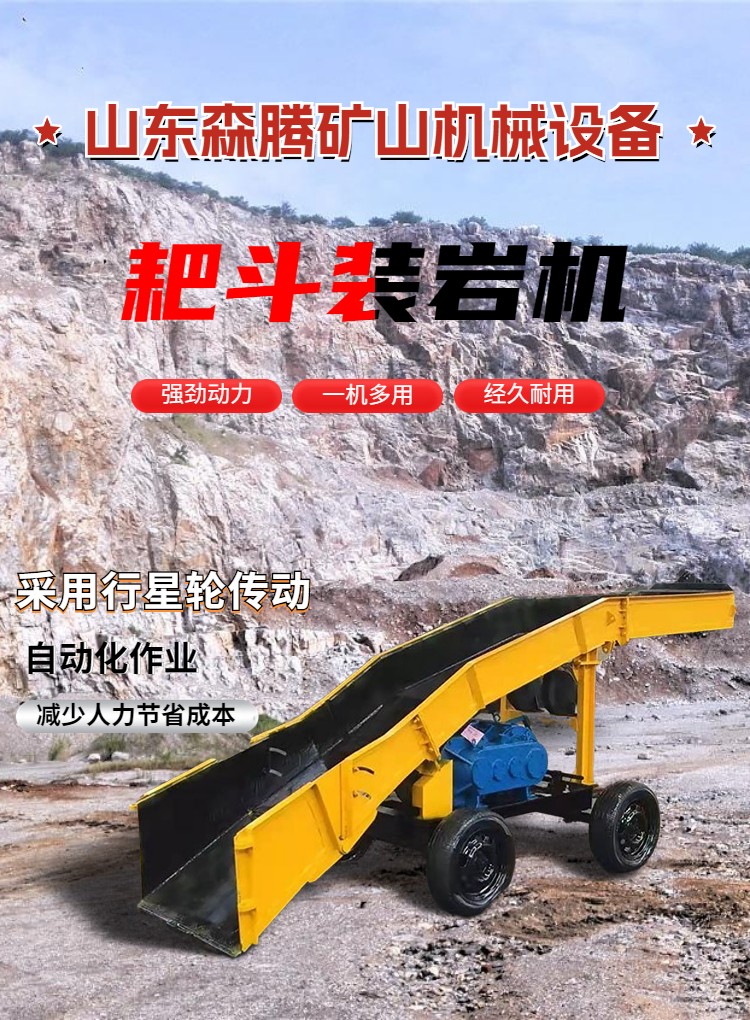
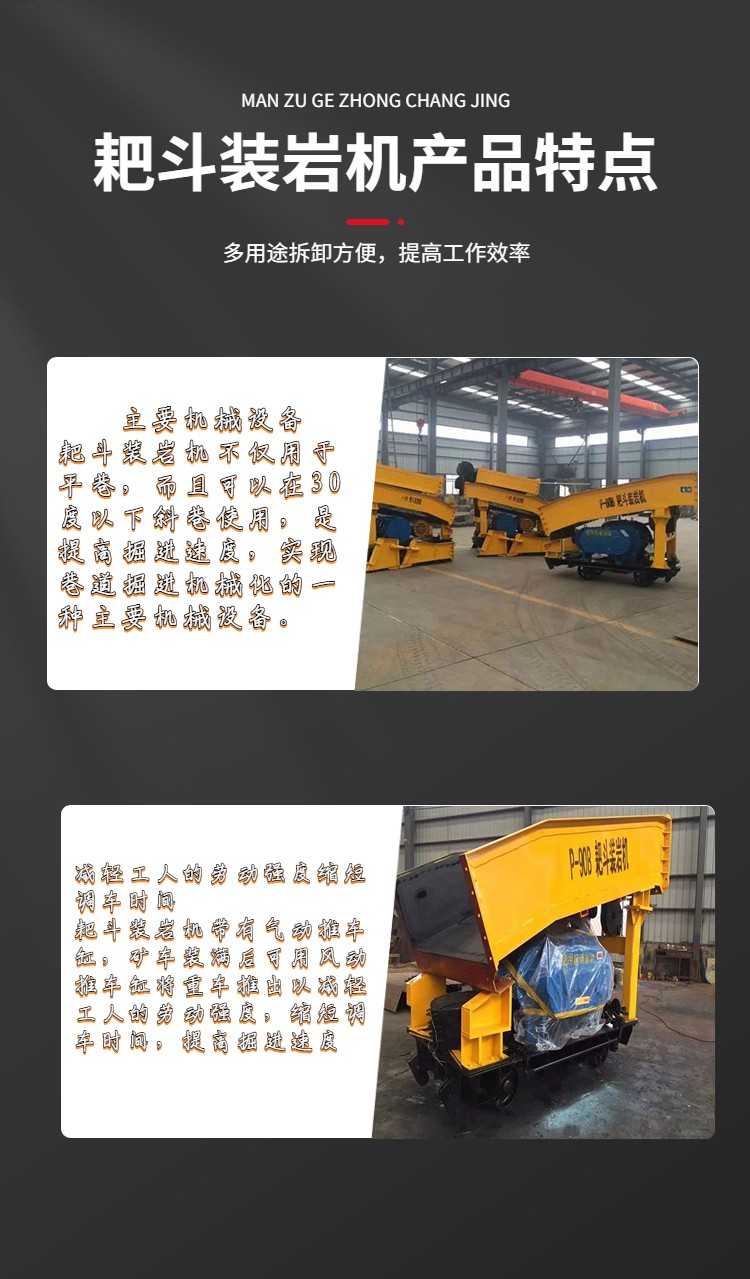
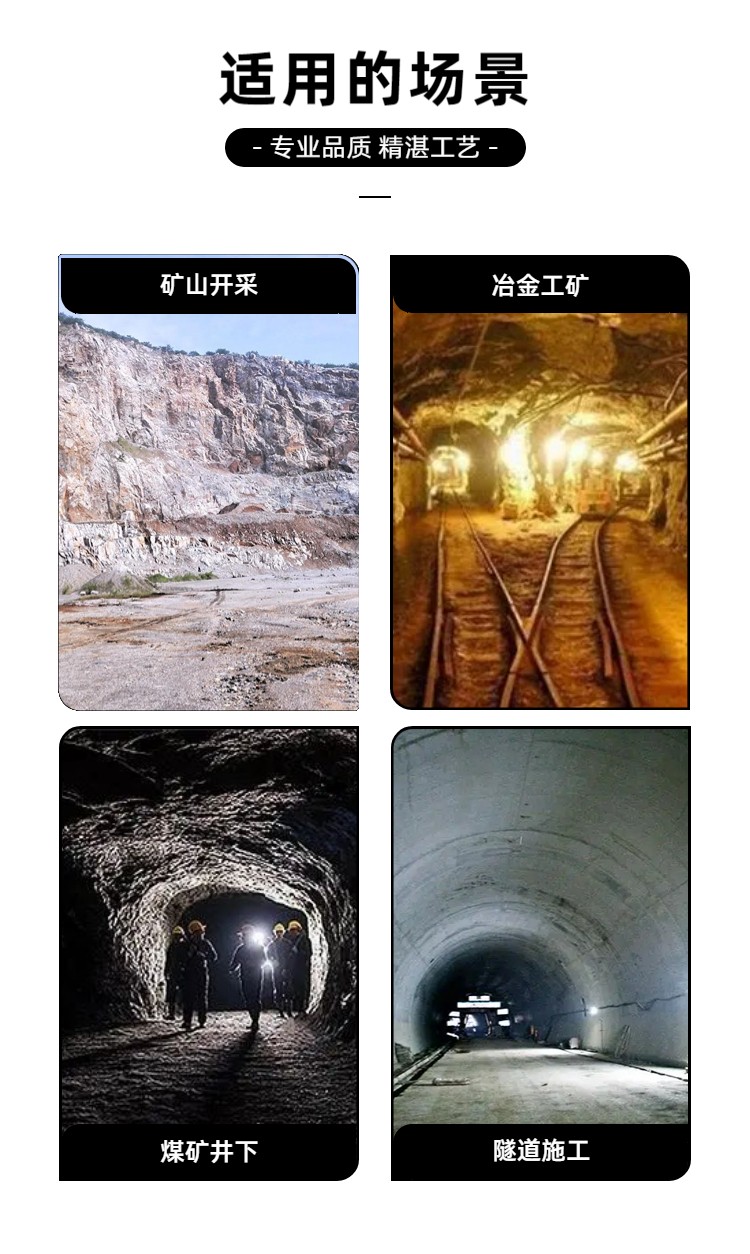
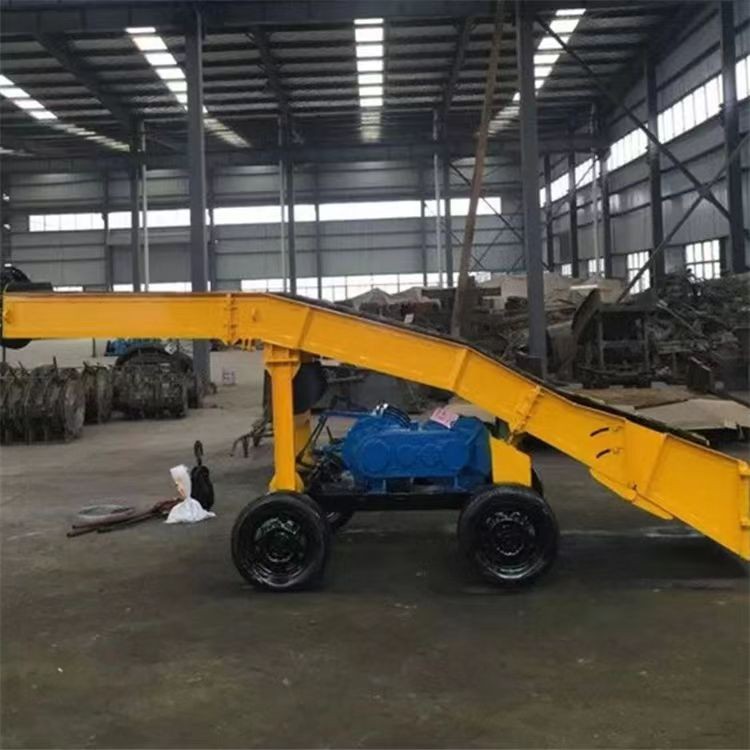
The main part of the bucket loader rockbreaker employs planetary gear transmission. This series of bucket loaders boasts high rock loading efficiency, simple structure, excellent reliability, ease of operation, and a wide range of applications. The bucket loader rockbreaker is not only used in level tunnels but can also be operated in inclines below 30 degrees, making it a key piece of equipment for increasing excavation speed and achieving mechanized tunneling. It features an pneumatic pusher cylinder, which allows for the removal of loaded ore cars using compressed air, thereby reducing labor intensity, shortening shunting times, and enhancing excavation speed. [1]
