
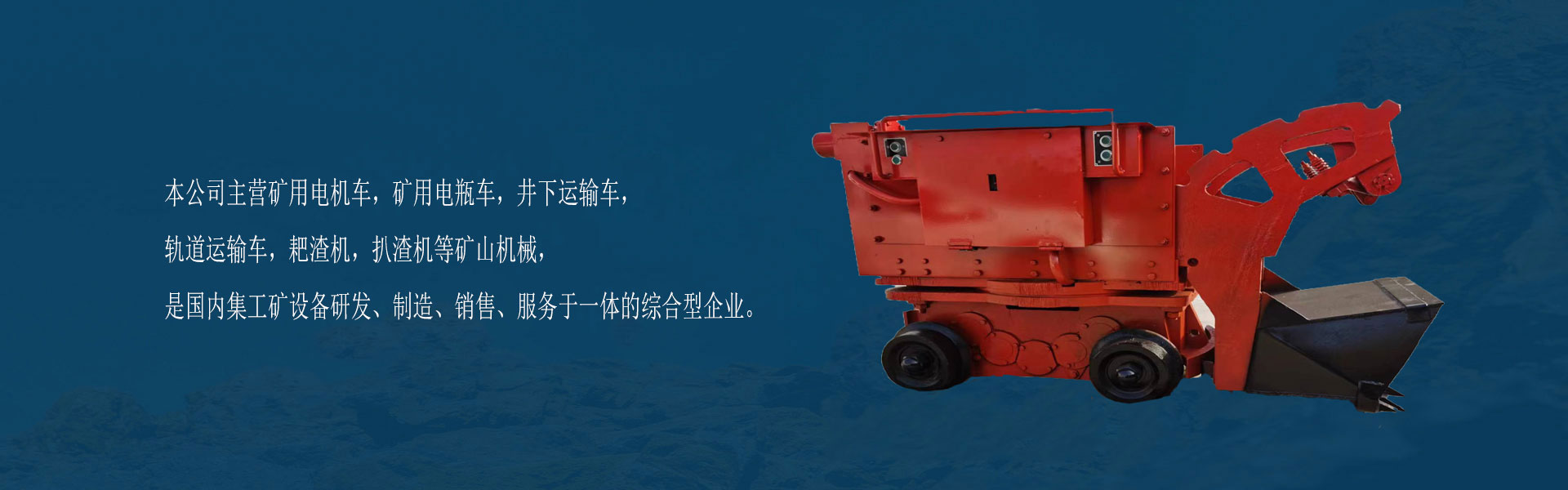




The structure of the miner's car includes reporting that the miner's car is available for loading gates (or loaders) with material. China developed the bucket conveyor train in the 1970s, consisting of bucket cars, lifting platforms, and a series of miner's cars. After the bucket cars are filled with material, they are lifted by the lifting platform and moved along the miner's car sides, individually transferring to each miner's car, thereby increasing the loading speed and achieving continuous miner's car loading. The bucket loading train has a simple structure, a small turning radius, and can be modified using existing standard miner's cars. The miner's car wheels have flanges, and there is a certain gap between the flanges and the rails. The contact surface of the wheel with the rail is shaped conically to keep the wheelset centered as it runs along the track, reducing mechanical wear and lowering running resistance. China's standard narrow-gauge railway has three track gauges: 600mm, 762mm, and 900mm. The basic structural components of the miner's car are the carbody, chassis, wheelsets, and connectors.
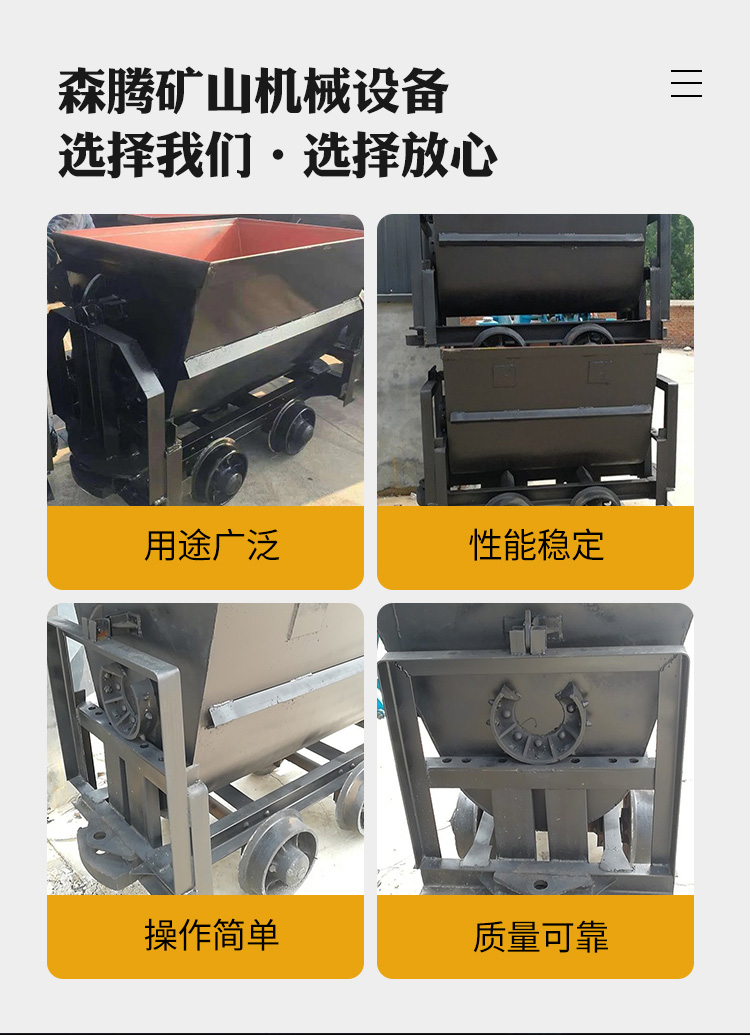
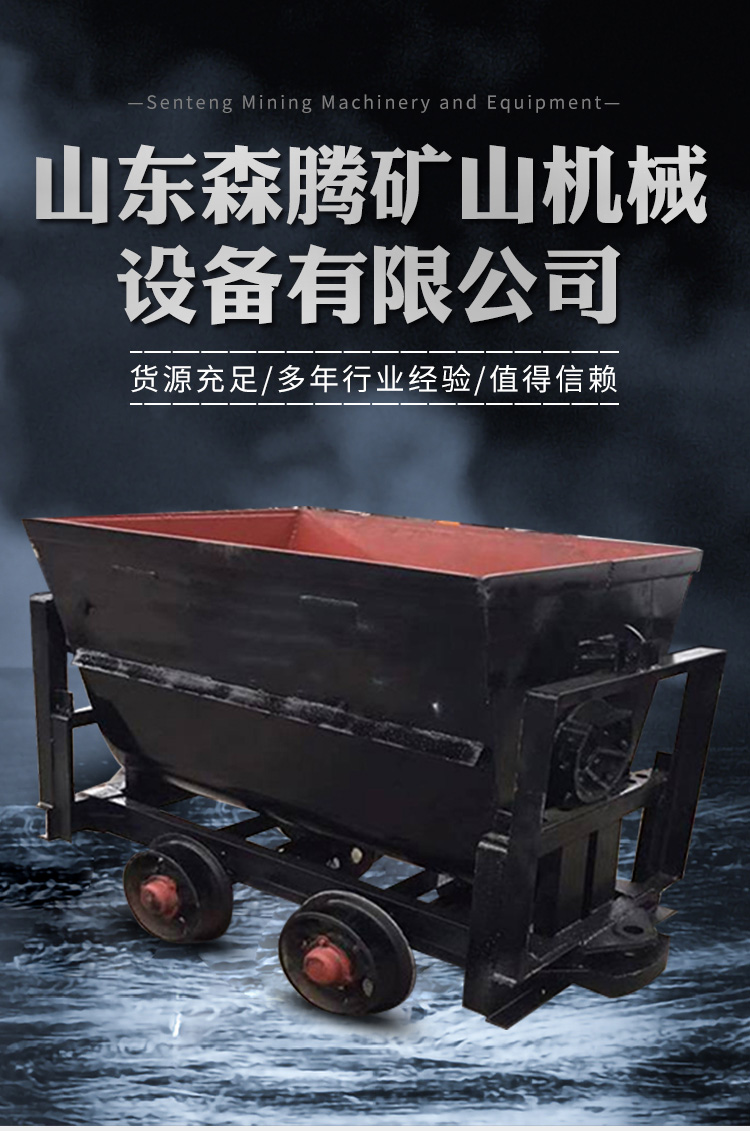
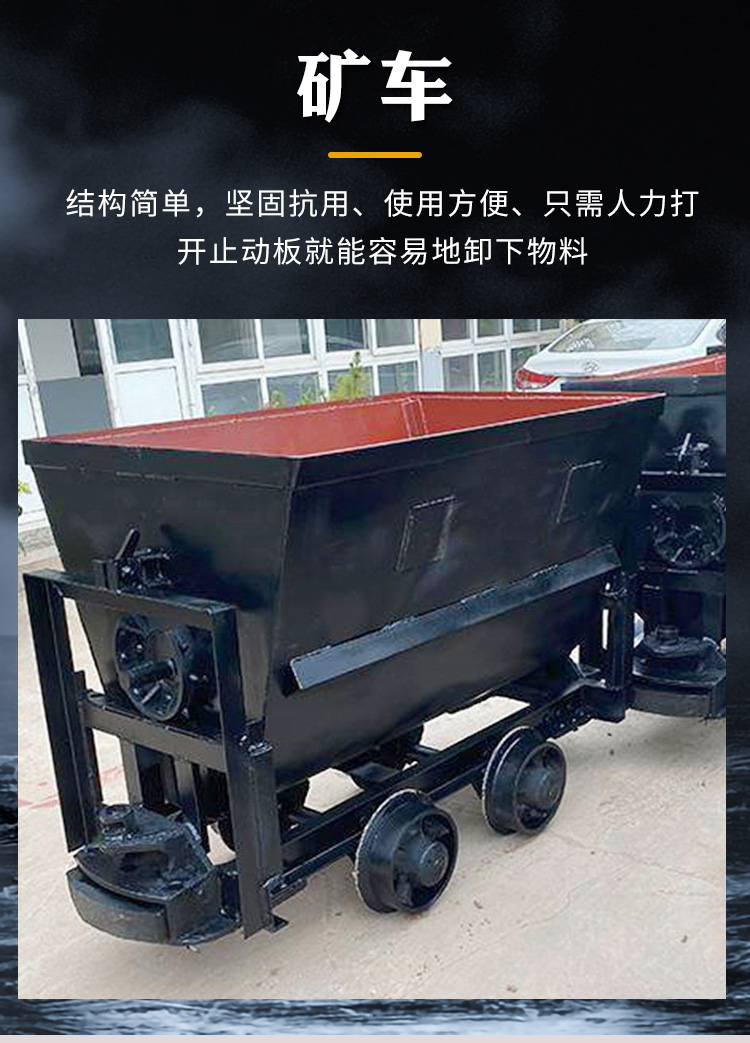
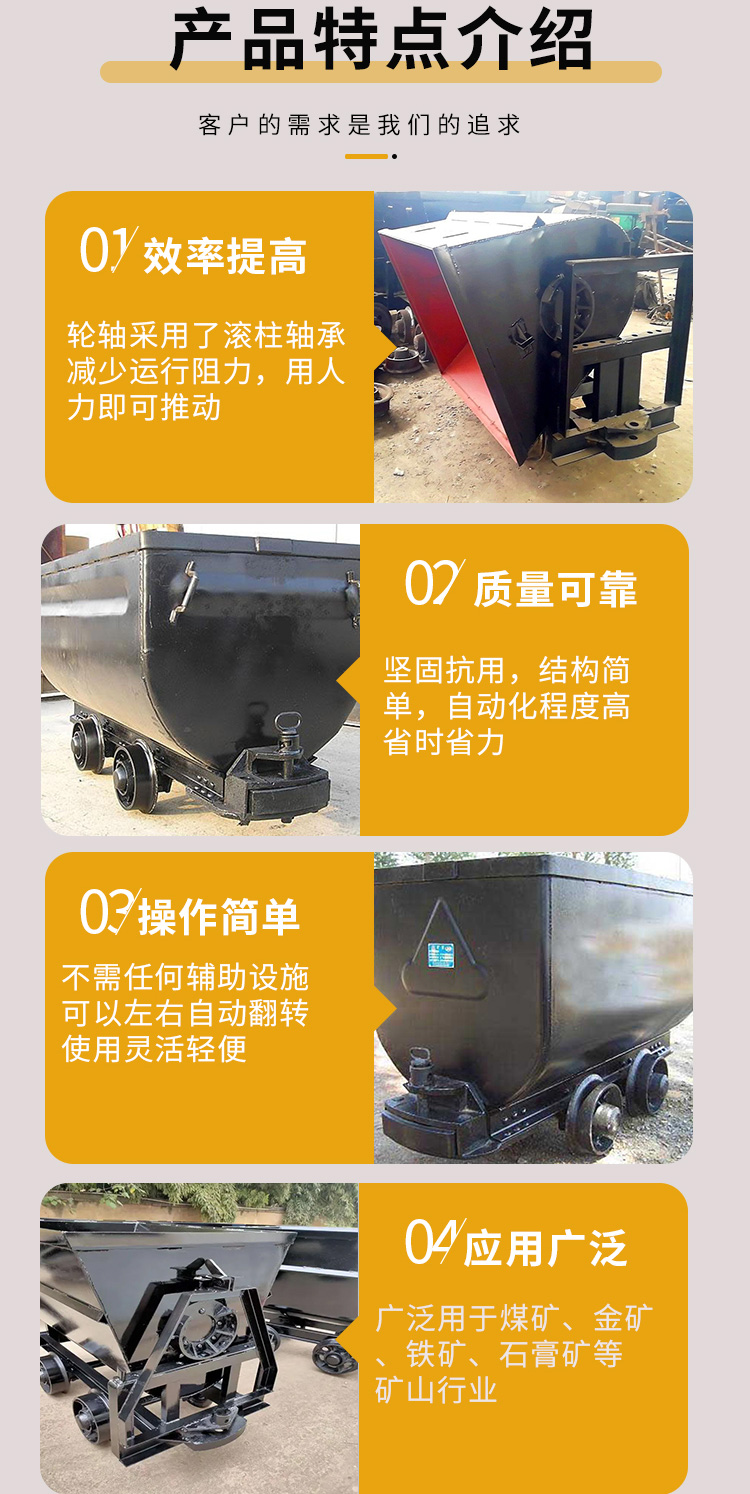
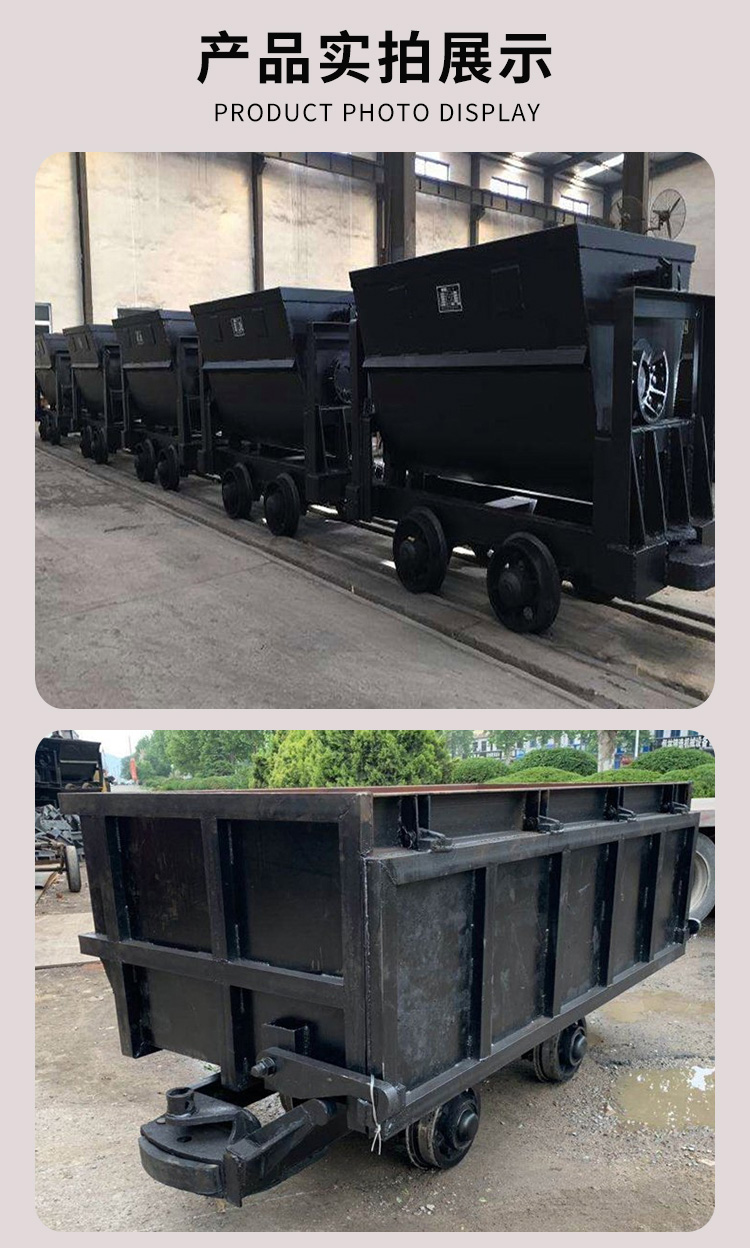
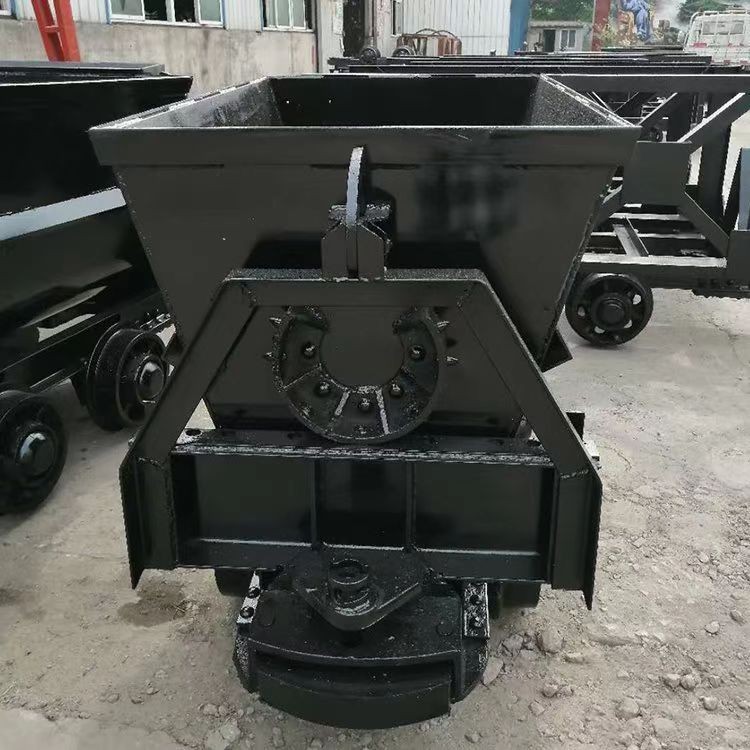
Underground Dump Car: The side(s) of the dump car can be opened to allow for unloading. The car tilts using a curved unloading track at the unloading point, and the side door is opened with a pull rod for (side) unloading, or the bottom plate opens backward or to one side under gravity for (bottom) unloading. The underground dump car and unloading pit consist of the car body, wing plates, and an adjustable undercarriage. They come in three types: one-piece undercarriage bottom unloading, two-section longitudinal bottom unloading, and two-section transverse bottom unloading. During unloading, as the car moves, the winged car body runs on the support wheels, and the adjustable undercarriage opens along the unloading curve track, then closes gradually as the car continues to move. Common capacities range from 3.3 to 5.5 m³ [2].
