



 通过中商114认证
1. Clear debris from the construction site, level cement, ensuring the site is free of significant highs and lows. The outdoor garage roof and rooftop garden must have a slope of 2-5‰.
2. The water discharged from the drainage board can be collected and drained into the nearby sewer or the city's sewage system.
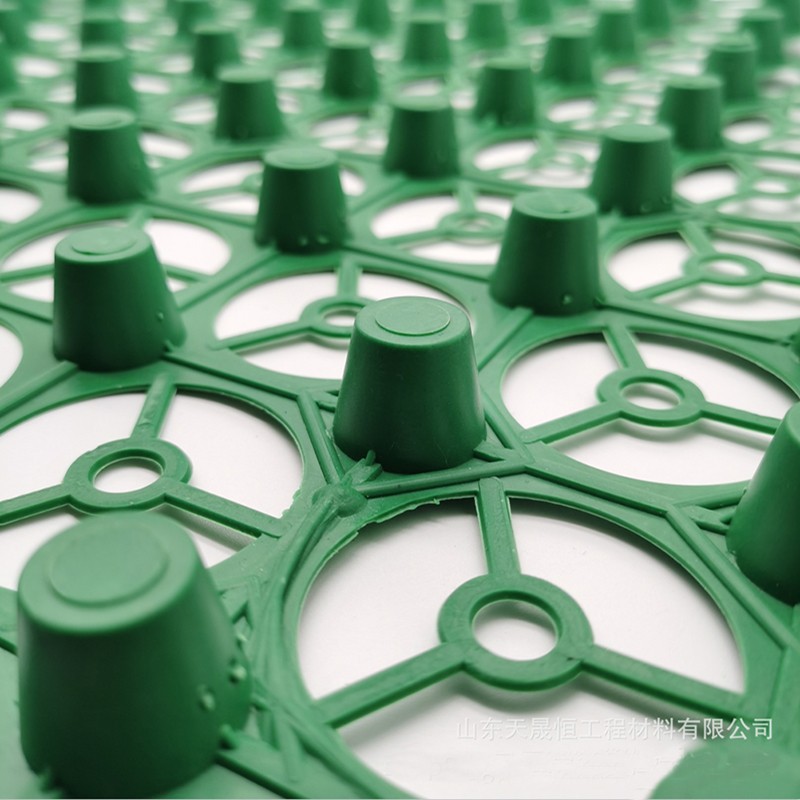
3. The basement floor is waterproofed, and the ground level is elevated above the foundation by constructing a drainage plate before the ground level is made. The rounded platforms are positioned downwards, with blind channels around them, preventing groundwater from rising. The seepage water naturally flows through the spaces in the drainage plate into the surrounding blind channels, which then lead it into a collecting pit.
4. Waterproofing interior walls in basements can be achieved by laying drainage boards on the main building walls, with the rounded platforms facing the main wall. An additional single wall can be constructed or wire mesh with cement applied to protect the drainage boards, allowing the渗water from the outside of the wall to flow directly downward into a blind trench and eventually into a collecting pit.
5. When laying drainage boards at any location, please note: do not let soil, cement, yellow sand, and other debris enter the front space of the drainage board, ensuring the space remains unobstructed.
6. When laying drainage boards, take utmost protective measures. For surface or outdoor garage installations, backfilling should be completed promptly to prevent wind from disrupting the drainage boards and affecting the laying quality. The waterproofing for basements and interior walls should be promptly protected to prevent damage to the drainage boards from human or object interference.
7. The backfill soil is clayey, and it is ideal to lay 3-5 centimeters of yellow sand on top of the geotextile for better water filtration through the geotextile. If the backfill soil is a nutrient-rich or lightweight soil, no additional layer of yellow sand is needed, as this type of soil is naturally loose and easy to filter water.
8. During the installation of drainage boards, align the edges with a right overlap of 1-2 points. Alternatively, you can abut the two bottom boards together, and use geotextile to overlap above, ensuring no soil enters the drainage channels of the boards to maintain unobstructed drainage.