
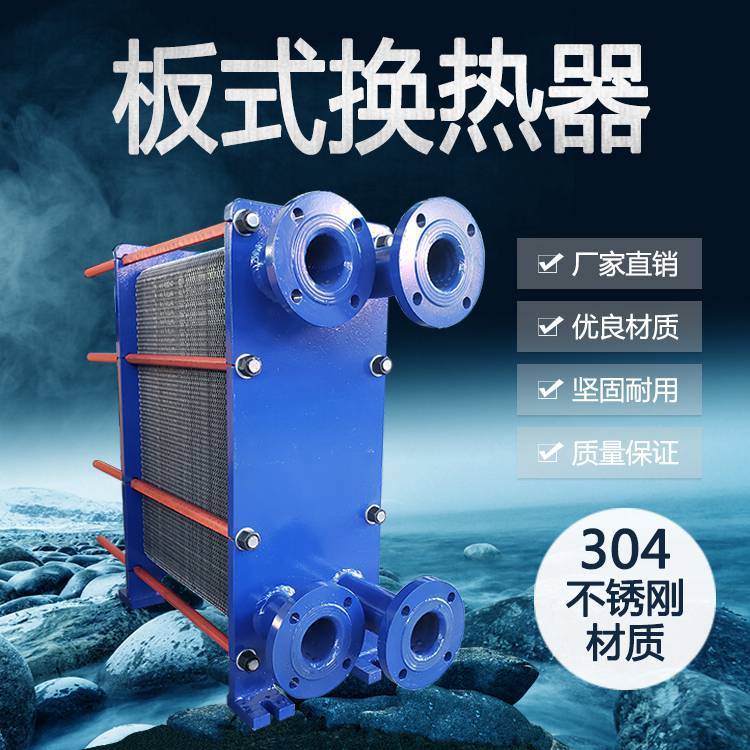
Plate Heat Exchanger Units Advantages: Compact structure, reliable operation, simple and intuitive operation, and are the primary energy-saving products. Heat exchanger units are mainly suitable for heating, bathing, and air conditioning systems in residential, government, industrial, hotel, and school settings. Integrated heat exchanger units can be used for both water-to-water and steam-to-water exchanges.
The plate heat exchanger unit consists of a heat exchanger, circulating pump, make-up water pump, electric control cabinet, filter, base, piping, valves, and instruments, and can be equipped with automatic pressure maintenance systems, water treatment equipment, water tanks, variable frequency pump control, temperature control valves, and remote communication control, thereby forming a complete heat exchange station. It features standardized and modular design, comprehensive equipment, easy installation, and high energy efficiency, and has been widely applied in systems such as community centralized heating, central air conditioning, domestic water supply, and industrial process water for enterprises.
The plate heat exchanger unit converts heat obtained from the primary network into the required domestic and heating water for users. Hot water enters the plate heat exchanger from the primary side inlet, undergoes heat exchange, and then exits from the primary side outlet. The secondary side return water, after being filtered to remove impurities, is pumped into the plate heat exchanger by the secondary side circulating pump for heat exchange. This produces hot water at different temperatures for heating, air conditioning, floor heating, or domestic use, to meet user needs. The filtered secondary water then circulates back into the heat exchanger, heated by steam or high-temperature water, and supplies heat. Steam or high-temperature water, after entering the plate heat exchanger, becomes condensate or high-temperature return water, which returns to the heat source to complete the primary and secondary heating system's circuit. A feedwater pump injects softened water into the system to maintain constant pressure.