


 通过中商114认证
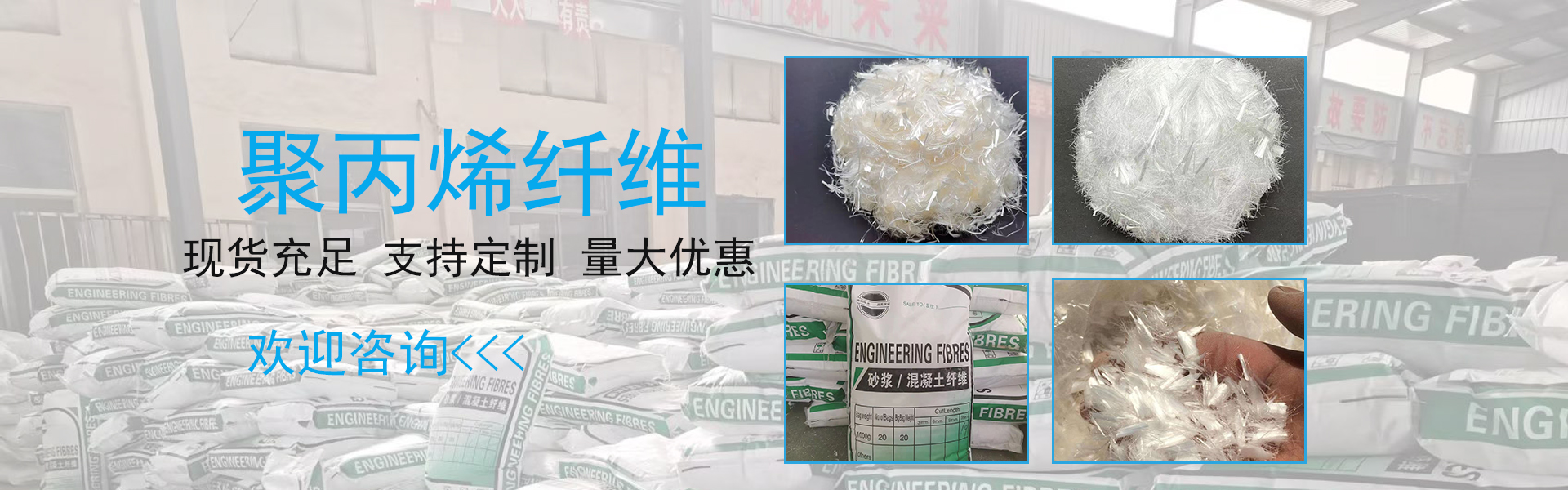
Polypropylene fibers in concrete offer a variety of significant applications in concrete engineering.
Polypropylene fibers can effectively control microcracks in concrete or mortar caused by factors such as plastic shrinkage, drying shrinkage, and temperature changes, preventing and inhibiting the formation and development of original cracks in concrete. The addition of polypropylene fibers significantly enhances the crack resistance of concrete, thereby extending its service life.
Secondly, polypropylene fiber can prevent the segregation of cement concrete, enhance the overall uniformity of the cast body, significantly reduce the number, length, and width of cracks, lower the likelihood of generating through cracks, and acts as a barrier against capillary cracks within the concrete, thereby improving its impermeability significantly. Additionally, it can reduce the transfer rates of moisture, chloride ions, and air within the concrete, and delay the corrosion of steel reinforcement.
Moreover, the addition of polypropylene fibers can enhance the toughness and fatigue resistance of concrete, improving its resistance to abrasion. After the fibers are incorporated into the cement matrix, they can reduce the brittleness of cement concrete, increase the toughness of the base material, and allow the concrete to withstand repeated static strength stresses while maintaining a good condition.
Overall, polypropylene fiber, as a secondary reinforcing material for concrete, significantly enhances its crack resistance, impermeability, impact resistance, seismic resistance, frost resistance, abrasion resistance, explosion resistance, and aging resistance, as well as improves its workability, pumpability, and water retention. These properties make polypropylene fiber highly applicable in concrete engineering.
