



 通过中商114认证
Full Bucket Alert: The buzzer sounds an alarm when the bin is full and the door no longer opens. If someone attempts to open it, an audio prompt will inform that the bin is full, and messages can be sent to the waste management center and sanitation workers.
Waste Weight Monitoring: Real-time weight tracking of waste, capable of sending notifications to waste management centers and sanitation workers.
Automatic Door Opener: Infrared sensor or button activation; doors close automatically after 10 seconds with hand protection feature.
Voice Prompts: Voice prompts for opening/closing doors, and continuous voice playback of advertisements and announcements.
Surveillance System: Connected to the control center, it is used to prevent intentional vandalism of trash bins and also serves as a social security monitoring tool.
Interconnected Functionality: The waste stations are connected to the control center via wireless capabilities, where the control center is responsible for collecting, receiving, and managing relevant information from the waste stations.
Smoke Alarm: An automatic fire alarm buzzer activates when a blaze occurs inside the trash bin, capable of sending messages to the waste management center and sanitation workers.
Fire Extinguishing Device: The liquid fire extinguishing system automatically activates when a flame occurs inside the trash bin, continuing until the flame is extinguished.
Solar-Powered Charging: Harnessing solar energy to power smart trash bins, promoting environmental conservation.
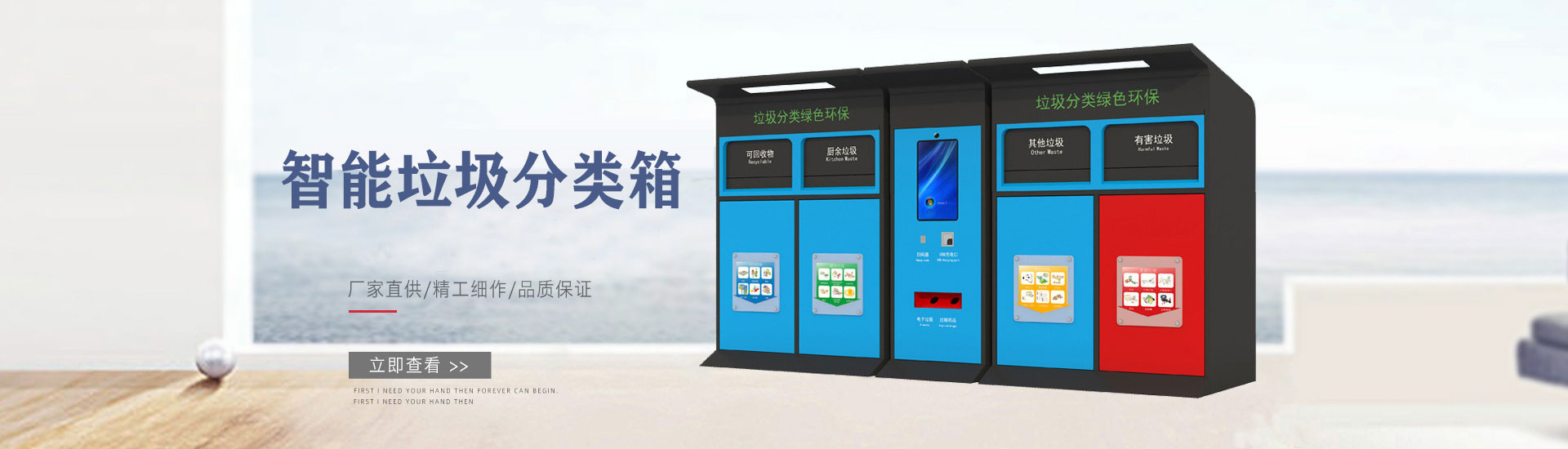
The smart trash bin is composed of three main parts: the intelligent recycling terminal device, the APP/miniprogram, and the backend management system.
Smart Recycling Terminal:
The smart recycling terminal includes: solar panels, a 4G/Wi-Fi communication control mainboard, and various sensors capable of detecting waste weight, volume, smoke monitoring, temperature monitoring, etc.
APP/Mini-program:
Users can register accounts through the APP/miniprogram and view the status information of the trash can.
Back-End Management System:
Upon equipment overflow, dedicated recycling personnel are notified, establishing both online and offline collection processes. Maintenance staff can manage smart waste bins through a backend management system, which includes device management, report statistics, operational management, system management, assessment management, and a visual big data platform. Managers can understand residents' waste disposal habits through data, optimizing disposal times and bin placements, and scientifically adjusting waste sorting. Community waste sorting supervisors and guides can also conduct targeted waste sorting promotion and guidance based on data, enhancing residents' enthusiasm and accuracy in participating in waste sorting.
