




 通过中商114认证
With the significant increase in people's income, their purchasing power has greatly enhanced, leading to better development in the catering industry. Despite the thriving catering sector bringing more choices to consumers, it has also sparked the issue of catering wastewater. As people become increasingly concerned about environmental hygiene, the problem of catering wastewater discharge has naturally garnered widespread public attention. The catering kitchen oil-water separator is an indispensable piece of equipment in catering kitchens. There are many brands of this equipment on the market, with significant differences in quality and performance among their products. So, how should companies choose a satisfactory catering kitchen oil-water separator if they wish to purchase one?
One, based on the business license of the kitchen oil-water separator manufacturer, product inspection reports, and other relevant materials.
It depends on whether the manufacturer is legitimate. You can start with certified materials, such as whether the manufacturer has a business license; if they do, it indicates the manufacturer is formal.
Understanding the working principle of the kitchen oil separator and the brands of raw materials and accessories used.
Kitchen oil-water separators achieve oil-water separation through various principles, which can be broadly categorized into two types: physical principle separators and chemical principle separators.
Physical separation methods include gravity separation, centrifugal separation, and filtration, while chemical separation methods are further divided into reagent separation and flocculant separation, among others. The processing precision and actual conditions determine the choice. Generally, the processing precision is not particularly high. Oil-water separators in industrial, manufacturing, and catering kitchens typically require gravity separation. Centrifugal separation is generally used in locations with high processing precision. Look at the materials of the oil-water separators; currently, materials such as stainless steel, glass fiber reinforced plastic, cast iron, aluminum, food-grade resin, or PVC are available on the market. The first three materials offer better compressive resistance, with stainless steel being excellent in both compressive resistance and corrosion resistance, albeit at a higher price. Food-grade resin or PVC has poor compressive resistance and is relatively cheaper, but usually not suitable.
III. The Function of the Kitchen Oil-Water Separator
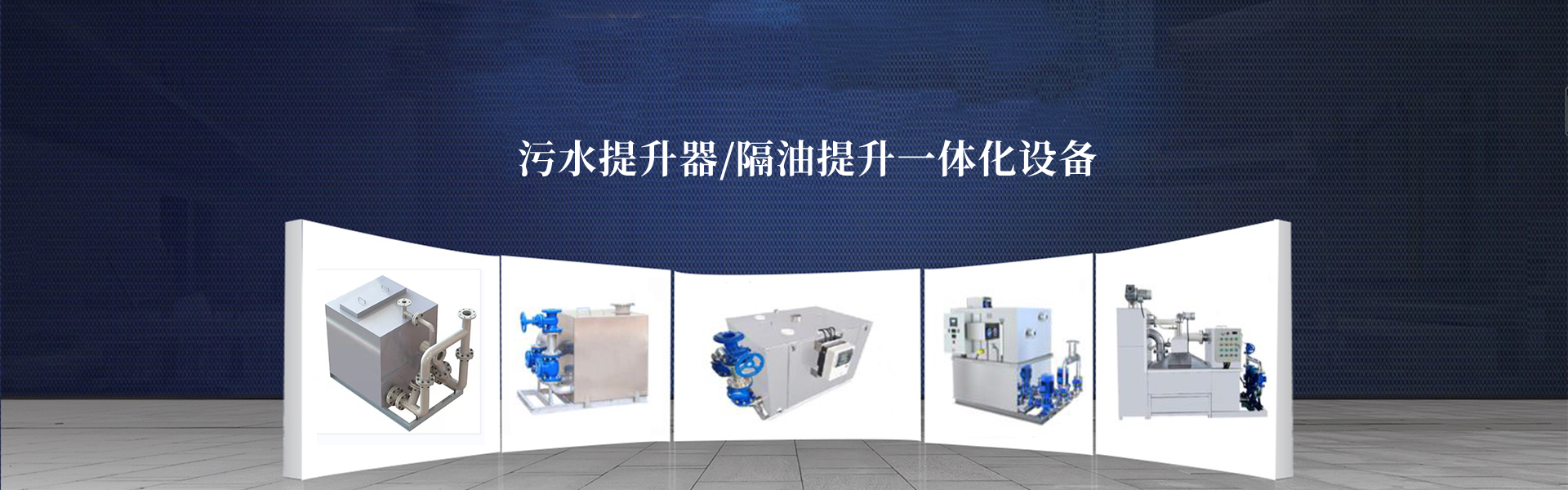
The oil-water separator range includes both gravity and automatic oil-water separators. The gravity oil-water separator is typically suited for smaller capacity applications and requires simple manual maintenance. Its significant advantage is that it can achieve oil-water separation without the need for power connection, saving energy and reducing emissions, aligning with today's environmental protection philosophy. The automatic oil-water separator requires no manual maintenance, featuring automatic draining, waste removal, and oil-water interface detection for oil expulsion. Its benefits include the elimination of manual maintenance needs and the capability for visual monitoring. If installed in a basement, it must have an lifting function.
Section 4: Installation Options
The oil-water separator utilizing the gravity separation principle must ensure that the inlet height is higher than the outlet height. It is typically available in ground-mounted, underground, and suspended installations. Users can choose according to their specific needs.
