



Carbon steel pipes can describe various metal tubular items, with the main alloying element being carbon ranging from 0.12% to 2%. In addition to carbon, which is not included in the alloys of chromium, cobalt, molybdenum, nickel, niobium, titanium, and tungsten, vanadium and zirconium can be added to achieve their respective alloying effects. For instance, compared to A106 B-grade pipes with low tensile strength, A333 6-grade pipes exhibit high tensile strength and impact properties in low-temperature applications and can be used at room temperature or higher. This is achieved by adding more than 0.9% manganese, which is limited to 0.65% in A106 pipes.
Under normal circumstances, when the specified manganese content is 1.65%, silicon content is 0.6%, and copper content does not exceed 0.6% of the limit, the pipe is referred to as carbon steel pipe.
Carbon steel pipes are further divided into four categories:
Low-Carbon Steel Pipe - Carbon Content: 0.55-1.05%
Carbon Steel Pipe - Carbon Content: 0.25-10.6%
High Carbon Steel Pipe - Carbon Content: 0.9-2.5%
Ultra-high Carbon Steel Pipe - Carbon Content: 2.5-3.0%
As carbon content increases, high-carbon steel pipes can become increasingly harder through quenching and tempering, with reduced ductility. Without heat treatment, high-carbon steel pipes may exhibit low welding capabilities and a low melting point. Large-diameter pipes used in water transportation are typically made of carbon steel.
According to the manufacturing method, these pipes are divided into three different types:
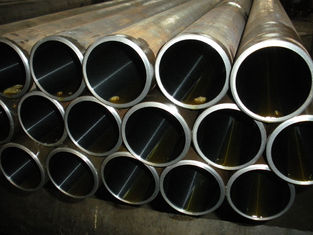
1. Seamless Tube - A pipe formed by passing hot steel through molds to create the pipe shape. The manufacturing range of carbon steel seamless tubes is 24- (600NB). Although this is an expensive method due to the machinery and time involved in the manufacturing process, it is the most reliable method ever invented.
2. Welded Pipe - Formed by wrapping steel plates in a circular motion and then welding at the joints, these pipes are known as welded pipes. Due to their affordability, there is a high demand for these pipes. They are welded in the following forms according to the required type:
ERW: Electric Resistance Welded Pipe
b、EFW: Welding Pipe
c. SAW: Submerged Arc Welded Pipe
3. Casting Molding Tubes - The ancient and traditional methods of casting molten metals. These tubes have a low demand for heat treatment.
Carbon steel tubes can be heat treated through various methods listed below: normalizing, annealing, quenching, tempering, isothermal quenching, and spray quenching.
Our range includes seamless tubes from ½-24 and welded tubes from ½-72, offering lengths from 4-7 meters with a single random length option, and 7-13 meters with a double random length option. We cater to customer requests by providing black coated surfaces, as well as flat or bevelled finishes, and we supply cut-to-length piping. Although many of the same manufacturing principles apply to carbon steel tubes and various similar alloy pipe materials, this statement will focus on the manufacturing processes for low-carbon steel tubes, which are commonly used in oil and water transmission, structural applications, general casing, pile driving, and mechanical components.
