

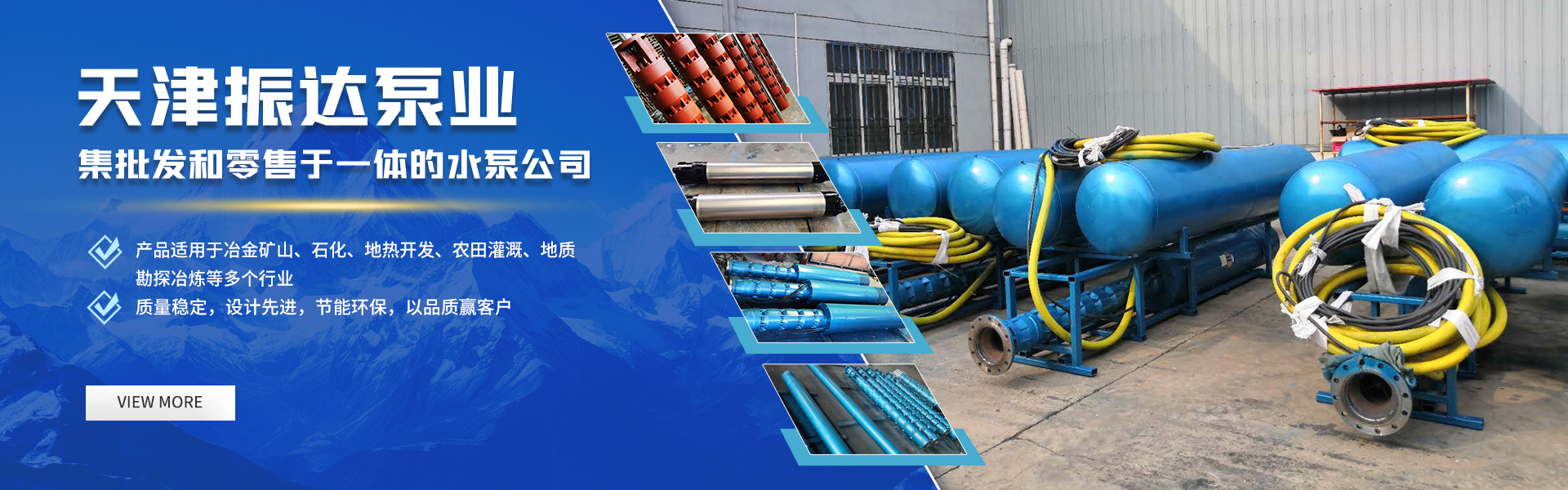
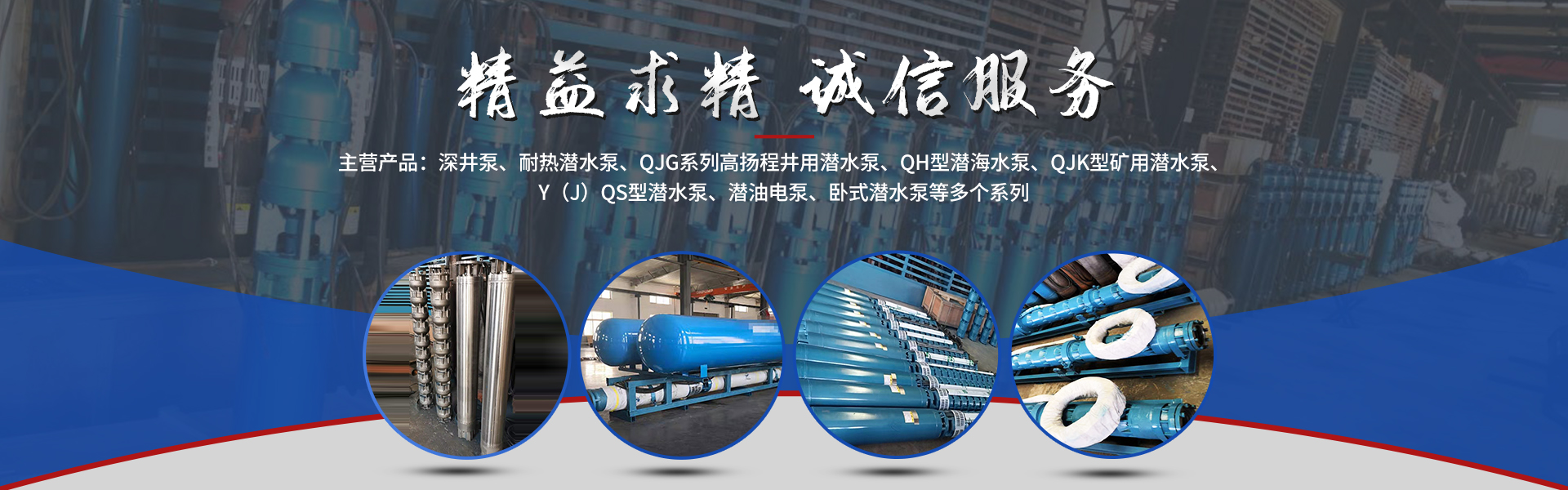

Sea water submersible pumps, as essential equipment in modern marine engineering, have far exceeded the traditional field of seawater extraction. These specialized pumps, capable of operating directly underwater, are playing an indispensable role in various fields such as marine resource development, environmental protection, and scientific research, thanks to their unique structural design and excellent performance.
Core Equipment for Marine Resource Development
In the field of seawater desalination, seawater submersible pumps are indispensable key equipment. Taking the Ras Al-Khair Seawater Desalination Plant in Saudi Arabia as an example, the plant processes up to 1 million cubic meters of seawater daily, utilizing multiple high-power seawater submersible pumps to transport seawater from the intake to the pretreatment system. These pumps are made of duplex stainless steel, effectively resisting seawater corrosion to ensure long-term stable operation of the equipment.
In deep-sea mining operations, seawater submersible pumps play a crucial role in transporting ore slurry. In 2019, during a deep-sea hydrothermal vent mining trial in the Okinawa Sea, Japan employed specialized submersible pumps to transport ore slurry rich in rare metals from a depth of 1,500 meters to the sea surface. These pumps are equipped with special wear-resistant linings and high-pressure sealing systems, capable of withstanding the high-pressure deep-sea environment and the strong corrosiveness of the ore slurry.
Ocean oil and gas development is inseparable from the support of submersible water pumps. In subsea oil production systems, submersible pumps are used in critical processes such as water injection for oil displacement and subsea pressure boosting. For instance, in the Santos Basin oilfield project by Petrobras, multi-stage centrifugal submersible pumps were employed to inject seawater into the oil reservoir, maintaining formation pressure and significantly enhancing crude oil recovery rates.
An Essential Tool for Marine Environmental Protection
In the field of ocean pollution control, seawater submersible pumps play a crucial role. During the 2010 Gulf of Mexico oil spill, emergency responders utilized high-power submersible pumps to extract contaminated seawater onto treatment vessels, in conjunction with oil absorbent materials for oil-water separation. This emergency response method significantly improved pollution control efficiency and minimized environmental damage.
Subsea sediment removal is another key application field. During harbor channel dredging projects,潜水泵are used in conjunction with dredging ships to effectively clear subsea silt. During the construction of Shanghai Yangshan Deepwater Port, multiple high-flow submersible pumps were employed, achieving an average daily sediment removal of 100,000 cubic meters, ensuring the port's water depth met the design specifications.
In marine ecosystem restoration projects, submersible pumps are utilized for artificial reef construction and seaweed farm cultivation. In the ocean farm project implemented in the Seto Inland Sea by Japan, submersible pumps are used for seawater circulation, bringing abundant nutrients to the artificial reef areas, and promoting the recovery of marine biological communities.
Effective Assistant in Ocean Scientific Research
In the field of deep-sea exploration, miniaturized and intelligent seawater submersible pumps provide a reliable guarantee for research equipment. The "Alvin" submersible developed by the Woods Hole Oceanographic Institution in the U.S. is equipped with micro-submersible pumps for collecting water and sediment samples. These pumps can operate stably at depths of up to 4,000 meters below the sea surface, providing scientists with valuable research samples.
The ocean data collection system requires continuous power and cooling, with the seawater submersible pump playing a crucial role. China's "Hailong" unmanned remote-operated vehicle is equipped with a circulating pump, providing a stable water flow to the cooling system of the equipment, ensuring long-duration operation in deep-sea environments.
In the underwater experimental facility, submersible pumps are used to create a simulated marine environment. The Institute of Oceanology, Chinese Academy of Sciences, has constructed an oceanic ecological simulation laboratory in Qingdao, utilizing multiple submersible pumps to build an artificial sea current system, providing an ideal experimental environment for marine biological research.
As the intensity of ocean development increases, the application prospects of seawater submersible pumps will become even broader. In the future, with advancements in materials science and manufacturing technology, seawater submersible pumps will evolve towards deeper, farther, and more intelligent directions, providing stronger support for human exploration and utilization of marine resources. Guided by the strategy of building maritime power, China's seawater submersible pump industry is sure to embrace new development opportunities and make greater contributions to the marine economy.
