
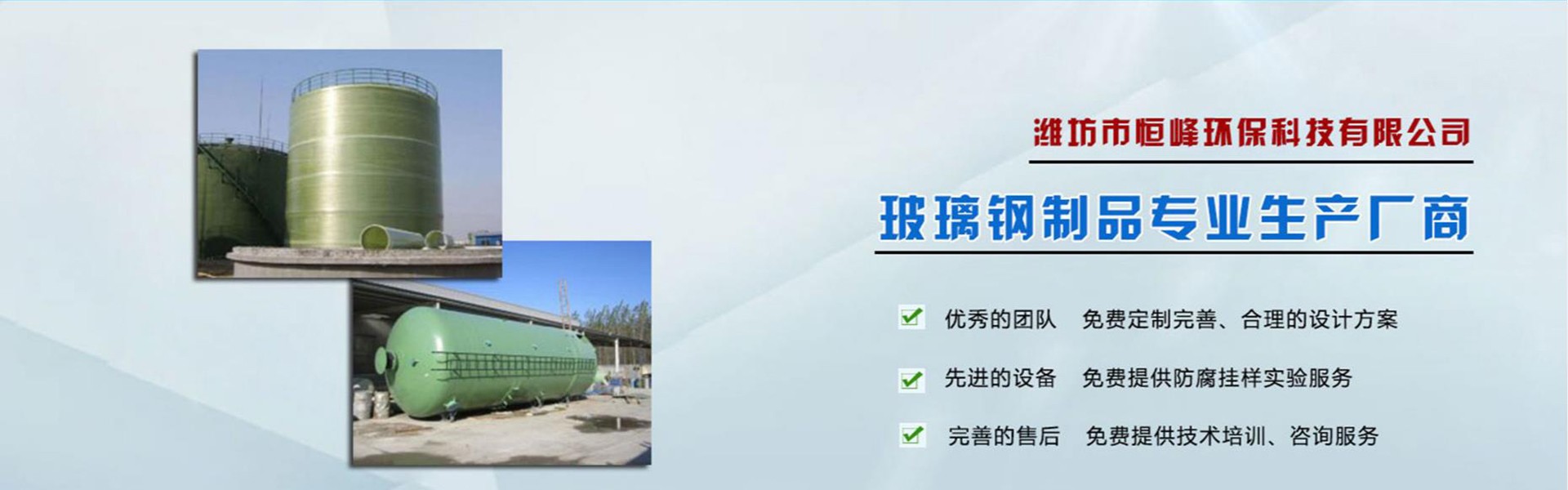

Feature One: Lightweight and High-Strength. The relative density is between 1.5~2.0, only 1/4~1/5 of carbon steel, yet the tensile strength is comparable, even exceeding that of carbon steel, and its specific strength can be compared to high-grade alloy steel. The tensile, bending, and compressive strengths of certain epoxy FRP can reach over 400 MPa.
Feature Two: Corrosion Resistance. Thanks to the excellent corrosion-resistant materials used, including FRP, it boasts high resistance against atmospheric and water corrosion, as well as against acids, alkalis, salts, and various oils and solvents.
Feature Three: Excellent Insulation. The fiberglass tank utilizes superior insulating materials, ensuring safe operation, even under high-frequency conditions, where the fiberglass tank maintains its superior dielectric properties.
Feature Four: Excellent thermal performance. Due to its low thermal conductivity, it is an excellent insulating material during service. Particularly under conditions of instantaneous high temperature, it can provide thermal protection and resistance to ablation.
Feature Five: Excellent Scalability. The fiberglass storage tank can be planned to accommodate various needs, resulting in products with different structures. Additionally, users can also choose other compatible materials to enhance the product's extensive functionality.
Feature Six: Good craftsmanship. As we discussed earlier, users can customize products with different functionalities. In fact, customers can design the style of the product according to their requirements and flexibly choose the molding process.
Glass fiber reinforced plastic (GRP) storage tanks offer high flexibility in planning, excellent structural performance, and the ability to modify the resin system or reinforce materials to enhance the physical and chemical properties of GRP storage tanks and non-standard equipment, catering to the needs of various media and operating conditions. By adjusting the thickness of structural layers, winding angles, and wall thickness structures and designs, tanks can be manufactured with different pressure ratings or specific functions, which is unparalleled by anisotropic metallic materials. The fiber winding process for GRP storage tanks is one of the manufacturing techniques for resin-based composite materials. There are three primary winding methods: hoop winding, flat winding, and spiral winding. Each method has its unique features, with wet winding being widely used due to its relatively simple equipment requirements and lower production costs.
The fiberglass large storage tank fiber winding process is one of the primary manufacturing techniques for resin-based composite materials. It involves using specialized winding equipment to uniformly and regularly wrap continuous fibers or fabric strips, which have been impregnated with resin adhesive, around a mandrel or liner under controlled tension and predetermined line patterns. Subsequently, the material is cured under specific temperature conditions to form a product of a certain shape.
The primary methods of wrapping include: hoop wrapping, plane wrapping, and spiral wrapping. The reinforcing material in hoop wrapping is connected around the mandrel at an angle close to 90 degrees (usually between 85-89 degrees) relative to the core mandrel axis. In plane wrapping, the reinforcing material is connected around the mandrel, tangent to both ends of the mandrel and within the plane. For spiral wrapping, the reinforcing material is also tangent to both ends of the mandrel but wraps around the mandrel in a spiral pattern.
玻璃钢储罐厂家纤维环绕技能的开展与增强资料、树脂系统的开展和工艺创造息息相关。尽管在汉代就有在长木杆外加纵向竹丝及环向蚕丝后浸渍大漆制作戈、戟等长兵器杆的工艺,但直到20世纪50年代纤维环绕工艺才真实成为一种复合资料制作技能。1945年初次使用纤维环绕技能成功制作了无弹簧的车轮悬挂装置,1947年纤维环绕机被创造。跟着碳纤维、芳纶纤维等高性能纤维的开发和微机操控环绕机的呈现,纤维环绕工艺作为一种机械化生产程度很高的复合资料制作技能,得到敏捷的开展,20世纪60年代开始在几乎一切可能的领域都得到了使用。
