










详情描述
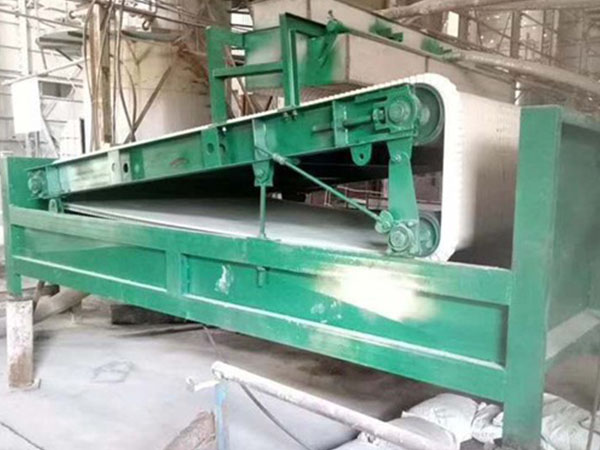
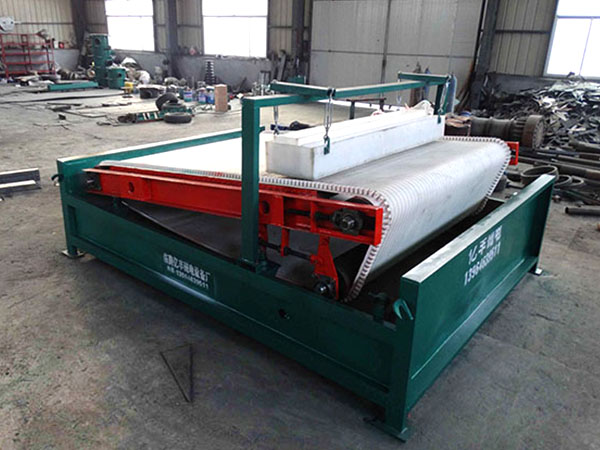
I. Working Principle of Plate Magnetic Separator:
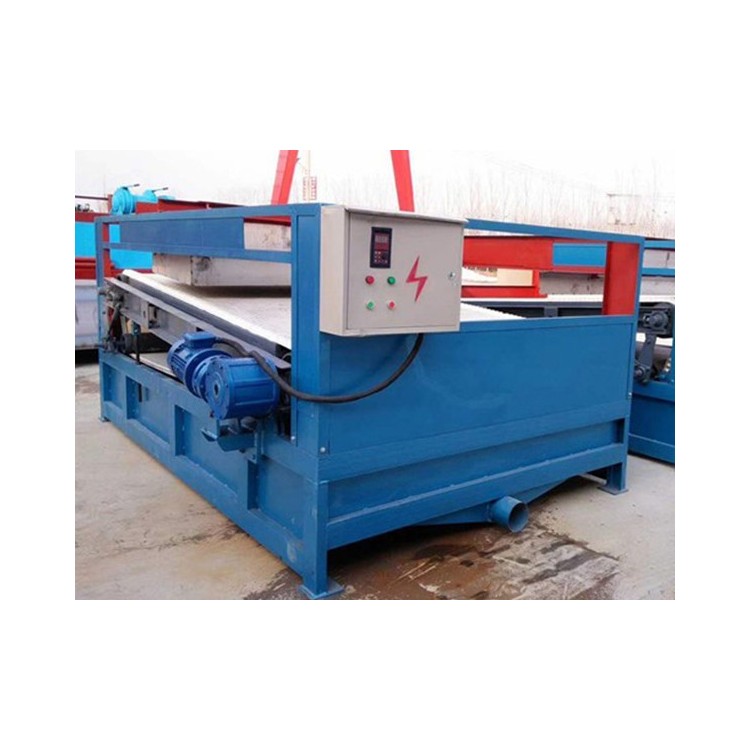
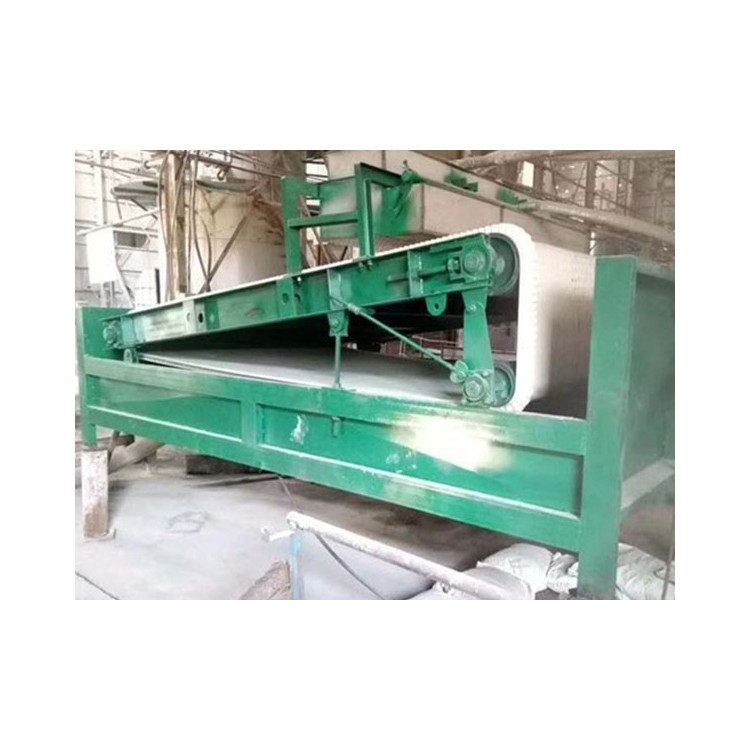
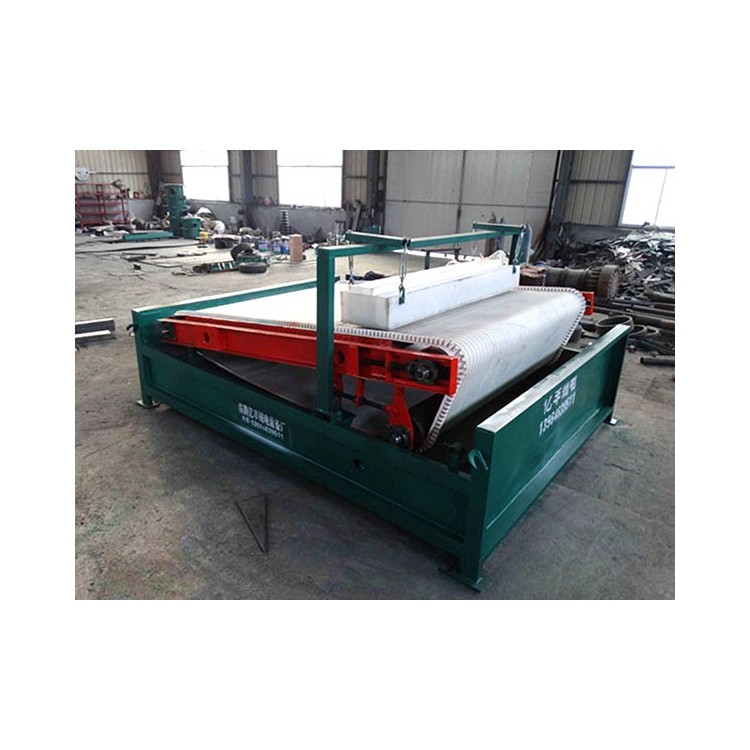
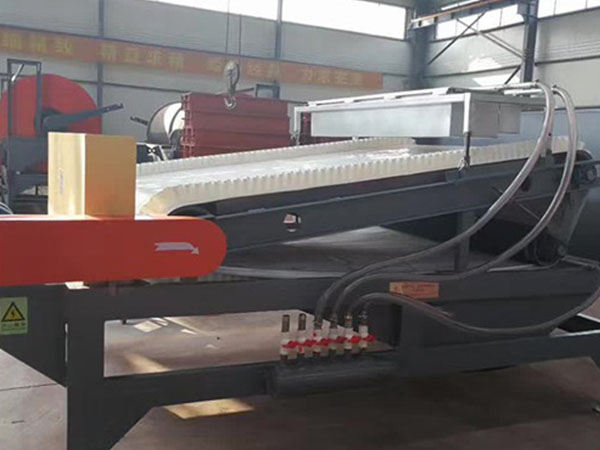
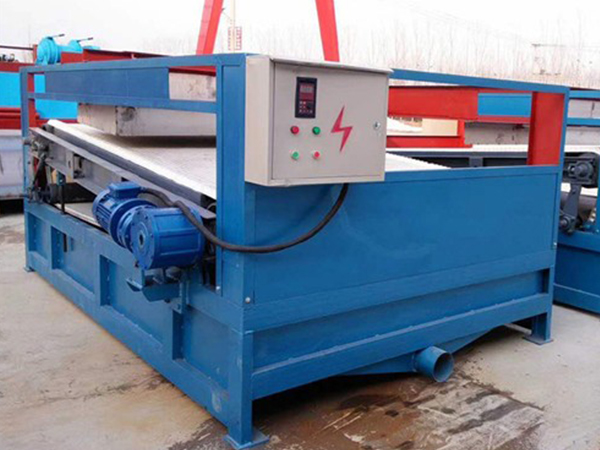
The slurry enters the even distribution device of the flat magnetic separator through the feed pipe, where it is evenly scattered onto the upper iron discharge belt of the magnet plate after thorough dispersion. Under the force of gravity, the slurry flows downward along the inclined direction of the magnet plate. The ferromagnetic materials contained in the slurry are firmly adsorbed onto the iron discharge belt under the strong magnetic field provided by the magnet rod. The motor-driven transmission device drives the iron discharge belt to move upward along the inclined direction of the magnet plate, simultaneously carrying the adsorbed ferromagnetic materials into the iron discharge area. They are then washed away by the iron discharge water and collected in the tailings bin. The non-magnetic slurry continues to flow downward along the magnet plate and is collected in the concentrate bin.
Section 2: Key Features of Plate Magnetic Separator:
◆ Choose high-performance neodymium-iron-boron magnets and a unique flat magnetic circuit design for increasingly rational magnetic fields.
◆ High gradient magnetic field with composite magnetic system and multi-pole structure.
◆ Large magnetic area, long separation time, good effect.
Integrating fluid mechanics, magnetics, and gravitation theories, they work together to complete the task.
The magnetic plate angle is adjustable to accommodate materials with varying fluidities.
◆ Equipped with a uniform feeding device, automatically cleaning the adsorbed magnetic materials.
◆ Customizable to user requirements, easy to disassemble, low energy consumption, and convenient maintenance.
Section 3: Application Scope of Plate Magnetic Separator:
Iron removal and purification in hydrometallurgical processing of non-metallic minerals, particularly for the wet iron removal of non-metallic minerals such as quartz sand and orthoclase. Additionally, it achieves good separation results for weakly magnetic minerals like hematite, limonite, specularite, siderite, manganese ore, and niobium ore mud.