

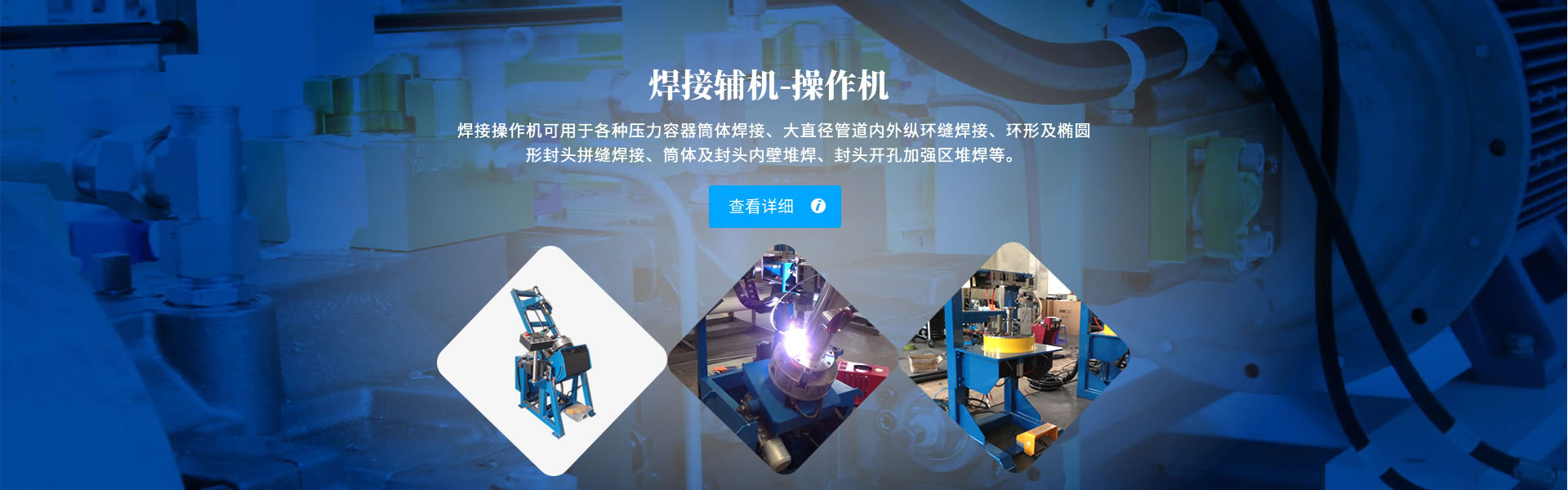


The selection of welding equipment is an important aspect in establishing welding processes, involving numerous factors. However, attention should be given to several key considerations. The technical requirements of the welded structure include the material properties, structural characteristics, dimensions, precision requirements, and usage conditions of the structure.
If the structural material of the welding equipment is plain low-carbon steel, an arc welding transformer can be used. For high-quality welding structures and low-hydrogen welding wire requirements, a DC arc welding machine is necessary. For thick and large components, a flux cored welding machine can be utilized; for bar material butt joints, cold pressing welding machines or resistance spot welding machines can be chosen. For reactive metals or alloys, heat-resistant alloys, and corrosion-resistant alloys, specific processes like inert gas welding, plasma arc welding, or electron beam welding can be selected depending on the situation.
For large quantities of welded structures with fixed structural forms and dimensions, welding machines can be utilized. Different welding equipment can be used to weld the same part, necessitating the selection of the most appropriate welding equipment based on actual usage. For instance, when welding outdoors where power and gas sources are lacking, only arc welding generators such as diesel (or gas) arc welding generators can be chosen as welding equipment.
For precision weldments that are not to be further machined or heat-treated after welding, an electron beam welding machine with energy concentration, no need for additional filler metal, minimal heat-affected zone, and high precision should be selected. During welding, the energy consumption of the welding equipment is quite significant. When choosing welding equipment, it is advisable to opt for the most energy-efficient and high-power-factor option that still meets the process requirements.
