
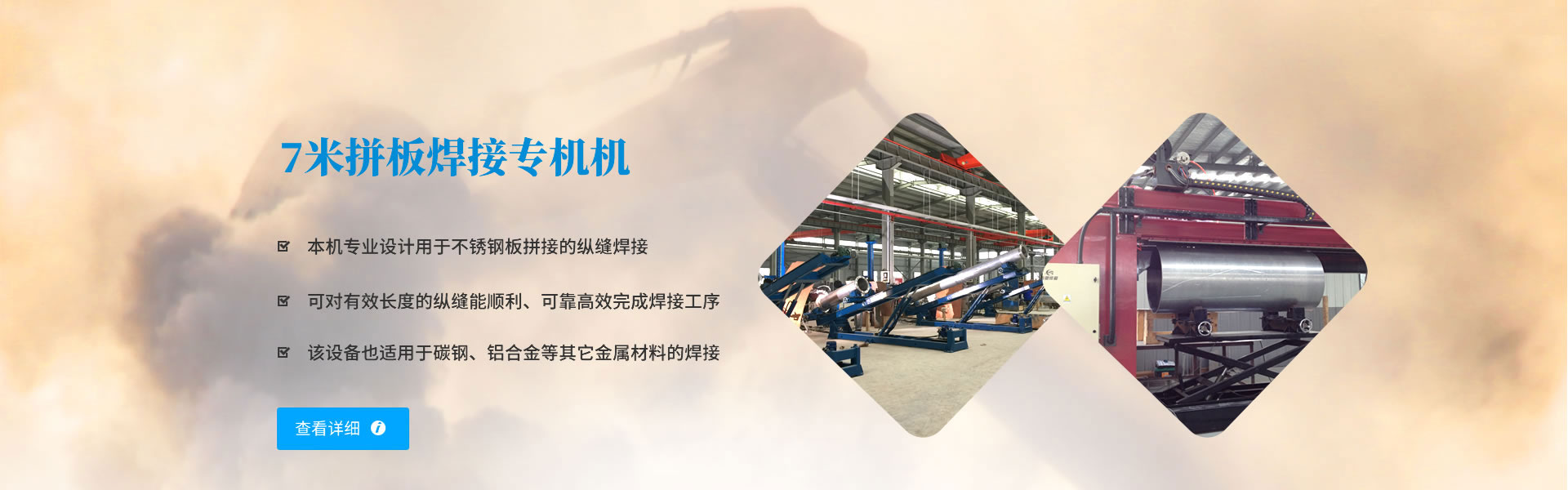
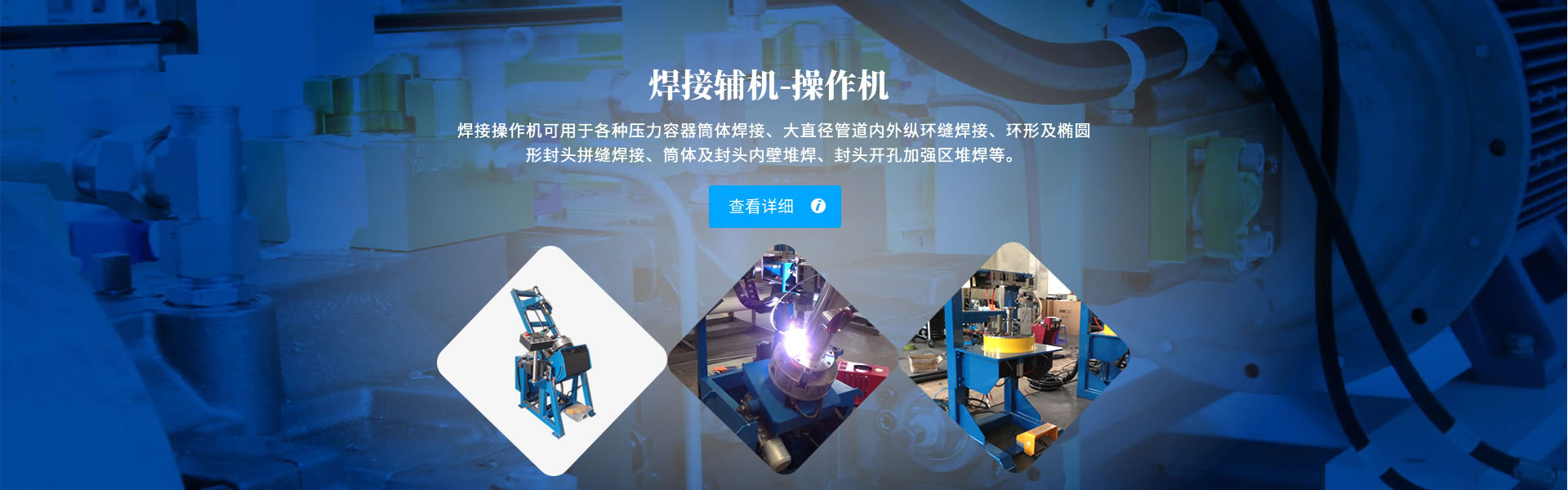


The automatic welding machine is designed for automated production, requiring either manual operation or a robotic arm to load and unload parts. The welding fixture automatically secures and positions the parts, initiates the welding power supply's arc, feeds wire, and moves the welding gun or part automatically. After completion, it automatically retracts, and the parts are removed by manual operation or a robotic arm. It is mainly composed of the welding system, mechanical system, and electrical control system.
Welding System
Welding systems consist of welding power sources and torches, mainly including argon arc welding machines,CO2Welding machines,MIG/MAGWelding machines, plasma welding machines, submerged arc welding machines, and so on. Of course, there are also resistance welding, flame welding, laser welding, electron beam welding, and other welding methods. Due to limited space, we will only describe the commonly used types of welding power sources here.
The aforementioned welding power sources, TIG welders, and plasma welders can fuse the weld metal itself to join two workpieces together. An automatic wire feeder can also be added to complete the welding of thicker workpieces.CO2/MIG/MAGWelding machines and submerged arc welding machines both have their own wire feeding systems, which deliver the welding wire through the center tip of the welding gun. Welding parameters are adjusted via control knobs on the welding machine.
Mechanical Systems
The mechanical system primarily consists of the bed frame mechanism, fixture and auxiliary workpiece support mechanism, welding gun fine-tuning mechanism, welding workpiece or welding gun movement mechanism, etc. For instance, as shown in the right figure, it is an automatic tube plate welding special machine.
Automatic Tube Sheet Welding Machine
Automatic Tube Sheet Welding Machine
Due to the varied shapes, sizes, and weld positions of various welding workpieces, each designer approaches their design with unique perspectives. As a result, the styles of specialized welding machines are as diverse as they come. For the equipment shown on the right, we will delve into the conceptual design process.
2.1 Bed Frame Structure:The bed frame primarily serves as support for the equipment, which can be constructed from castings or welded components. Due to the long production cycle and high cost of castings, materials and steel plates are now predominantly used, which are then welded, annealed, and finished. This method allows for rapid manufacturing and cost savings, leading to widespread application.
2.2 Workholding and Auxiliary Support Mechanisms: As illustrated, these can fix the relative position of the workpiece based on the machining surface or locating holes. The movement of the clamping mechanism can be manually, pneumatically, electrically, or hydraulically controlled to achieve clamping and positioning of the workpiece.
2.3 Welding Gun Micro-adjustment Mechanism: To align the welding gun with the weld seam, it is necessary to finely tune the welding gun's...X\Y\ZAdjusting to three-dimensional positioning ensures the torch is accurately aligned with the weld seam. Additionally, according to the welding process requirements, rotation functions in all directions must be achieved.
2.4 Welding Workpiece or Welding Gun Mechanism: To accomplish straight, circular, or curved weld seams, relative movement between the welding gun and the workpiece's seam path is required to meet the welding requirements. Either the welding gun can move, or the workpiece can be moved. This necessitates
Seam Welding Special Machine
Based on the shape and size of the workpiece, the design approach is determined. The design principle focuses on simplicity in mechanism, control, and ease of loading and unloading workpieces by workers. As shown in the figure, for the annular seam welding machine, the workpiece moves while the welding gun remains stationary. In the straight seam welding machine, the workpiece is stationary, and the welding gun moves in a straight line.
Electrical System
The electrical control system primarily handles the clamping and positioning of fixtures, the startup and shutdown of welding machines, the movement of welding guns or workpieces, the in and out of conveying devices, etc. As shown in the right figure, it includes automatic features./Manual conversion, arc control options, adjustment and display of welding speed, power supply switch and emergency stop switch, etc.
Electrical control systems typically consist of relays,PLCProgrammable Controllers, Single-Chip Microcomputers, CNC Systems, Computer Control. In welding production sites, due to the abundance of welding spatter, complex water, electricity, and gas lines, and significant electromagnetic interference, the commonly used relays are often...PLCNumerical control systems.PLCDue to the integrated relay functions and programmable control capabilities, with the advancement of technology and the emergence of new products, the currentPLCWe can still achieve more complex functionalities, such as partial CNC features, like circular interpolation, etc.PLCControl technology is widely applied in automatic welding special machines.
