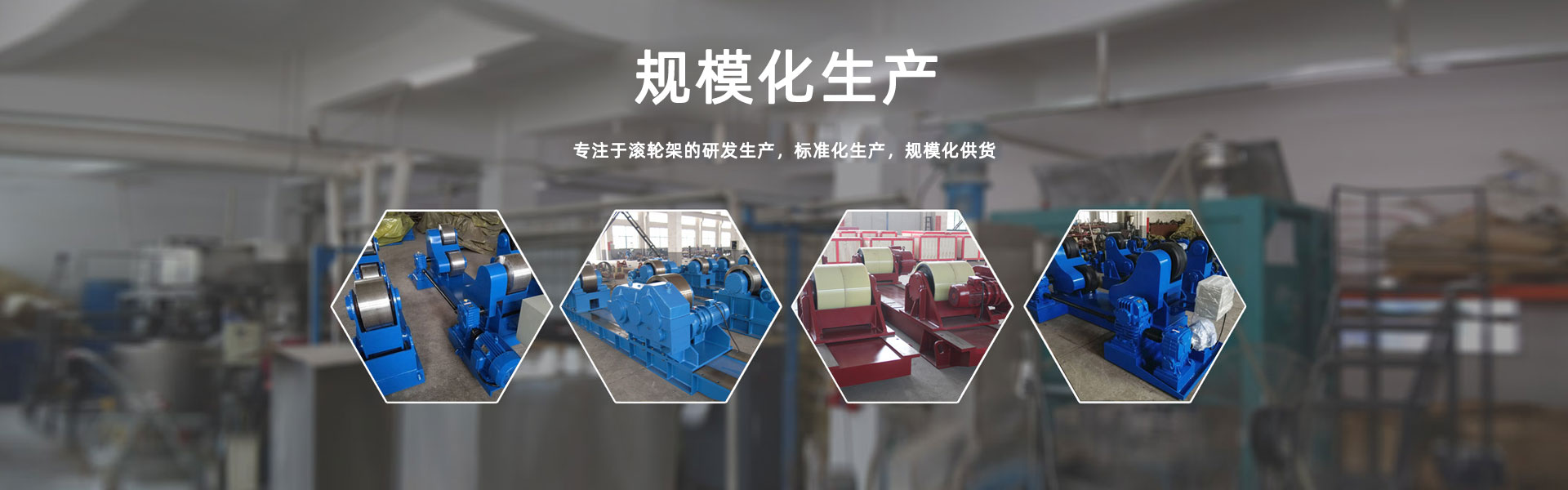
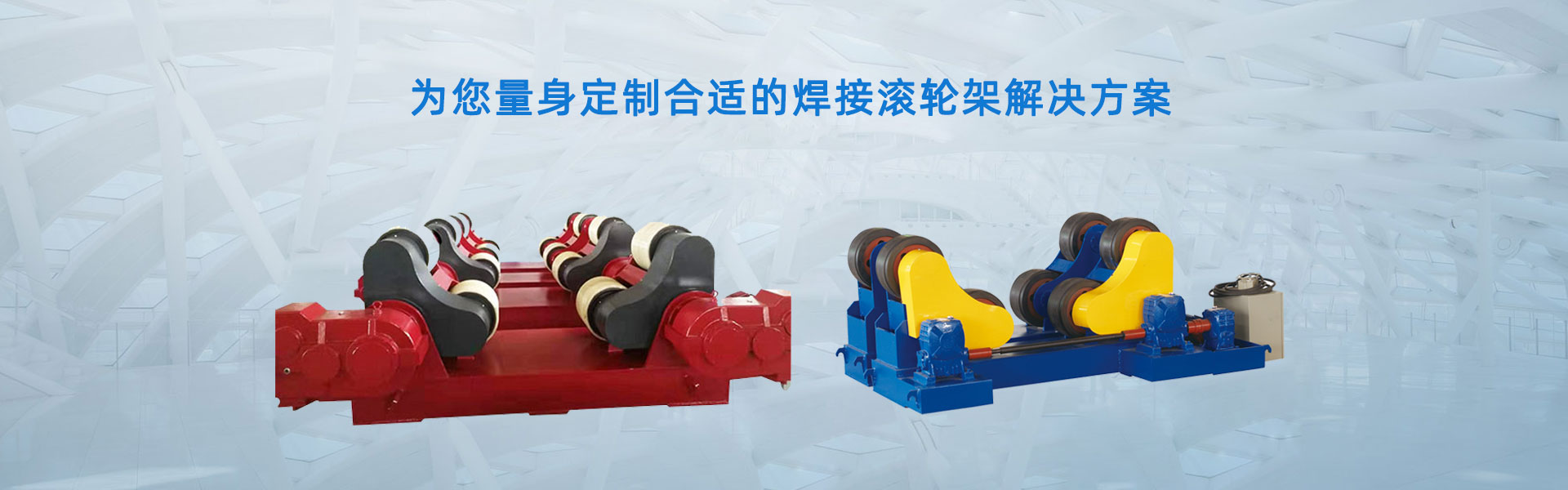
Firstly, the roller stand is applicable in any environment and has a wide range of applications. Secondly, the swivel roller stand is controlled by a thyristor DC motor, ensuring stable speed with no stepless adjustment, constant material consumption during operation, and all losses are controllable. Additionally, the DC power supply for the roller stand does not require traditional transmission devices. It offers fuel efficiency, does not emit toxic gases or liquids during operation, and meets environmental protection standards. At present, all that is needed is to disassemble and test the appropriate modules, which are relatively easy to replace. Compared to adjustable roller stands, it not only has the advantages of roller stands but also has the ability to adjust the center distance of the conductor by using screws or bolts to accommodate changes in conductor diameter. The drive utilizes a harmonic drive reducer with dual motors, either a cycloidal pinwheel reducer or a worm reducer. According to customer requirements, the Bota heavy industry roller series can be divided into three types: rubber tires, steel tires, and steel-rubber composite tires, and can be combined with other equipment for control.
Adjustable Wheel Stand: The adjustable wheel stand consists of two parts: the steering section, which includes the main body, motor reducer, and wheel, and the support section, which consists of the main body and shaft part. The roller compactor is equipped with polyurethane wheel structure for increased tactile sensitivity. In addition to maintaining the working surface, it can also be extended with rubber tires. The rubber tires are produced by professional roller manufacturers with performance principles. During operation, the adjusted roller stand is controlled by a single variable-frequency inverter through two drive motors and one reducer motor, and the speed change process is divided into two stages. The welding workpieces are placed on the steering wheel and the steering wheel. When the steering wheel operates, due to the collision between the drive and the drive shaft, the workpieces move. The linear velocity of the workpiece at the required welding position is the welding speed. The collision force between the rotating workpiece and the drive shaft causes the roller to rotate. Wheel Stand Connected to the Adjustable Wheel Stand: The wheel stand is a device that transmits the rotation of a cylindrical (or conical) weld through the collision between the weld and the drive shaft. The adjustable roller stand is one type of roller stand. In addition, the wheel stand should have a frame that rotates in the opposite direction, self-adjusting welding roller stands, and non-adjusting welding roller stands.