



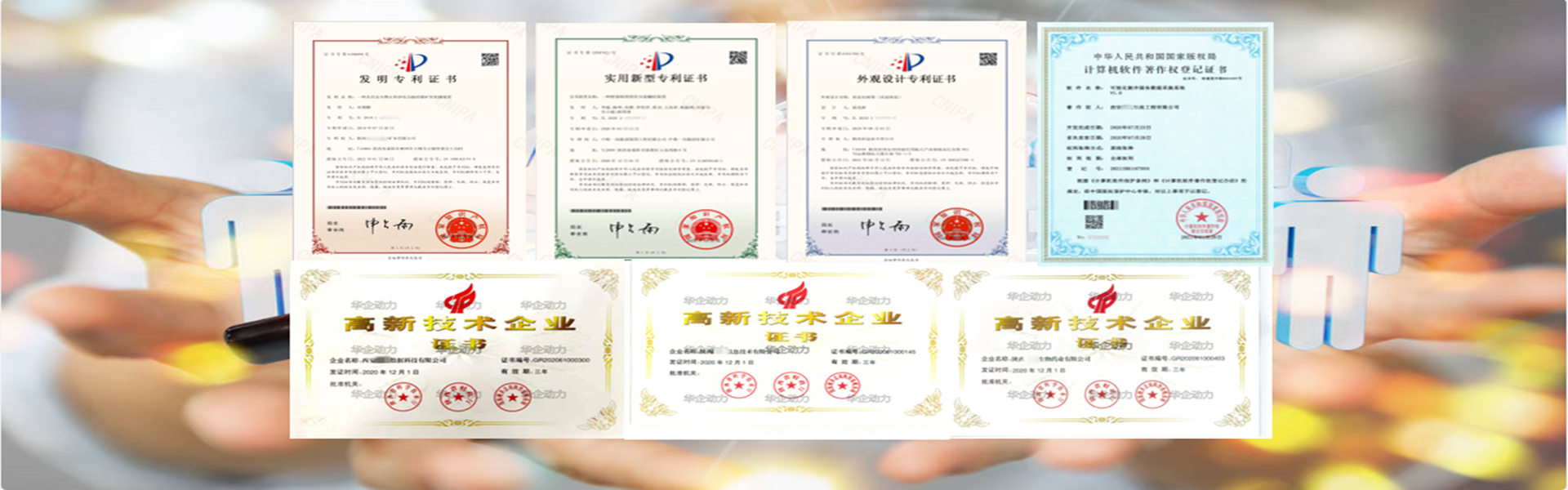


 通过中商114认证
The wave of high-tech enterprise declaration has arrived, with many companies inquiring, "Can we apply for high-tech status if our company's income is insufficient and our intellectual property is lacking?" It's likely that many businesses have numerous questions about their first-time application for high-tech enterprise status, and what specific areas of deficiency might lead to rejection.
Huapu Dynamics has compiled a selection of cases, addressing the most common questions that many businesses face, hoping to provide you with answers and clarification.
It is hereby emphasized that any enterprise engaging in the following behaviors does not meet the qualifications for declaring itself as a high-tech enterprise:
1. High-tech Revenue Indicator. High-tech product (service) revenue refers to the total income from products (services) developed through technological innovation and R&D activities, which meet the requirements of the "Supported High-tech Fields." If the proportion of high-tech product (service) revenue to the total revenue of the enterprise in the past year is less than 60%, it indicates that the company does not meet the fundamental criteria.
Our corporation confirms that there are 6 high-tech products/services, accounting for 41.27% of the company's total revenue that year. This percentage does not meet the required threshold of 60% or above, therefore, it does not qualify for the high-tech enterprise application.
2. The high-tech and product do not meet the field requirements. Producing prohibited items, such as Congtaike, extracted from certain substances, cannot be declared as a high-tech enterprise, even if the technology is highly advanced and precise.
3. Entity Type: Entities that are not legal persons, such as branches, offices, subsidiaries, individual dealers, etc., do not possess legal entity qualifications and are not eligible to apply. It is explicitly stated that enterprises from Hong Kong, Macau, Taiwan, and regions are not permitted to apply for high-tech enterprise status.
4. Research and Development Expenses. The total amount of research and development expenses for the company over the past three fiscal years (or actual operating period, if less than three years, calculated based on the actual operating time) accounts for a certain percentage of the total sales revenue for the same period.
① Companies with annual sales revenue of less than 5 million yuan (inclusive) accounted for less than 5% of the total.
② Companies with annual sales revenue between 50 million yuan and 2 billion yuan (inclusive) account for less than 4% of the total.
③ Companies with over 200 million yuan in annual sales account for less than 3%.
If the total R&D expenses incurred within China account for less than 60% of the overall R&D expenses, the company does not meet the qualifications for the High-tech Enterprise application.
Some Information Technology Co., Ltd. achieved sales revenue of 20 million yuan in the past year. The total R&D expenses over the past three fiscal years accounted for 2.84% of the total sales revenue. All other conditions were met, but the ratio of 2.84% fell short of the 5% threshold required for the high-tech enterprise certification.
In some industrial manufacturing companies, the proportion of personnel costs in the R&D expenses is too high, exceeding 60% of the total R&D expenditure, with significant cost amounts. For non-software companies, the personnel cost ratio is excessively high, and the allocation of R&D expenses is unreasonable.
5. The company has experienced a major incident. A major safety, quality, or severe environmental violation incident has occurred within the year prior to the application for recognition.
A mining company's "High-Tech Enterprise" qualification was revoked due to an environmental incident in July last year, resulting in the adjustment of the corporate income tax rate from 15% to 25%.
Therefore, companies must be vigilant about legal risks associated with major safety and quality incidents during the production process. Major safety and quality incidents are considered legal risks in the area of corporate management, demanding that companies not only prioritize profitability but also ensure safe production and product quality. Otherwise, they may face the revocation of their status as a high-tech enterprise and be ineligible to reapply for five years.
A biopharmaceutical company has been revoked of its high-tech enterprise qualification due to allegations of intentional falsification in the production of 11 batches of freeze-dried human rabies vaccines and will not be considered for reapplication for 5 years.
6. Intellectual Property. It is particularly emphasized that enterprises without intellectual property rights or insufficient intellectual property rights can address this issue through the following methods: 1. Transfer; 2. Apply for patent and software copyright registration.
In the short term, intellectual property rights can also be obtained through patent transfers and the application for software copyrights.
Patent transfers typically take one and a half months, while utility model applications are granted and issued within 6 to 8 months after acceptance.
The soft copyright certificate is issued within 1 to 35 working days from the date of application.
