
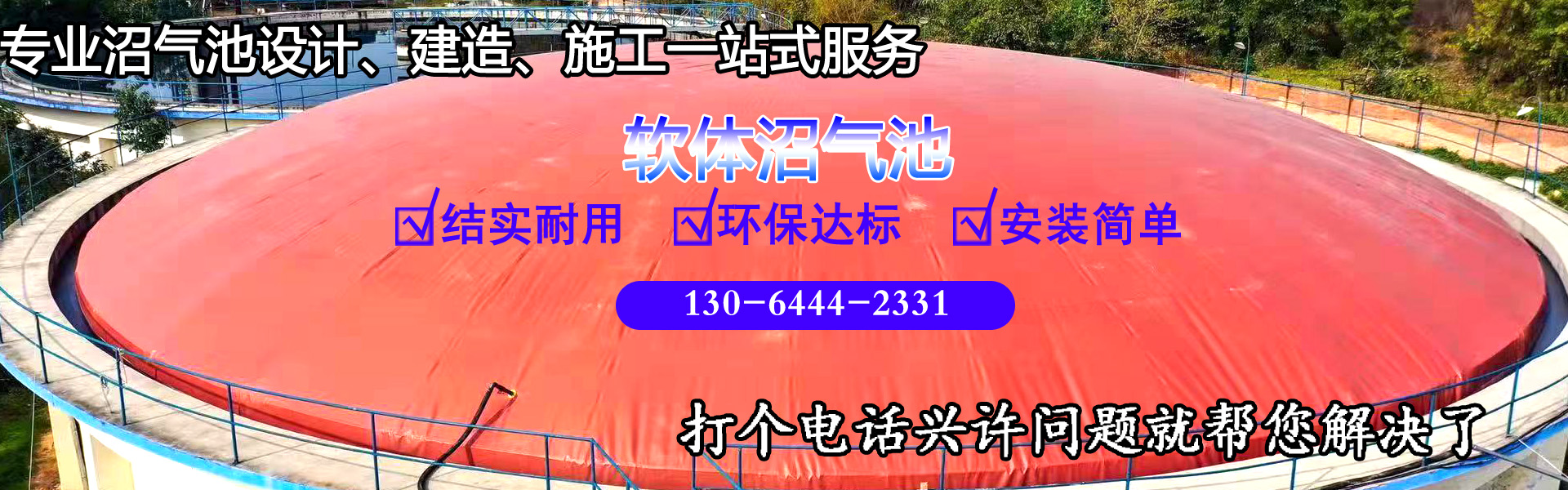

The black film biogas pond should be enclosed after the overall construction is completed to prevent personnel from moving within the black film biogas pond area (except for special circumstances, personnel are prohibited from walking on the biogas pond cover film).
2. Upon completion of the black membrane biogas digester construction, immediate drainage should be conducted if surface water accumulates due to rainy weather without the biogas rising. If the water depth exceeds 50 cm, it may affect the service life of the biogas digester.
3. The black membrane biogas digester's inlet should be free from debris such as branches and plastic bags to prevent blockages. In case of a blockage, it should be cleared promptly.
4. The dewatering pipe is the outlet for sludge discharge from the biogas digester. Under normal operation of the biogas digester, dewatering is required every six months without a pressurized machine, and once a year with a pressurized machine. If the gas production decreases or the effluent water turns black before the scheduled dewatering, it should still be performed. The discharged sludge can be directly used as fish feed in ponds or as farm manure. The amount of sludge discharged each time is determined by the actual conditions on site. The dewatering process is considered complete when the outlet no longer discharges waste sludge and black wastewater.
5. When the entire black membrane biogas digester operates normally, biogas fills the entire top membrane of the digester, forming a giant biogas bag. The amount of biogas stored within the bag can be adjusted according to the specific biogas consumption, typically determined by the inflation height (usually 3-5 meters). Normally, the inflation height of the biogas top membrane should not exceed 5 meters; if it does, it is necessary to vent the gas. Failure to vent regularly can lead to the top membrane being pulled out of the anchoring groove, potentially causing a serious tear and affecting the lifespan of the top membrane. The biogas outlet serves as the exit for biogas from the digester. Due to the high water vapor content in the biogas, condensation can form on the pipe walls over time, creating water droplets that may block the exhaust pipe. It is necessary to drain the exhaust pipe, typically once a month. In cases where biogas cannot be vented, immediate drainage should be performed.
