

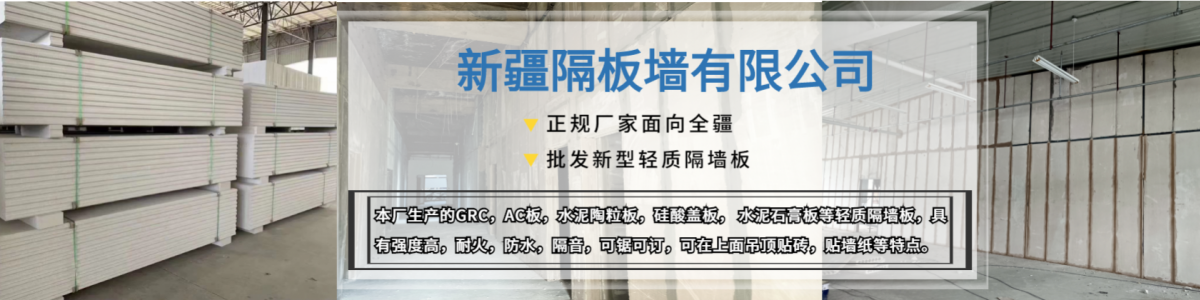


Production Process Details of Lightweight Partition Boards
Which lightweight partition board is the best? Lightweight partition boards are a new type of energy-saving wall material. This innovative wall material, formed through mechanical extrusion, resembles hollow floor slabs in appearance but boasts excellent properties such as environmental protection, energy conservation, and ease of ensuring construction quality.Xinjiang Lightweight Partition Panel ManufacturerIntroducing lightweight partition boards, a revolutionary new type of wall material that differs both in concept and functionality from traditional small brick walls. It represents a sustainable development in wall construction. Which manufacturer offers the best lightweight partition boards? Let's delve into the production process.
Waste water, coal slag, ceramic balls, and fly ash are sifted and mixed with cement and water in a specific percentage by weight in a mixer. After mixing, the material is transported to a molding area, where it is extruded and shaped. The product is then processed to the desired dimensions, and after self-inspection, it undergoes a 28-day curing period before being dispatched. The lightweight partition boards are filled with a professional adhesive between the quality partition boards and the lightweight partition boards. At the connection points between the lightweight partition boards and the main concrete structure, U-shaped steel clips are used to secure the boards, and the joints are filled with the adhesive. Compaction treatment is required during construction. The joints of the lightweight partition board panels are lined with 50mm wide glass fiber mesh, and the gaps are filled with an adhesive. The interior wall coating can be applied 7 days after the joint sealing strips are installed. All irregular material joints must be lined with glass fiber mesh: not less than 200mm wide at the inside corners, not less than 150mm wide at the outside corners, and not less than 100mm wide at the flat joints.
Lightweight partition boards include slag (15~20% by weight), mineral powder (7~8%), ceramsite (8~10%), fly ash (6~8%), additives (1~3%), cement (25~30%), and water (16~22%). The raw materials of slag, mineral powder, ceramsite, fly ash, and cement are separately crushed, sieved, and reserved. The crushed and sieved raw materials are then mixed and blended according to the quality ratio to obtain the target product. 1. Water slag: particle size not exceeding 4.75mm, grading is controlled by different sieve apertures; 2. Coal slag: particle size not exceeding 15mm, grading is controlled by different sieve apertures; 3. Ceramsite: particle size not exceeding 15mm; 4. Cement: bulk cement, ordinary portland cement PI42.5, all cement specifications meet national standards.
Our company produces a variety ofXinjiang Partition BoardOur range is comprehensive, with guaranteed quality and stable performance, catering to the diverse needs of our customers. The effects are highly noticeable upon use, allowing for confident selection.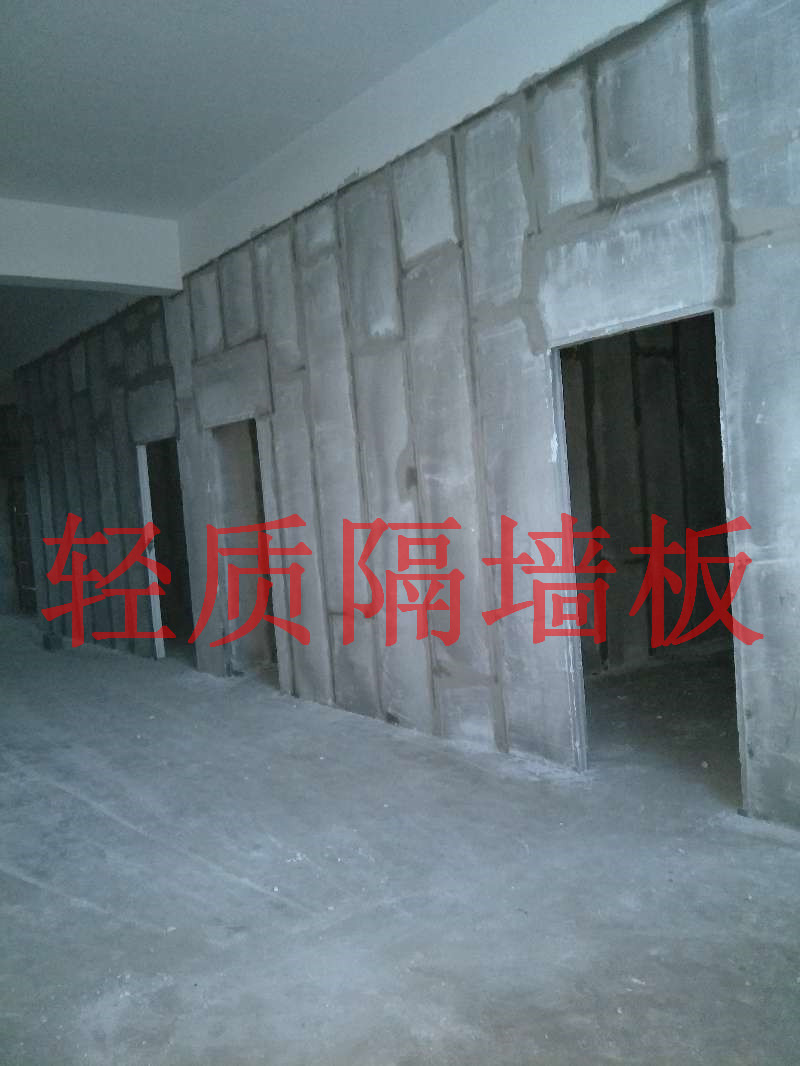
News Center Co., Ltd.
