


Heat exchangers are thermal exchange devices that play a crucial role in various industries such as chemical, petroleum, power, and food processing. As a result, when selecting them, quality and brand should be a priority. When it comes to selecting plate heat exchangers, do you truly understand their knowledge, and are you really aware of the four key principles? Here, the heat exchanger manufacturer provides a brief explanation.
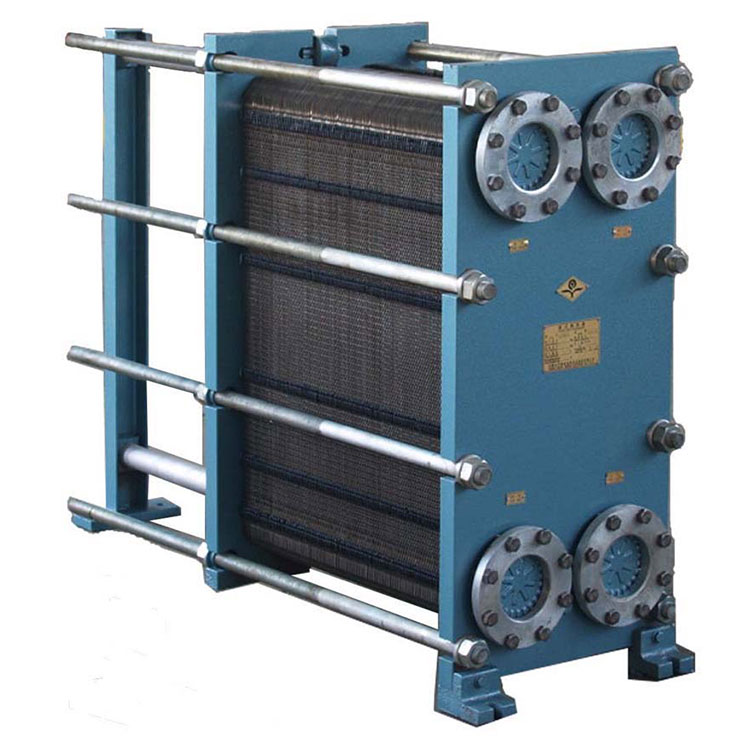
Four Key Principles for Plate Heat Exchanger Selection:
1. Single Board Area: A smaller single board area results in more board pieces, occupying more space and reducing resistance. Conversely, a larger single board area leads to fewer pieces, less space, and increased resistance, making it difficult to maintain flow between the boards. Therefore, when selecting, the single board area should be taken into consideration.
2. The selection of flow velocity between plates affects the heat exchanger's performance and pressure. A higher flow velocity results in a higher heat transfer coefficient but also increases the pressure drop; conversely, lower flow velocities have the opposite effect. Generally, the flow velocity between plates is chosen to be between 0.2-0.8 m/s, and for plate-type heat exchangers, it is preferable to maintain consistent velocity between the two fluids. Below 0.2 m/s, the fluid does not reach turbulent flow and forms significant dead zones; excessively high flow velocities lead to a dramatic increase in pressure drop, with the gas flow velocity between plates typically not exceeding 10 m/s.
3. Determining the Process: Aim for equal flow distribution on both sides whenever possible. If there is a significant difference in flow rates, the side with the lower flow should be arranged with multiple flow paths or use a plate heat exchanger with unequal cross-sectional channels.
4. Heat Exchanger Flow Direction: During single-phase heat exchange, countercurrent flow has a larger average temperature difference. Generally, in the design of plate-type heat exchangers, it is preferable to arrange the fluid as countercurrent as much as possible. Countercurrent flow occurs when the fluid paths on both sides are equal; when the fluid paths of the liquid nitrogenation furnace on both sides are unequal, alternating countercurrent and concurrent flows occur, with the average temperature difference being less than that of pure countercurrent flow.
After the heat exchanger manufacturer's introduction to the "Four Principles for Plate Heat Exchanger Selection," we believe it will greatly assist everyone in their future use. Our company offers a range of heat exchangers, including all-copper heat exchangers and finned tube heat exchangers, among others. Welcome to visit and make your selection!
