


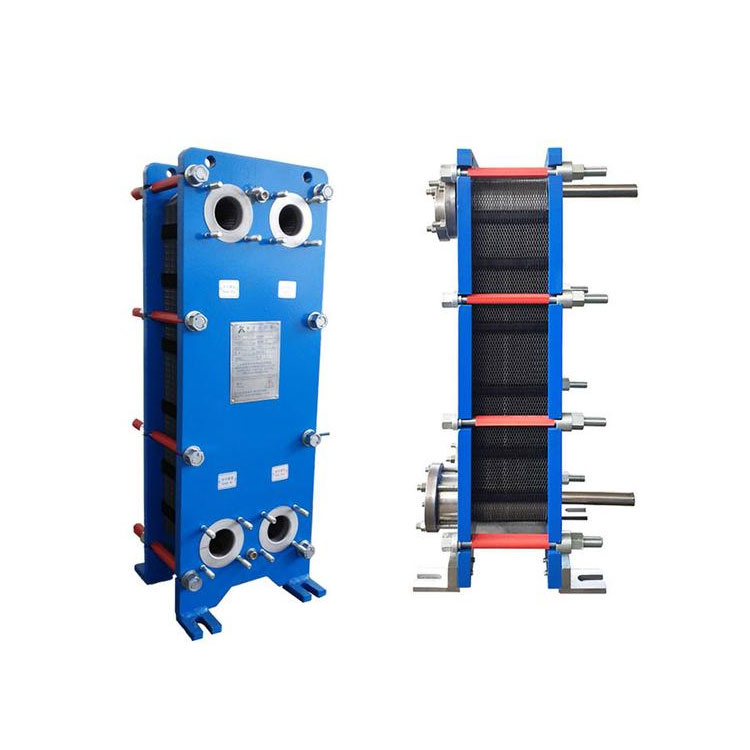
Plate heat exchangers are a common type of heat exchange equipment, particularly prevalent in both daily life and industrial settings. When using plate heat exchangers, we often encounter various issues, such as significant pressure drop. If the pressure drop in a plate heat exchanger is too high, it severely affects the system's requirements for flow rate and temperature, thereby impacting the normal operation of the heat exchanger. So, what are the reasons for a high pressure drop in plate heat exchangers? Manufacturers of heat exchangers summarize the following:
1. The system piping of the plate heat exchanger was not properly flushed, especially in the newly installed system piping, where a significant amount of debris entered the interior of the plate heat exchanger. This resulted in a narrower flow passage cross-sectional area, causing debris to accumulate at the corners and in the guidance area, thereby greatly reducing the flow passage area and leading to pressure loss.
2. Plate heat exchangers, during selection, often have a smaller surface area, leading to excessively high flow velocities between plates and significant pressure drop.
After operating for a period of time, the plate surface structure of the plate heat exchanger caused excessive pressure drop.
The above are several possible reasons for the high pressure drop in plate heat exchangers summarized by the heat exchanger manufacturer. If you encounter a high pressure drop while using plate heat exchangers, it is advisable to refer to the listed reasons for a thorough investigation to identify the cause and take appropriate measures to address the issue.
