

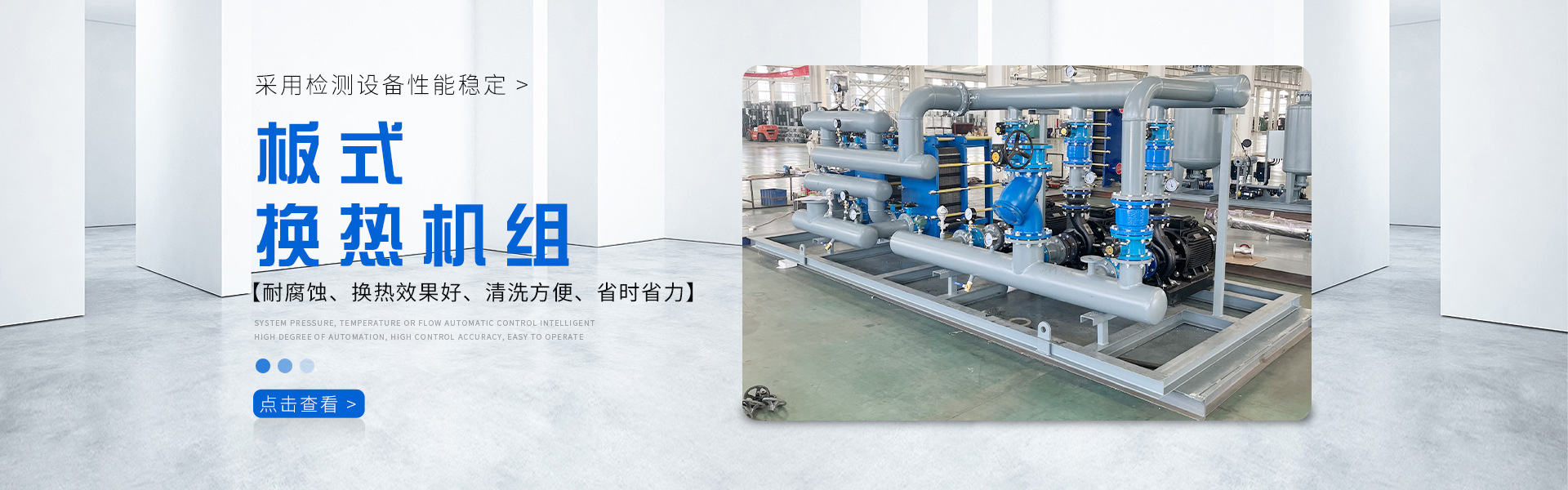







Shell and tube heat exchangers are a commonly used heat exchange equipment, characterized by fast heat exchange rates, long service life, and low maintenance costs. They are applied in numerous industries. What is the working principle of this equipment during operation? Let's take a look below.
The equipment consists of multiple heat exchange plates, featuring two relatively independent channels for the flow of cold and hot mediums. Through the heat conduction of the high-performance white steel plates, the heat content of the cold-side medium is increased by the heat from the hot-side medium; or, put another way, the low heat content of the cold-side medium absorbs heat from the hot-side, achieving the purpose of heat exchange.
The equipment consists of multiple layers of extremely thin copper sheets stacked in different configurations. Inside, one layer circulates a high-temperature lithium bromide solution, while another layer flows a cooler solution. A sealing ring is inserted between them, facilitating heat transfer between adjacent cold and hot fluids within the channels for the cold and hot media, thereby achieving cooling.
3. Compared to traditional heat exchange equipment, the shell-and-tube heat exchanger boasts not only a more favorable appearance but also significant advantages in functional use. Heat can be utilized twice, allowing for the full utilization of resources and achieving energy-saving objectives.
The heat exchanger transfers heat through thin copper, thereby achieving the purpose of heating low-temperature solutions and reducing the temperature of high-temperature solutions.
