Common FAQs on Reverse Osmosis Equipment_News Information Co., Ltd._Zhongchun Environmental Protection Technology (Suzhou) Co., Ltd._Zhongshang 114 Industry Resources Network
Zhongchun Environmental Protection Technology (Suzhou) Co., Ltd.

Pure Water Equipment, Ultra-Pure Water Equipment, Recycle...

24-hour Service Hotline
18550863818
Current Location:Home>News Information Co., Ltd.>Common FAQs on Reverse Osmosis Equipment

    Common FAQs on Reverse Osmosis Equipment

    2025-10-21

    Why do O-Rings in Reverse Osmosis Equipment Expand?

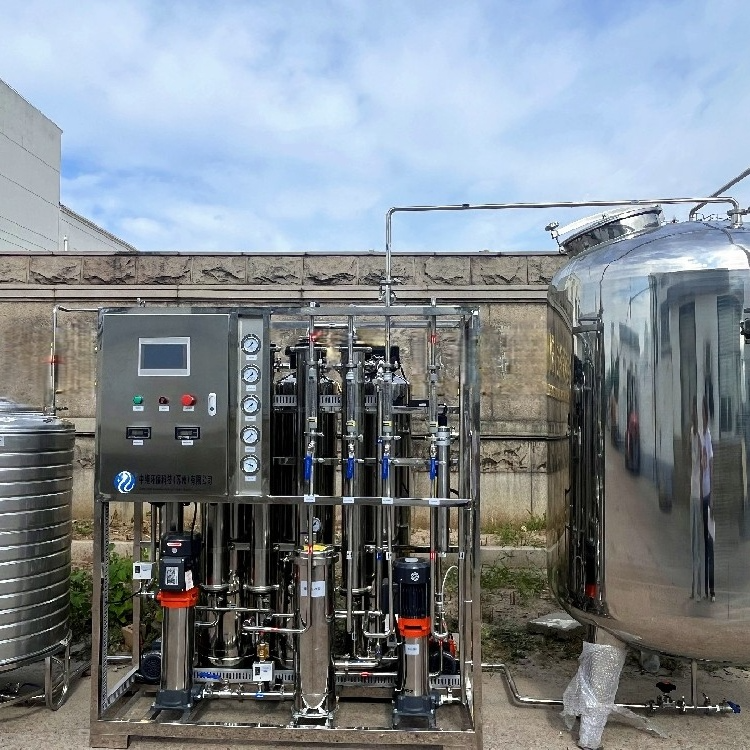
    Reverse osmosis equipment in water treatment systems requires three types of sealing gaskets to achieve sealed isolation between different sections of the membrane shell. To reduce installation resistance, a thin layer of clean water or glycerin should be applied to the surface of each sealing gasket during installation. It is important to note that lubricants such as Vaseline or other petroleum-based oils should be used sparingly, as they can cause cracking of the freshwater pipes and, especially, expansion of the sealing gaskets. While the expansion of the gaskets generally does not directly affect the system's operational performance, it can impact the system's re-loading after unloading, as the expanded gaskets are difficult to fit into their slots.

    Are the product yields of all components in the reverse osmosis equipment process consistent?

    In reverse osmosis equipment, due to the pressure difference, or membrane pressure drop, between the feed and concentrate sides of the membrane elements, and because the salt content in the concentrate of each element is higher than that in the feed, the osmotic pressure of the feed water in each element continuously increases along the system process. Neglecting the brine back pressure and osmotic pressure, the water production of each membrane element along the system process is directly proportional to the difference between the working pressure and the osmotic pressure, meaning the water production of each element gradually decreases.

    Does pH affect the removal rate and lifespan of reverse osmosis membranes?

    Reverse osmosis equipment, as a primary filtration process in water treatment, raises the question: Can the pH value of the raw water entering the reverse osmosis membrane cause damage? Generally, the materials of reverse osmosis membranes are composite membrane materials, which, when used within the specified pH range of the product—usually between 2 and 11—pose minimal harm to the membrane itself. As for the impact of pH on the desalination rate of the reverse osmosis membrane, it is influenced by the inherent properties of various ions in the water, which are determined by the ions' acidity, alkalinity, decomposition, and charge levels. These factors can lead to a reduction in the desalination rate of the membrane. Thus, pH can have a significant impact on the desalination rate of certain impurities. Similarly, if the reverse osmosis membrane has zero removal rate for CO2, increasing the pH of the raw water to convert CO2 into CO32- can effectively improve desalination. However, special attention must be paid to the scaling issue of the reverse osmosis membrane at this point.

    How should one operate a reverse osmosis system for the first time?

    By employing low-pressure, low-flow techniques to expel air from the pipeline, only when the air in the pipeline is removed can the equipment operate normally. Initially, the pressure must be maintained between 0.2~0.4MPa. When using low-pressure flushing and exhaust, the concentrated and effluent water must be discharged into the drain. If the pressure rises rapidly during operation, it indicates that air is present within the membrane elements, which can cause a shock force between the water flow and radial direction. In such cases, the outer casing of the membrane may rupture, leading to an irreparable reverse osmosis membrane. Upon the first use, it is crucial to adjust the membrane operating pressure to 0.2~0.4MPa for flushing, and ensure that the reverse osmosis system automatically performs a low-pressure flush of the reverse osmosis membrane function with each startup.

    How to Replace Security Filter Cartridges in Reverse Osmosis Equipment?

    After prolonged use, the security filter may experience variations in water quality due to its age. This can lead to the clogging of the filter core. To replace the filter core, one should refer to the pressure difference before and after the filter. When the pressure difference exceeds 0.03MPa, consider a replacement. The replacement process is as follows: shut down the reverse osmosis system, release the pressure by pressing the pressure relief valve on the equipment until the pressure gauge reads zero. Use a professional wrench to unscrew the filter vessel of the filter. Remove the old filter core and replace it with a new one. Tighten the filter vessel by rotating it with a professional wrench.

    How to Clean and Disinfect Reverse Osmosis Systems?

    Routine cleaning of reverse osmosis systems requires the expertise of professional technicians. Can customers perform the cleaning themselves? If the reverse osmosis system needs cleaning, it should be handled by professional factory personnel. The following conditions are prerequisites for chemical cleaning and, if met, cleaning can proceed. Prerequisites for chemical cleaning: The system's output water volume is reduced by 5-10% compared to the initial or last cleaning. The system's desalination rate is reduced by 2.5-5% compared to the initial or last cleaning. The pressure difference between sections of the system is 1-2 times greater than after the initial or last cleaning. The system should be operated with a protective solution if a long-term shutdown is necessary. Note: Water output and desalination rate are affected by water temperature, so test results should be obtained under the same water temperature conditions.

    Does the reverse osmosis equipment have good defluorination effect?

    Using superfluorinated water can be harmful to human health. To avoid the dangers of fluorine in daily life, reverse osmosis equipment can be utilized for fluorine removal. Fluoride ions in groundwater mostly come from the erosion and dissolution of surrounding rocks, and the water also contains a large number of soluble ions. During fluorine removal, the impact on other molecules must be considered. The fluoride removal rate is not particularly high in groundwater with high salt content when using reverse osmosis equipment. However, compared to other methods, reverse osmosis is simpler to operate and offers better treatment results.

    What are the basic requirements for the quality of purified water produced by purification equipment?

    Pure water produced by purification equipment is used in industries such as pharmaceuticals and biomedical. However, what are the basic quality standards for purified water? Both the Chinese Pharmacopoeia and the European Pharmacopoeia clearly state that the source water for pharmaceutical water must at least meet drinking water standards. If not, it must undergo purification treatment until it does. In addition to specific regulations for Escherichia coli, no more than 100 other bacteria are allowed to exceed 100/ml. During the water purification process, internal contamination can also occur, and various water treatment devices in the purification equipment can become sources of contamination. Therefore, it is essential to regularly clean and disinfect the purification equipment. Moreover, sterilization and disinfection devices should be installed at the end of the purification water equipment.

    What are the characteristics of purified water equipment's outlet water quality?

    The purified water produced by our purification equipment meets both national hygiene standards and the company's actual production requirements. The purified water output from our equipment exhibits two distinct characteristics. Firstly, the installation of disinfection and sterilization equipment in the purification system is gradually increasing. Secondly, the piping distribution system of the purification equipment has been replaced by a recirculation pipeline instead of the traditional supply pipeline. Both of these features are designed to control microbial contamination and the increase of bacterial endotoxins. Additionally, attention must be paid to the impact of pipeline flow rate on microbial proliferation, as low flow rates or blockages within the pipeline may lead to an increase in microbial growth, affecting water quality.


Contact us

Zhongchun Environmental Protection Technology (Suzhou) Co., Ltd.
Service Hotline 18550863818
Company Phone 18550863818
Company Address 2 Wanshun Road, Taiping Street, Xiangcheng District, Suzhou City

Message Consultation

 Click OK to indicate that you agree to《Service terms》《Privacy policy》

www.114global.com © Zhongshang 114 Hebei Network Technology Co., Ltd.Address: Room 6009, Oriental New World Center, No.118 East Zhongshan Road, Qiaoxi District, Shijiazhuang City, Hebei ProvincePlatform Service Hotline: 4006299930

 Click OK to indicate that you agree to《Service terms》《Privacy policy》