

Detailed description of performance features:
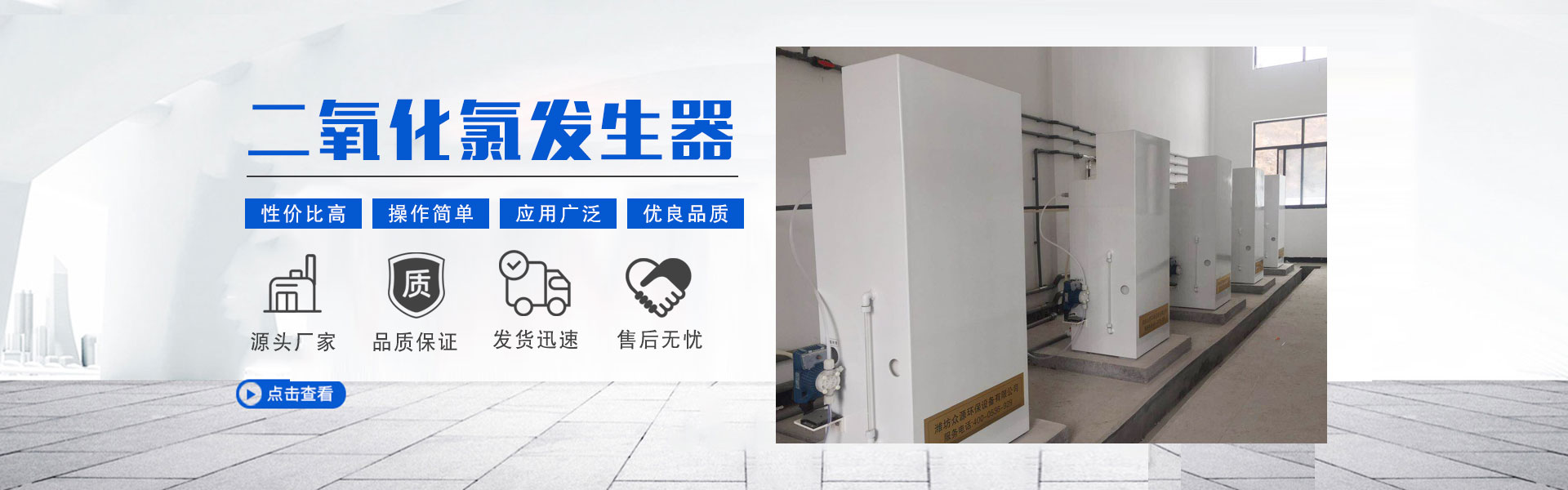
Produced primarily from sodium chlorate (NaClO3) and hydrochloric acid (concentration ≥31%), the compound disinfectant is mainly composed of chlorine dioxide with chlorine gas as a secondary component.
2. The Zhenyuan equipment fully utilizes the working principle of the water jet creating negative pressure. The reactor inside the equipment is always under a negative pressure state. Moreover, due to the entry of air, the raw materials are continuously aerated. The chlorine dioxide gas produced in each reactor is continuously extracted, resulting in a higher chlorine dioxide output. The ClO2 content, calculated based on the effective chlorine, is greater than 70%.
To fully extend the raw material reaction time and enhance the chlorine dioxide content and conversion rate of the raw materials, the equipment utilizes a five-stage segmented reactor. The equipment yield is ≥90%, with chlorine dioxide accounting for 70-80% of the total active chlorine.
4. Our domestic five-level reactor ensures a reaction time of 1.95 hours for the raw materials, allowing for complete reaction within the reactor. Consequently, the reaction yield can be guaranteed to exceed 90%.
5. The five-stage reactor mechanism: Sodium chlorate and hydrochloric acid react at room temperature, producing a significant amount of chlorine dioxide gas. The raw material conversion rate is low, so the first four stages of reaction can fully extract a large amount of chlorine dioxide gas. Starting from the fifth stage, heating is applied to ensure the raw materials react completely, at which point there is more chlorine and less chlorine dioxide. This ensures an increase in raw material conversion rate and a higher proportion of effective chlorine in the form of chlorine dioxide.
6. The equipment employs dual-temperature control technology to enhance raw material conversion rates, achieving over 75% efficiency. Specifically, the first four reactors are heated using a water bath method to temperatures between 30-40°C, while the fifth reactor is heated using a dry method to temperatures between 45-50°C.
7. The facility has been upgraded with a residual liquid treatment system, which can expel the minor, unreacted residues.
Due to the thorough reaction of the raw materials, the concentration of chlorates in the disinfected water has significantly decreased, meeting the national drinking water standards: chlorates below 0.7 ppm.
Our equipment utilizes a combination heating system, primarily water bath heating with auxiliary air heating, to maintain a constant temperature of 45-50°C. Currently, domestic hypochlorous acid generators employing vacuum-type systems all use an external air blowing-off process to extract chlorine dioxide from the reaction liquid, which is then absorbed by a water jet to produce the disinfectant. However, this process has a flaw: the actual temperature inside the reaction chamber does not reach the required temperature. During operation, especially in winter when outdoor temperatures are often below 0°C, the blowing-off process with cold outdoor air significantly lowers the temperature of the reaction chamber liquid, preventing the desired temperature from being achieved, thus reducing the conversion rate of the generator's raw materials. Our company, through technological innovation, has added air-assisted heating at the equipment's intake to pre-heat the cold air before blowing-off, thus avoiding the aforementioned issue. This air-assisted heating enables automatic temperature control, ensuring a constant 40°C air temperature regardless of the outdoor temperature, which is essential for maintaining the reaction temperature inside the reactor throughout the year. This is a distinctive feature of our generator compared to similar products, and we have filed a national invention patent for this technology. Additionally, due to the rapid heat exchange in the reaction chamber, the lifespan of the reactor is greatly reduced. This device effectively overcomes this defect. (Traditional direct heating methods only heat局部, providing poor uniformity and a short lifespan.)
9. The reverse flushing system is utilized to clean the reactors, which may accumulate crystals or impurities during long-term operation or idleness. This can reduce the reactor's volume, decrease reaction space, and lower the conversion rate of raw materials. The reverse flushing system ensures each reactor is thoroughly cleaned.
10. Equipment Assurance: Domestic explosion-proof devices can instantly release chlorine dioxide gas, which is confined within the reactor, to the outdoor environment, and then automatically restore the sealed state. This ensures the equipment operates under both atmospheric and negative pressure conditions, guaranteeing safe use during normal operation and emergency shutdowns.
The raw material conveyance utilizes imported electromagnetic-driven diaphragm metering pumps, offering stable operation and precise, reliable measurement. It features both manual and automatic control modes, with a liquid crystal display on the metering pump panel.
The reactor inside the equipment is made of high-temperature and corrosion-resistant synthetic metal or pure titanium, ensuring a service life of over 10 years.


通过认证