
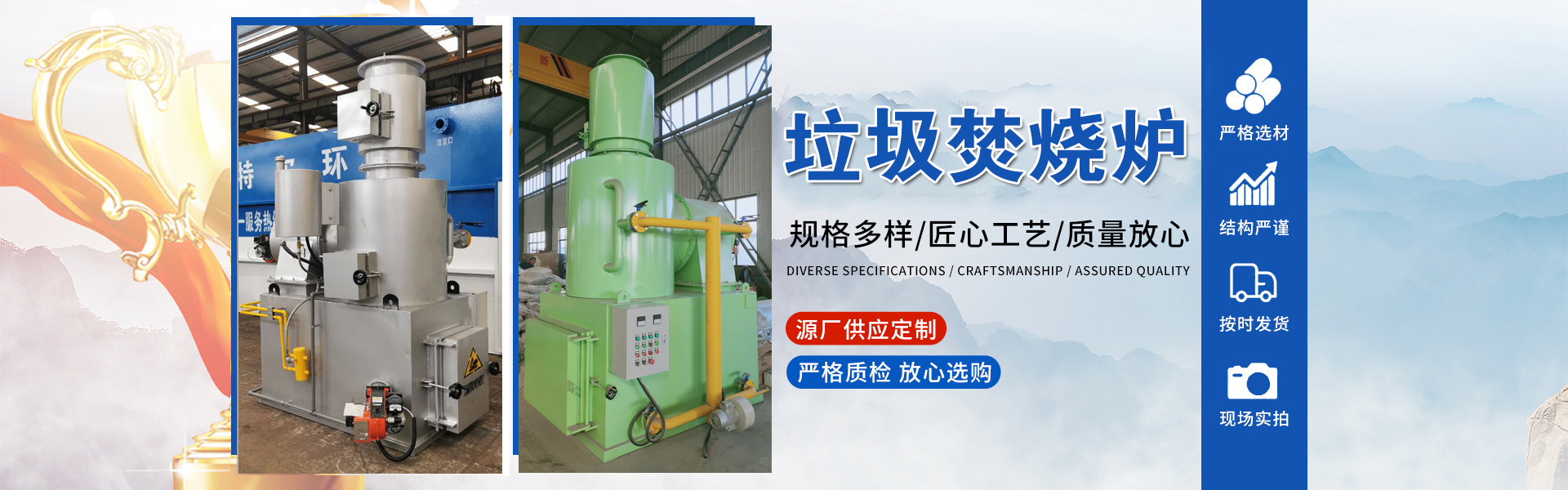
Waste incinerators are equipment for burning domestic waste, comprising four main systems: pre-treatment, incineration, smoke biochemical dedusting, and gasifier (for auxiliary ignition). They integrate automatic feeding, screening, drying, incineration, ash cleaning, dust removal, and automated control. Waste undergoes three stages: drying, combustion, and ashing, and is burned at temperatures of 850-1100 degrees Celsius. The DCS automatic control system and automatic combustion control system enable real-time monitoring and adjustment of the incineration conditions of waste inside the furnace, as well as timely regulation of the grate speed and combustion air volume. The high-temperature flue gases produced by incinerating waste undergo heat exchange in a waste heat boiler, generating superheated steam that drives a turbine generator set to produce electricity. This electricity is then transmitted through the power grid to various locations, achieving resource utilization in waste treatment.
News Center Co., Ltd.
